Milk has long been central to the Indian diet. Across all social classes, fresh milk and its derivatives like curd, buttermilk, ghee, and khoa form an essential part of everyday meals. However, during the 19th and 20th centuries, this basic staple was not available to all, and what reached the market was largely unfit for safe consumption. As towns expanded and milk became increasingly commercialised, scarcity, adulteration, and contamination turned the daily supply into what colonial health officers called the “milk problem.”
In the expanding towns and cities of Western India, finding milk that had been drawn, stored, and transported with any regard for basic sanitation was exceptional. The tropical heat of the subcontinent only heightened the danger, causing untreated milk to spoil far more rapidly than almost any other common foodstuff.
As a result, urban milk supplies presented a double hazard to public health. First, polluted milk directly transmitted deadly pathogens, spreading bacterial infections like tuberculosis through the milk of infected cattle, while unhygienic handling further increased the risk of contamination. Second, the rampant practice of diluting milk with dirty water or stripping its fat undermined basic nutrition, leaving children vulnerable to deficiency diseases like rickets. Milk had become a major source of infection in the colonial city.
The Imperial Government’s attention to improving urban dairying grew significantly in the early 20th century. At the Bombay Municipal Laboratory, routine chemical analysis of milk began in 1905. Between 1910 and 1913, Dr Lemuel Lucas Joshi conducted systematic examinations to detect tubercle bacilli in the city’s supply.
{{/usCountry}}The Imperial Government’s attention to improving urban dairying grew significantly in the early 20th century. At the Bombay Municipal Laboratory, routine chemical analysis of milk began in 1905. Between 1910 and 1913, Dr Lemuel Lucas Joshi conducted systematic examinations to detect tubercle bacilli in the city’s supply.
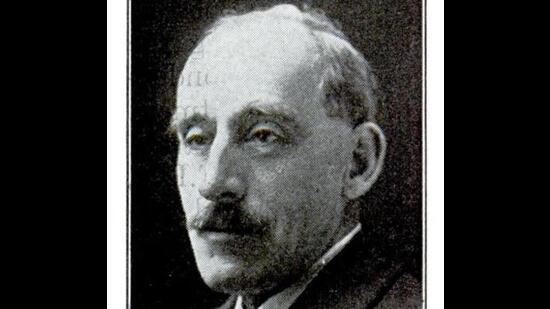
{{/usCountry}}Joshi held a diploma in Tropical Medicine and Hygiene from the University of Liverpool. As Municipal Analyst in Bombay and a member of the Special Dairying Committee appointed by the Government of Bombay, he launched a detailed investigation of the Bombay milk supply in early 1913. This project aimed to analyse the normal chemical composition of milk under local conditions, determine the exact methods and extent of adulteration, and measure the bacterial content in the city’s commercial supply.
After analysing nearly 1,400 samples of milk, Joshi found that four-fifths of the milk supply of Bombay was adulterated with water, and over 90 per cent of the milk samples examined bacteriologically were contaminated with microbes whose presence indicated dirt and other impurities. He ascribed the “milk problem” to various factors, such as climatic influences, caste and class, peculiar customs and habits of the people, illiteracy and ignorance of the farmers and milk vendors, and lack of proper sanitary and legislative control.
Conditions in Poona proved no better. Whether looked at from the point of view of the healthiness of the milk obtainable, or of the quality of the milk to be had, or of the quantity available, the milk supply in Poona was open to the most strenuous criticism.
Dr Harold H Mann provided a detailed account of Poona’s milk infrastructure in his landmark study, “The Supply of Milk to Indian Cities”, published in ‘The Agricultural Journal of India’ (1914, Volume IX, Part 2, pages 160 to 177). He followed it with another paper in the same journal titled, “The Sources of the Milk Supply to Poona City” in 1919 (Volume XIV, pages 628-638).
An agricultural chemist, educator, and social researcher, Mann combined laboratory science with pioneering field surveys that helped shape agricultural science and rural sociology in early 20th-century India.
For Mann, the “milk problem” could not be understood without considering public health, rural economics, municipal governance, and Indian social structure. According to him, Poona consumed roughly 2,550 gallons of milk daily. The city produced the majority of its own supply, yielding about 2,000 gallons per day, which consisted of 1,400 gallons from buffaloes and 600 gallons from cows. The remaining 550 gallons came from 47 surrounding villages. In terms of distance, 21 per cent of the outside milk came from villages within three miles, 48 per cent came from three to six miles away, 28.5 per cent came from six to nine miles out, and only 2.5 per cent travelled from over nine miles away.
Transporters carried the milk primarily by hand in brass pots slung over their shoulders or balanced on their heads. Trains and bullock carts were used in only a few cases. Buffalo milk made up nine-tenths of the total quantity brought into the city.
Traditional handling practices presented constant sanitation risks. Milkmen stored their stock in dirty hovels and cleaned their brass vessels by scrubbing them with mud taken from filthy sources. Milk was carried over long distances in open cans with a wisp of dirty straw floating on top to prevent spilling.
When Mann tested 51 samples on a conservative standard of purity, only 10 were pure. The remaining 41 were adulterated with more than 10 per cent added water. Price directly reflected quality, as there was a close connection between price and dilution. For instance, milk sold at rates cheaper than six seers per rupee was almost guaranteed to be watered down.
As for physical cleanliness, 56.7 per cent of the samples were nearly clean, 33.3 per cent were fairly clean, 7.8 per cent were distinctly dirty, and 1.9 per cent were very dirty.
Within Poona itself, 2,688 milking cattle were housed in scattered urban sheds. While 57 per cent were kept strictly for private family use, the rest were maintained for commercial sale. Eight out of 10 commercial sheds held fewer than 10 animals, and their general hygiene conditions were extremely poor.
Mann’s findings reflected a pattern of adulteration seen across British India, sometimes involving blatant legal loopholes. The ‘Chemical Trade Journal and Chemical Engineer’ (December 4, 1909) noted that in a Calcutta bazaar, 28 vendors posted signs reading “Milk adulterated with water is sold here”. By displaying these notices, vendors protected themselves from legal prosecution while continuing to sell diluted stock to local buyers.
Unsanitary water used for dilution frequently triggered serious disease outbreaks. The ‘British Medical Journal’ (August 24, 1901) reported that milk adulterated by vendors with foul water caused the Cherat Typhoid epidemic in 1897 and the Peshawar epidemic in 1898. Contaminated milk was also identified as the cause of the 1899 Typhoid epidemics in Kasauli, Subathu, Intogh, Rawalpindi, and Lucknow.
According to Mann, the Act for the Prevention of Adulteration (Act II of 1899) was a “dead letter”. Fixing purity standards under framework laws like the Food and Drugs Act proved complicated. Indian milk was frequently a mixture of cow and buffalo milk, which made setting single chemical standards difficult. Administrative efforts were further constrained by religious and caste sensitivities, as well as the risk that strict regulations might raise prices beyond the reach of poorer residents.
Private enterprise did establish dairies using modern Western methods in Bombay and Poona, but high prices restricted their products to wealthy households. The central problem facing municipal health officers was how to secure pure, wholesome milk at a price ordinary residents could afford.
The history of milk in colonial India is not limited to adulteration. It touches public health, urban growth, rural livelihoods, caste, municipal regulation, and the everyday challenge of supplying a rapidly growing city with safe milk. In the coming weeks, this column will explore how Poona grappled with these challenges and how the search for clean, affordable milk shaped the city’s public health history.