Pune: Two organisations have come together to safeguard future generations from Thalassemia, an inherited blood disorder, through routine pregnancy screening.
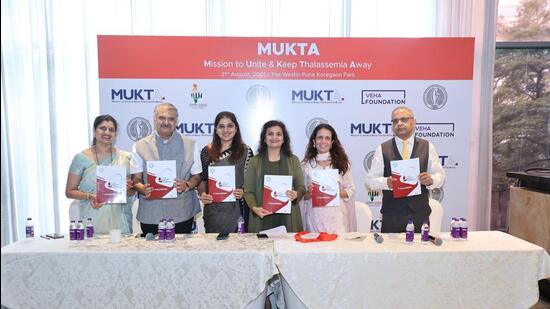
The Federation of Obstetric and Gynaecological Societies of India (FOGSI) and Veha Foundation, a non-profit company, unveiled the ‘Good Clinical Practice Recommendations’ (GCPR) for universal antenatal Thalassemia screening, prevention, and diagnosis on Thursday in Pune, as part of their Project MUKTA (Mission to Unite and Keep Thalassemia Away).
The guidelines were released in Pune by Dr Sunita Tandulwadkar, President of FOGSI, along with Dr Jaydeep Tank, Immediate Past President of FOGSI, Rumana Hamied, Director of Veha Foundation, and Dr Pooja Lodha, National Convenor of Project MUKTA.
Speaking at the launch, Dr Tandulwadkar said, “The word MUKTA means ‘liberated’, and that’s what we’re striving for - a future where no child has to suffer from a condition we have the power to prevent.”
The new guidelines recommend that every untested woman should undergo a simple blood test called HPLC to screen for Thalassemia within the first three months of pregnancy. If both partners are found to be carriers, doctors can provide early counseling and further testing to help prevent the birth of an affected child.
Project MUKTA will begin in 10 cities by the end of 2025 with continuing medical education (CME) sessions for doctors, and later expand to over 30 cities. Awareness campaigns, community sessions, and collaborations with medical colleges, professional organisations and diagnostic centres are also planned.
{{/usCountry}}Project MUKTA will begin in 10 cities by the end of 2025 with continuing medical education (CME) sessions for doctors, and later expand to over 30 cities. Awareness campaigns, community sessions, and collaborations with medical colleges, professional organisations and diagnostic centres are also planned.
{{/usCountry}}Rumana Hamied of Veha Foundation explained: “Behind every statistic is a life, a child, and a family. Our goal is not just to raise awareness, but to drive tangible action that liberates future generations from a preventable condition.”
To ensure effective implementation, the project will begin by training 70-80 doctors as master trainers who will work directly with doctors, facilities, and communities across India.