
 E-Paper



Veggie prices soar, consumers and vendors suffer
The surge in vegetable prices over the past three months has adversely impacted not only consumers but also vendors

 Prefer HTon Google


PUNE: The surge in vegetable prices over the past three months, with rates soaring as high as ₹220 per kg, has adversely impacted not only consumers but also vendors.
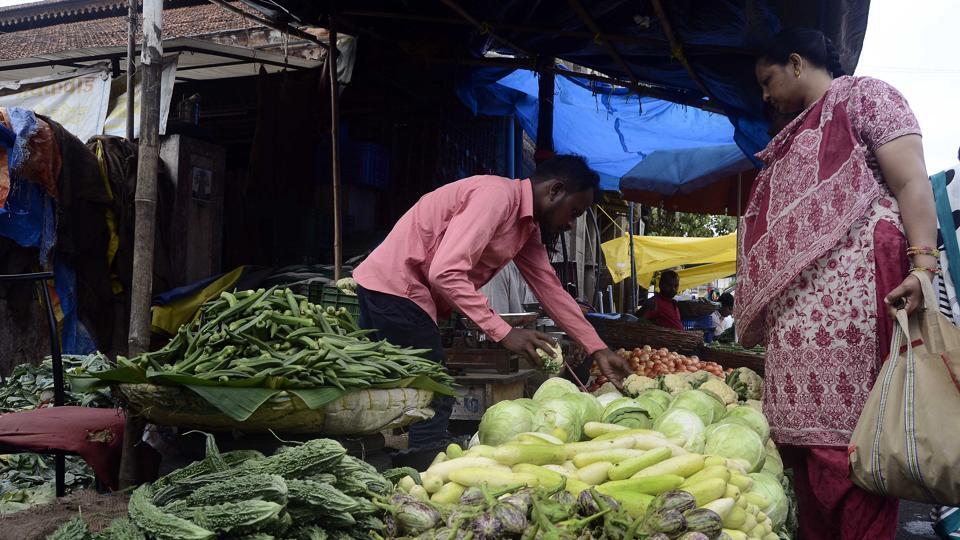
Among the vegetables that have become expensive are leafy greens, especially coriander and fenugreek leaves (methi), the prices of which have gone from ₹5 to ₹10 a bunch to ₹30 to ₹40 a bunch. The prices of green beans, peas, lemons and tomatoes, too, have escalated with green beans selling for ₹80 per 250 gm, up from the earlier ₹20 to ₹30 per 250 gm. The worst part is that these vegetables are household staples that are frequently used in a variety of dishes. Increasing vegetable prices have translated into increasing household expenses and consequently, increasingly tweaked diets.
Sunita More, a helper at a girls’ hostel in Pune, said, “All vegetables have gotten expensive. Those that were costing us ₹10 or ₹20 three months ago are now costing us ₹40 or ₹50. I have a family of eight to feed. It becomes too costly for us to have vegetables every day which is why we have switched to having pulses. It is a lot more affordable for us to do that.”
While the rise in prices hasn’t affected the vegetable expenditure of higher-income households, it hasn’t escaped unnoticed either. Mansi Joshi said, “The prices have gone up but they are still not that high that we cannot buy vegetables. The prices fluctuate a lot. It means a lot of bargaining for us but I understand that it is not the vendors individually raising the rates. The problem is with the supply. There was less rain and there is more inflation. It is costing a lot to produce vegetables so the rates have gone up.”
Pune is a city that primarily outsources its produce from the surrounding villages or cities, including Nashik and Narayangaon and from the neighbouring states of Gujarat and Karnataka. Since vegetables are not locally grown, an overall deficit in the quantity of produce negatively affects both availability and price. Currently, vegetable markets in Pune are seeing less stock because of inadequate rainfall last year as well as the intense heat this summer. Due to this, there has been added competition and increase in the prices of the available stock.
Tanveer Bagwan, a vegetable vendor in Shivajinagar said, “Since there is less supply, we have to spend quite a lot of time searching for vegetables in the market. It takes us longer to source the produce and even then, it is a question whether it is economical for us to purchase it at such high prices. Methi right now is very expensive. Even if we decide to buy our usual quantities, we have to think twice about whether all of it will be sold. Even if one or two bunches aren’t sold, we have to incur losses.”
Another vegetable vendor, based in Baner said, “High prices means there is more bargaining. Customers ask 10 vendors before they zero in on one. If the prices are high, there is less scope for us to earn. Prices of vegetables need to be ₹20 to ₹30 per 250g for them to be affordable to customers and profitable for us.”


