


 Live Score
 Cricket Teams
 Cricket Players
Aaron George provides the calm to steer India past Afghanistan's mammoth total in U19 World Cup semi-final
India U19 reached the U-19 World Cup final by chasing down Afghanistan's 310 with 53 balls to spare.

 Prefer HTon Google


India U19 punched their ticket to the U-19 World Cup final with a statement chase, hunting down Afghanistan’s 310 for 4 with 53 balls to spare and seven wickets in hand.
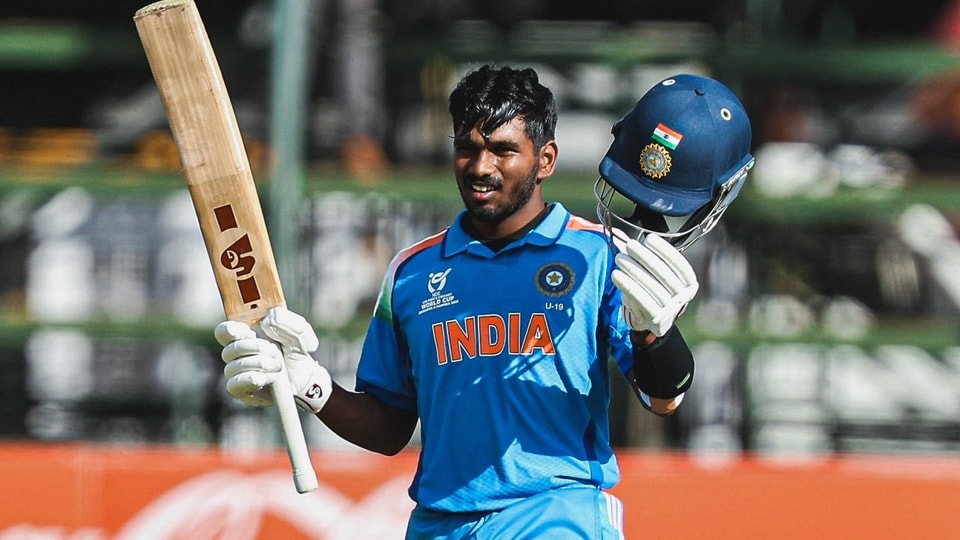
In a semi-final that threatened to become a pure batting slugfest, India’s top order made sure the contest never got away from them, finishing on 311 for 3 in 41.1 overs.
Afghanistan had set the tone with two centuries in a mammoth partnership that stretched India’s attack. Faisal Shinozada led the surge with 110 off 93 balls (15 fours), before being removed late, while Uzairullah Niazai stayed unbeaten on 101 off 86 (12 fours, two sixes). Their acceleration after the halfway mark pushed Afghanistan past 300 and left India a tricky chase on a flat track.
India’s bowlers did enough to prevent a 340-type scoreline. Deepesh Devendran (2/64) and Kanishk Chouhan (2/55) were the wicket-takers, striking at key moments as Afghanistan lost four wickets — including two in the final five overs — after reaching 265 for 2. The fall of wickets read: 53, 117, 265 and 293, with India forcing Afghanistan to reset before the last push.
Also Read: India U19 vs Afghanistan U19 Highlights: Aaron George's century helps IND to 311-run chase, reach 6th consecutive final
The chase, though, belonged to India’s batters — and to their clarity. Vaibhav Suryavanshi provided the early adrenaline shot, blasting 68 off 33 balls with nine fours and four sixes. His assault put the asking rate in India’s pocket, even though Nooristani Omarzai had him caught, and later also removed the captain.
At the other end, Aaron George delivered the innings that made the chase feel routine: 115 off 104 balls, stitched together with 15 boundaries and two sixes. He absorbed the quieter phases, took the singles on offer, and kept the pressure pointed the other way. When Afghanistan finally found him through Wahidullah Zadran, it came too late to change the direction of the game.
Captain Ayush Mhatre added a composed 62 off 59 (five fours, four sixes), ensuring India didn’t lose shape after the first burst. Omarzai’s 2 for 64 was Afghanistan’s best spell, but India’s top three had already cracked open the chase.
The finishing touches were calm. Vaibhav Malhotra’s unbeaten 38 off 47 guided India home without drama, with Vedant Trivedi alongside him at the end. India crossed the line with nearly nine overs unused. Afghanistan kept competing — Zadran’s 1 for 67 and Abdul Aziz’s 10-over spell were part of that — but India’s chase never drifted into desperation.
In the end, India transformed a high-pressure semi-final into a controlled pursuit — and booked their place in the final with momentum and muscle. They will now play England in the title on 6th February, 2026 at the Harare Sports Club, Zimbabwe.


