Anaya Bangar, who underwent gender-affirming surgery in March this year, is now eligible to play community cricket in Australia. The former Mumbai Under-19 cricketer received clearance from Cricket Australia after approaching the governing body earlier this summer when she received no response to a similar request sent to the Board of Control for Cricket in India.
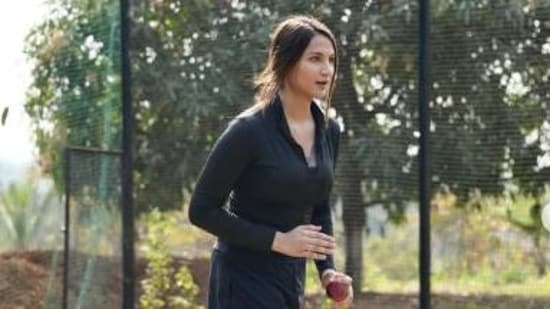
“It is a great day for me, especially after knowing the fact that I can play cricket. There was a stage when I thought I would never play cricket again, but thanks to Cricket Australia, it has given me another chance,” Anaya told The Indian Express.
The 25-year-old said she had written to the BCCI last year seeking clarity on whether transgender athletes could compete in women’s cricket. Her request came two years after the International Cricket Council introduced regulations preventing transgender women who have undergone male puberty from participating in elite women’s international cricket.
When she received no response from the Indian board, Anaya approached Cricket Australia in June this year.
CA informed her that she was immediately eligible to play community cricket. However, for participation in elite competitions such as the Women’s Big Bash League (WBBL), she will still have to satisfy its testosterone-related eligibility requirements.
Under Cricket Australia’s Transgender and Gender Diverse Players in Elite Cricket Policy, a player’s serum testosterone concentration must remain below 10 nmol/L for at least 12 months to be eligible for elite cricket.
{{/usCountry}}Under Cricket Australia’s Transgender and Gender Diverse Players in Elite Cricket Policy, a player’s serum testosterone concentration must remain below 10 nmol/L for at least 12 months to be eligible for elite cricket.
{{/usCountry}}Responding to Anaya’s request, Cricket Australia Head of Integrity Jacqui Partridge wrote: “Until March 2027, you remain eligible to participate in Premier Cricket competitions in any State or Territory of Australia. As Premier Cricket is classified as Community Cricket rather than Elite Cricket under the Policy, your participation in those competitions is not affected by this determination.”
“Your eligibility for Elite Cricket from that date (March 2027) is conditional upon you providing a blood test upon your arrival in Australia confirming that your serum testosterone concentration remains below 10 nmol/L and that you continue to satisfy the Policy’s eligibility requirements,” Partridge added.
A top BCCI official, however, told the newspaper that the Indian board currently has no provision covering such a case.
“When it comes to the ICC, they have said no to it. BCCI is yet to decide what can be done in such cases. As this is the first time such a case has come up, the board is yet to take a stand. Especially on allowing them in domestic cricket,” the official said.
Anaya, who is still recovering from her surgery, is now looking for a club in Australia to continue her cricket career.
Her push for a formal policy is not new. In a social media post last year, Anaya called on the BCCI and ICC to discuss a framework for transgender athletes based on scientific evidence rather than “outdated perceptions”.
She also revealed that she had participated in a research project conducted by Manchester Metropolitan University’s Institute of Sport, which examined the effects of hormone therapy on her strength, endurance, hormone levels and glucose levels.
“After I published my athlete testing report and everything else, BCCI stayed quiet about it. Whereas Cricket Australia actually read my report, went through all my medical history and had a proper team assessing my case,” Anaya said.
“I approached Cricket Australia and they gave me clearance to play in terms of fairness and inclusivity. They asked for my blood test report and testosterone test report. They asked for the papers for the surgeries that I’ve done. They asked me for my Manchester University report which I had published over a year ago.”
Anaya believes that meeting the remaining eligibility requirements could eventually open the door to elite cricket.
“If everything goes well and I perform, then I have a chance to play in the WBBL,” she said.
Anaya began her transition from man to woman in 2022 and sought counselling to guide her through the process before moving to the United Kingdom, where she explored hormone replacement therapy.
The journey, she said, has been painful both physically and emotionally, forcing major changes across almost every part of her life.
“Honestly, the journey since the beginning was very painful, not just physically, but emotionally. My whole life changed — family dynamics, friendships, career, social focus, everything changed,” she said.
“And to be honest, I would do this again because transitioning has made me comfortable and happier in my own skin. I wouldn’t trade back for anything else. I would have had to give up cricket as well. And now with Cricket Australia doing this, I am just very happy.”