


 Live Score
 Cricket Teams
 Cricket Players
Ashutosh Sharma makes INR 14.52 lakh per ball as DC finisher turns RR's missed chance into painful defeat
Delhi Capitals' Ashutosh Sharma scored 18 runs off 5 balls, leading to a crucial win against the Rajasthan Royals.

 Prefer HTon Google


Delhi Capitals entered the final stretch of their chase with enough control to believe, but not enough safety to coast. David Miller’s dismissal at 18.1 left them needing 19 runs off 11 balls against Rajasthan Royals, with the game still carrying one late twist if RR found a tight over or another wicket.
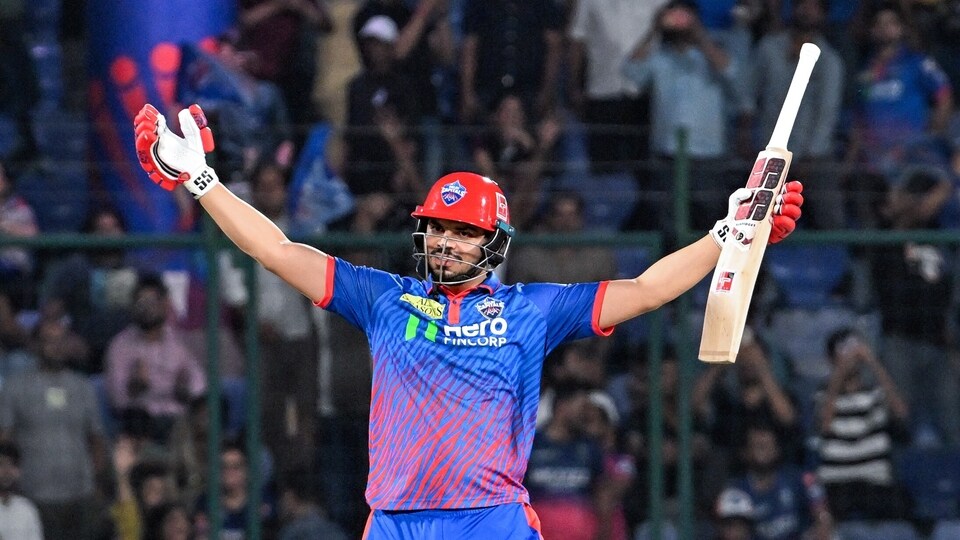
Ashutosh Sharma walked in with no time to settle, no soft entry point and no room for a slow read of the pitch. Five legal balls later, the chase was over. His 18 not out turned a live finish into a closed result, and in the monetary ledger, those five balls produced one of the sharpest finishing returns of the match.
The finishing premium behind Ashutosh’s five-ball burst
Ashutosh’s innings was valued at around ₹1.20 crore in gross match value. After accounting for his match cost of ₹47.50 lakh, the knock generated a profit of ₹72.62 lakh for the Delhi Capitals.
The cleanest way to understand the innings is through its per-ball return. Ashutosh faced five legal deliveries. His net profit from the innings was ₹72.62 lakh. That works out to roughly ₹14.52 lakh in profit per ball faced.
That figure captures the price of finishing under pressure. A short innings at the back end of a chase does not have the cushioning of time. There is no repair phase if the batter misses. There is no long runway to recover from a dot ball. Each delivery either cuts the chase down or gives the bowling side another grip on the game.
Ashutosh cut it down immediately.
Delhi needed 14 off 8 when he faced Brijesh Sharma at 18.5. The six he hit from that ball changed the finish. The equation dropped to 8 off 7, and Rajasthan’s defence lost its last real cushion. Ashutosh then took a single off 18.6, keeping control with DC going into the final over needing seven.
Adam Milne still had a narrow path for RR. A dot first ball would have dragged tension back into the chase. A wicket would have brought panic into the final over. Ashutosh gave him neither. He struck four off 19.1, reducing the equation to three off five balls, then hit six off 19.2 to end the match with four deliveries unused.
The scorecard records 18 off 5. The ledger explains why those 18 runs were expensive. They came at the moment when Delhi needed certainty, not decoration.
RR’s wasted value made the finish more damaging
Ashutosh’s burst also has to be read against Rajasthan’s own missed opportunity earlier in the game.
Vaibhav Sooryavanshi had given RR a massive early return with the bat. His 46 off 21 was worth around ₹2.11 crore in batting value. Rajasthan were 75/1 after the powerplay and 89/2 when he fell at 7.3 overs. That start gave them the shape of a total that could have forced Delhi into a far more desperate chase.
RR finished on 193/5. It was a strong score, but the innings did not fully capitalise on the platform. The lower order did not turn the early acceleration into a target that placed the chase beyond Delhi’s control. Rajasthan had the launch, but not the final premium.
Ashutosh turned late risk into immediate return
The value of Ashutosh Sharma’s innings lies in its compression. He did not score enough runs to dominate the scorecard. He scored enough at the exact point where the match demanded a finisher.
Delhi’s top and middle order had done the bulk of the work. KL Rahul, Abishek Porel and Axar Patel kept the chase moving through its main body. Ashutosh entered the settlement phase. His role was not to build the chase; it was to prevent the chase from becoming a negotiation.
That is why the ₹14.52 lakh-per-ball figure works as the central hook. It translates a five-ball cameo into a performance-return number that reflects timing, pressure and outcome. In a normal innings, 18 runs can disappear into the larger score. In this chase, those 18 runs arrived when each ball carried a direct result value.
For Delhi, Ashutosh was a high-return closing asset. For Rajasthan, he became the final cost of an innings they had not stretched far enough and a chase they had not squeezed tightly enough.
RR had already found value through Vaibhav’s bat. They had also leaked part of it through his misfield and their inability to build a safer total. Ashutosh then entered late and made every remaining Rajasthan mistake more expensive.
His 18 off 5 was worth around ₹1.20 crore in gross value. His profit stood at ₹72.62 lakh. Each ball he faced returned roughly ₹14.52 lakh in profit. That is the monetary story of the finish. Delhi did not need a long innings. They needed five balls to settle the bill. Ashutosh paid it in full.
Method note
The valuation uses a match-impact model that measures batting value through runs, scoring tempo, match phase, chase equation and pressure context, then converts that impact into a rupee estimate using the player’s match-cost and rating layer. Ashutosh Sharma’s profit-per-ball figure is calculated by dividing his total innings profit by the five legal balls he faced.
These values are analytical estimates, not official IPL figures or actual payments. They are meant to measure match value and performance return within this model.


