


 Live Score
 Teams
Teams Players
Vaibhav Sooryavanshi's INR 2.11 crore profit night wasted as INR 22 lakh fielding mistake leaves behind painful scar
Rajasthan Royals suffered defeat despite Vaibhav Sooryavanshi's explosive 46 runs, valued at ₹2.11 crore.

 Prefer HTon Google


Rajasthan Royals found a ₹2-crore batting return from a 15-year-old and still left the night with defeat. Vaibhav Sooryavanshi’s 46 off 21 balls gave RR the kind of powerplay surge that usually turns a T20 innings into a position of control, but the value he created with the bat was allowed to drift.
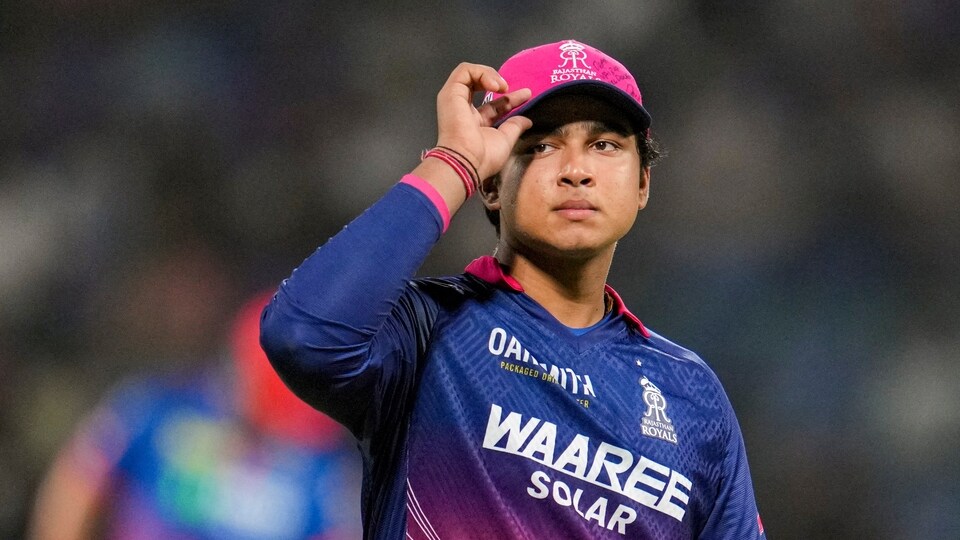
His night also carried a visible scar. A misfield in the 14th over of Delhi Capitals’ chase gave away three extra runs, cut into his ledger and softened the equation for the chasing side. It did not diminish his batting value, but it made his match a sharper study of how one player can generate profit and still end up on the wrong side because the team around him fails to close the deal.
Vaibhav’s bat gave RR a ₹2.11 crore surge
Vaibhav Sooryavanshi’s innings was worth 60.30 batting impact points in RR’s ledger. With his manual rating multiplier for the game, that translates to roughly ₹2.11 crore in batting value.
His match cost, based on his ₹1.10 crore season price spread across the expected league window, stands at around ₹7.86 lakh. That means his batting alone returned nearly 27 times his per-match cost.
That is the scale of the value RR received before the chase even began.
The innings came with the right violence. Vaibhav hit 5 fours and 3 sixes. His boundary balls created real money. Those eight scoring shots alone were worth more than the total value of many full T20 innings because they provided RR with speed, field disruption, and early control.
Rajasthan were 75/1 after the powerplay. Vaibhav had made 42 of those runs from 16 balls. By the time he fell at 7.3 overs, RR were 89/2. The innings had already launched.
At that stage, RR did not need rescue. They needed conversion.
Also Read: ‘My last T20 will be in Chennai’: MS Dhoni's retirement shadow looms over CSK's final league game
RR failed to turn the launch into a winning total
Rajasthan finished on 193/5 after suffering a major middle-order collapse. A side reaching 89/2 in 7.3 overs has room to push beyond the merely competitive zone. RR had early tempo, wickets in hand and a teenage opener who had already damaged Delhi’s plans. The lower order had the job of turning that platform into a total that would force Delhi to chase under constant stress.
They did not do enough.
The innings collapsed, and that is where the loss begins to hurt RR’s ledger. Vaibhav had already done the expensive work. He had brought powerplay acceleration at an extremely low cost base. Rajasthan’s middle and lower order needed to protect that investment by adding a finishing premium. Instead, Delhi were left with a chase that remained breathable.
The defeat, therefore, does not sit on Vaibhav’s bat. It sits on Rajasthan’s failure to turn his early value into match control. RR received a premium opening burst and still handed Delhi a target that could be hunted with one partnership and a few late blows.
The misfield cut ₹22.45 lakh from his night
Vaibhav’s fielding lapse still needs to be counted. At 13.5 in Delhi’s chase, Axar Patel faced Yash Punja. Delhi were in a demanding phase of the chase. The ball should have been a single. Vaibhav’s misfield turned it into four.
That error gave Delhi three extra runs.
The match equation moved from what should have been 68 needed off 37 balls to 65 needed off 37. The required rate dropped from roughly 11.03 per cent to 10.54. In a chase moving into the final six overs, that was a real pressure release.
The direct player-level debit is around 6.42 impact points. In monetary terms, using Vaibhav’s match conversion rate, that cost him roughly ₹22.45 lakh.
His batting value stood around ₹2.11 crore. After the fielding debit, his net player worth drops to around ₹1.89 crore. His profit for the game falls from roughly ₹2.03 crore to about ₹1.81 crore.
That is still a massive surplus. The mistake stained his night. It did not define it.
The broader match-swing view is even sharper. Because the ball gave extra batting value to Delhi and removed control value from Rajasthan’s bowler, the full delivery swing comes to about 12.18 impact points, or around ₹42.62 lakh in match-value terms.
That does not make Vaibhav the reason RR lost. It shows how a strong personal ledger can still contain an expensive leak.
RR’s bigger problem was value wastage
Sooryavanshi’s game had two financial truths. His bat gave Rajasthan one of the cleanest value wins of the match. His misfield handed Delhi a costly release of pressure. Even after that deduction, RR still received more than enough value from him for a 15-year-old player priced at ₹1.10 crore.
The team's result exposes the deeper issue. Rajasthan did not lose because Vaibhav failed to produce. They lost after receiving a huge early return from him. His innings created speed. His price made that speed even more valuable. His dismissal still left RR with a platform that demanded a heavier finish.
Delhi were allowed back into the game because RR’s total did not fully reflect the start they had been given.
That is why this match belongs in the value-wasted category. Vaibhav created a ₹2.11 crore batting surge, gave ₹22.45 lakh back through a fielding lapse, and still finished as one of Rajasthan’s biggest profit points of the night.
RR’s defeat made the innings feel smaller than it was. The ledger says something harsher about the team. Rajasthan found a teenage goldmine at the top and still failed to cash the cheque.
Method note
The valuation uses a match-impact model that assigns player impact to batting, bowling, fielding and match context, then converts those points into a rupee estimate using the player’s match-specific rating layer and cost base. Vaibhav’s batting worth is calculated from his scoring impact, boundary value, innings phase and manual performance rating. His fielding debit is calculated from the confirmed 13.5-over misfield, with the ball corrected from four runs to its likely single-run outcome.
These values are analytical estimates, not official IPL figures or salary adjustments. They are meant to measure match value and opportunity cost within this model, not actual money earned or lost by the player or franchise.


