Despite the draw in the Colombo Test on Thursday, India captain Shubman Gill is confident that it’s not the end of the road for them as far as the World Test Championship (WTC) final is concerned. If India had won, which they should have after enforcing the follow-on, they would have moved into fourth position on the WTC table ahead of Bangladesh, and then their job in the remaining seven games (two against hosts New Zealand in November and five against the visiting Australia early next year) would have been easier.
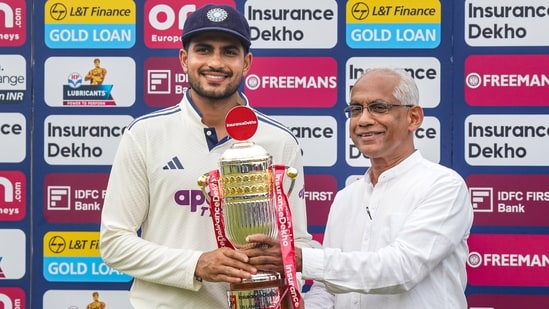
However, Gill is not overly worried. “I still think we've got a pretty good chance to qualify for the WTC if we play the New Zealand series well and then hopefully by the time Australia series comes and we just have to win the series, if we're in a situation where we just have to win the series I think we'll be in a good position to qualify for the World Test Championship,” he said in the post-match press conference.
Also Read: Tough days ahead: How the Colombo Test draw has dented India’s chances for the WTC final
Deep Dive
How did the draw in Colombo affect India's chances in the World Test Championship?
What needs to happen for India to qualify for the World Test Championship final after the Colombo Test?
What factors contributed to India's inability to secure a win in the Colombo Test?
Gill also pinpointed what led to the team’s ineffectual show on day five. That the pitch started behaving weirdly, which compromised Indian bowlers not a little. Following on, Sri Lanka had resumed day five on 229/6 but closed on 429/9d at which point both sides shook hands on a draw with not enough overs left for India to chase down a target upwards of 200.
{{/usCountry}}Gill also pinpointed what led to the team’s ineffectual show on day five. That the pitch started behaving weirdly, which compromised Indian bowlers not a little. Following on, Sri Lanka had resumed day five on 229/6 but closed on 429/9d at which point both sides shook hands on a draw with not enough overs left for India to chase down a target upwards of 200.
{{/usCountry}}“I think their batsmen played very well and generally when you play on day 3, 4, 5, we felt that the two modes of dismissal, lbw and bowled, were out of the game because the ball was moving with a lot of slowness and bounce, so there was only one mode of dismissal left if the batsmen were defending: that was catch either at silly point, short leg or in the slips. So in such a situation, we attacked a lot in the beginning, then there was a little pressure on us, we came back in the game, but I think the wicket got slower this morning,” he said.
“It was not that the ball was not moving, the ball was spinning but the ball that we felt was turning, the wickets were not in play at all so as a batsman, if you know spinners do not have two modes of dismissal in play, then it becomes a little easier to bat unless you are playing shots. If you are not looking to make runs then it becomes difficult to take a wicket so I think we tried our best, they played also really well. It's not that the wicket was very flat, they played also really well and on day 4, we thought that we created chances, we created a lot of catches, 3-4 catches here and there. If there was a little more momentum and pressure, if the wickets had come in then maybe the result could have been different,” he added.