


 Live Score
 Cricket Teams
 Cricket Players
From troll magnet to trusted pick: Harshit Rana turns Gautam Gambhir's most debated call into a tactical masterpiece
Harshit Rana has evolved from a doubted selection to a key ODI player, showcasing wicket-taking abilities and lower-order batting contributions.

 Prefer HTon Google


Harshit Rana has spent the last year wearing two jerseys at once: India’s, and the invisible one stitched from public doubt. Every time his name appeared on the teamsheet, the conversation moved around “why him?” and “why again?”, with Gautam Gambhir dragged into the argument as much as the bowler himself.
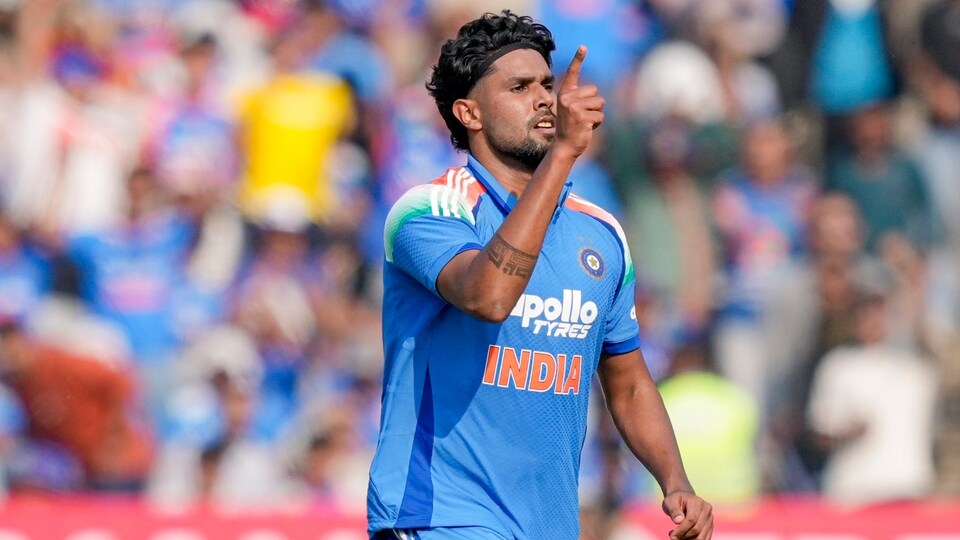
The last few months have finally started to flip that script. Not because Rana has suddenly become flawless, but because the returns are no longer isolated. Wickets in clusters, spells that change the shape of a game, and a growing lower-order batting value, this is beginning to look less like persistence for persistence’s sake, and more like a plan taking form.
Why Gambhir kept going back to Rana
Rana isn’t the classic safe ODI pick. He’s not built for the tidy, low-risk middle-overs job description that flatters economy charts. His appeal is more specific: steep bounce, hard lengths, and wicket-taking ability that makes captains keep in attacking roles even when the runs leak.
That is precisely why the backing mattered. India’s ODI history is full of bowlers who can deliver fine spells; it is rare to find pacers who can take something away from set batters without needing everything to swing. Gambhir’s selection logic, at least in Rana’s case, appears grounded in simple belief: you are going to bleed a few boundaries anyway in modern ODIs, bleed them while hunting for wickets.
The Evidence in favour of Gambhir’s instincts
The point isn’t that Harshit Rana has been consistently brilliant. The point is that he has produced enough match-shaping moments across series to justify repeated selection, and those moments have come in different conditions.
He announced his ODI presence early, with a three-wicket haul in debut against England in Nagpur in February 2025. Debuts can be noisy and forgettable; this one carried a clear message - he can strike at international level.
The more defining turn came in Australia later in 2025. One quiet outing in Perth could easily have been used as an exit sign; instead, the management stayed the course. In Adelaide, he responded with a two-wicket spell that kept him relevant across the innings.
Then came the spell that effectively changed his ODI perception: a four-wicket haul in Sydney that didn’t simply pad figures, but shaped the match by repeatedly removing batters and disrupting momentum.
Back home against South Africa at the end of 2025, you saw the honest version of a young ODI quick: impact mixed with learning curves. There was another three-wicket haul in Ranchi - again reinforcing his wicket-taking identity. There was also an expensive night in Raipur, the kind that happens to fast bowlers in high-scoring ODIs where even good deliveries get punished. And then there was a controlled, wicketless spell in Visakhapatnam that showed he can bowl tight overs too, even when wickets don’t arrive.
This is what the process actually looks like on the field: not a straight line upward, but a player being persisted with because the upside repeatedly shows up in real games, not just in nets, not just in domestic cricket.
That moment that sharpened the story
The first ODI against New Zealand in Vadodara will be remembered for his batting. Rana’s 29 off 23 wasn’t a casual cameo in a comfortable chase. It came when the finish tightened, when the required rate was no longer polite. And when a lower-order batter is expected to hang around rather than participate. He did more than hang around. He took calculated risks, ran hard, and helped finish the chase with KL Rahul.
That innings matters because it reveals the second part of Gambhir’s bet. Rana isn’t being viewed as a bowler who might occasionally swing his bat; he is being shaped into a lower-order contributor who can meaningfully add 20-30 runs.
The domestic hints have always been there. A fast bowler capable of a number nine hundred in red-ball cricket is a big clue. Vadodara was the ODI transition of that clue - under pressure, in a chase, with consequences.
What Rana’s growth changes for India’s ODI balance
This is where the logic becomes practical. If you number eight can credibly contribute with the bat, your top-order can structure chases differently. Your team can afford an extra attacking bowler without fearing a cliff at the end of the batting card. And the bowler himself attacks more freely because his value to the XI isn’t tied to a single spell.
That is the hidden payoff of backing a multi-skill profile through early turbulence: you don’t just get wickets; you get flexibility.
The verdict so far
Rana still has ground to cover - especially on consistency and economy across long ODI spells. But the evidence over the last year is no longer a single-match argument. It is a set of recurring signs: wicket-taking bursts in multiple series. A tour-defining spell abroad, and now a pressure cameo with the bat that directly influenced a chase.
This is the point where the conversation should evolve. Not to “Gautam Gambhir was right” as a victory lap, but to something more useful for India: Harshit Rana is beginning to look like the kind of ODI cricketers managements back for a reason - because he can change games in more than one way.


