


 Live Score
 Teams
Teams Players
India win sixth Under-19 World Cup after Vaibhav Sooryavanshi’s once-in-a-lifetime knock destroys England
The Indian U19 team led by Ayush Mhatre defeated England in the final of the 2026 World Cup to win their sixth title, the most in the history of the tournament.

 Prefer HTon Google


Ayush Mhatre and his boys created history by defeating England in the U19 World Cup 2026 final at the Harare Sports Club in Zimbabwe. India now have a record six U19 World Cup titles under their belt, the most in the history of the tournament. The Indian team, led by Vaibhav Sooryavanshi’s monumental 175, put on an epic show as they marched on to win the silverware.
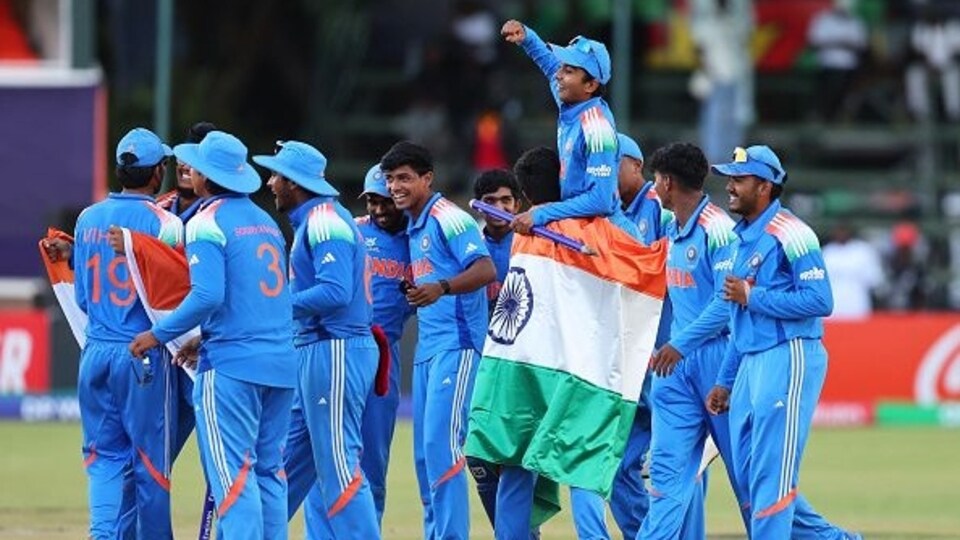
India won the toss for the final and opted to bat first. They lost the hero from the semi-final, Aaron George early, but that did not stop them from blazing away to a dashing start. Vaibhav Sooryavanshi took the onus on himself to take India ahead in the competition.
Mhatre provided support to Sooryavanshi's destruction
Sooryavanshi's fireworks left the English team clueless, with the captain Thomas Rew looking for different plans to bring back some sanity into the progression of the game. But there was no stopping Sooryavanshi as he kept tumbling records while playing a destructive knock. The Indian captain, Ayush Mhatre played the perfect supporting role scoring 53 runs off 51 deliveries.
After the dismissal of Mhatre, Sooryavanshi unleashed hell on the English batters as he upped the scoring rate further. With the teen sensation at the crease, it looked like India would go past 500 by the end of their 50 overs. Things look all settled for Sooryavanshi to score a double hundred and take down many more records. However, Manny Lumsden ultimately ended Sooryavanshi’s craziness in the middle as the batter walked back after scoring 175 runs off just 80 deliveries.
After the departure of Sooryavanshi, there was another 50 runs partnership strengthening India’s position further in the game. However, soon after that England made a comeback and picked up three wickets in a span of just six runs. But the lower order batters in the Indian line-up showed enough resistance to take India’s score to a record 411/9 at the end of the 50 overs.
The chase was always going to be challenging given the scale of the chase. But England drew inspiration from how easily India chased down the 310 runs against Afghanistan in the semi-final at the same venue.
Ambrish provided India the first breakthrough, with England stationed at just 19. It looked like Mhatre and his boys would make light work of Rew and his mates. But Dawkins stood tall at one end, while Ben Mayes and Thomas Rew provided the firepower at the other end. However, the biggest positive for India was that they managed to pick up the key wickets at the correct stages.
Caleb Falconer stood tall under pressure
It was the 21st over of the chase that provided the swing in momentum in India’s favour. At the start of the over England were competing with the score past 170 and seven wickets still in the bank. But they lost the set Dawkins and Ralphine Albert in that over and India sensed the opportunity. The Boys in Blue picked up two more wickets conceding only three runs and took the punch out of England’s chase.
With seven wickets down for 177, India could see the end of the tunnel. It was at this stage that Caleb Falconer and James Minto decided to test India’s patience. While Falconer played some delightful shots, Minto kept rotating the strike. Their partnership increased the annoyance of the Indian team, with Falconer bringing up a brilliant half-century under pressure.
The partnership between Falconer and Minto worked 92 runs and it looked there could be a late twist in the tale. However, Ambrish came to the rescue of the Indian team once more. He picked up the wicket of Minto and took India closer to the historic win.
But Caleb Falconer stood tall between India and the win. Even with the last man at the other end, Falconer kept the chase interesting. He scored a brilliant hundred, but was at last dismissed by Kanishk Chouhan for 115 off 67 deliveries. England's innings ended at 311 as India won the match by 100 runs.


