


 Live Score
 Cricket Teams
 Cricket Players
Inside PCB’s U-turn: How weeks of boycott threats quietly paved the way for India vs Pakistan T20 World Cup blockbuster
In just about 10 days, the PCB’s hardline position softened, culminating in Monday’s reversal and the revival of world cricket’s biggest rivalry.

 Prefer HTon Google


After weeks of chaos, a five-hour-long meeting in Lahore and a day of frenzied statements, the commercial centrepiece of the 2026 T20 World Cup, India vs Pakistan, is officially back on the table and will go ahead as scheduled on February 15 in Colombo. The confirmation came late on Monday evening after Pakistan Prime Minister Shehbaz Sharif gave the green signal for the team’s participation in the Group A match, shortly after the ICC shared an update on its Lahore meeting with PCB chairman Mohsin Naqvi. The meeting was also attended by Bangladesh Cricket Board (BCB) president Aminul Islam.
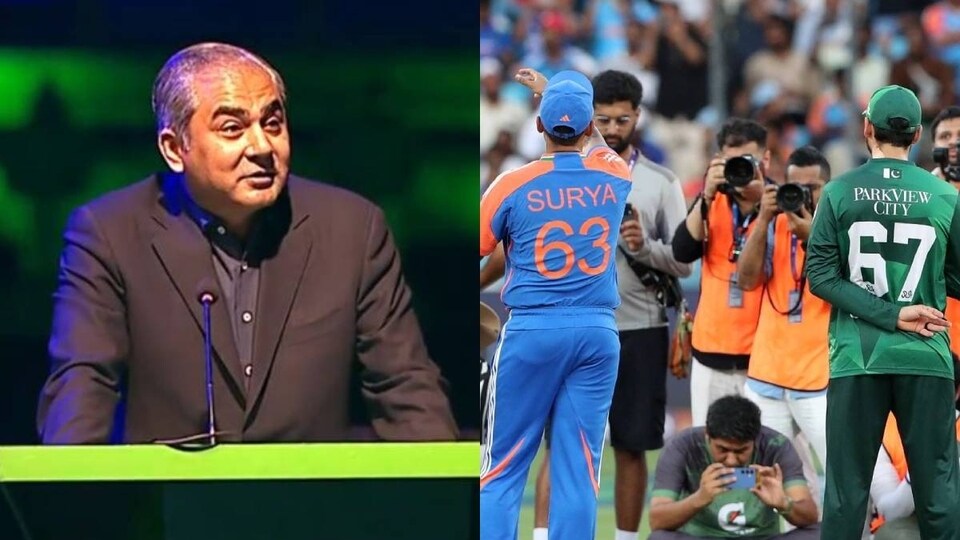
The growing optimism around a possible Pakistan U-turn turned into confirmation over the course of Monday evening. Earlier, Naqvi and former PCB chairman Najam Sethi hinted at “good news” during the PSL auction event in Lahore. This was followed by an official BCB release in which Islam urged Pakistan to roll back its withdrawal stance and play the India match “for the benefit of the entire cricket ecosystem.”
Minutes later, the ICC described its meeting with the PCB and BCB as “open, constructive and congenial,” confirming that no sanctions would be imposed on Bangladesh. The long evening finally ended with Pakistan formally confirming its participation, with the government stating that the decision was taken following requests from multiple ICC member boards, all of whom cited the significant financial impact a boycott would have had on other nations.
“In view of the outcomes achieved in multilateral discussions, as well as the requests of friendly countries, the Government of Pakistan hereby directs the Pakistan National Cricket Team to take the field on February 15, 2026, for its scheduled fixture in the ICC Men’s T20 World Cup,” the statement read. “This decision has been taken to protect the spirit of cricket and support the continuity of the global game.”
How PCB softened its India stance to revive the T20 World Cup blockbuster
Over a fortnight ago, Naqvi first cast doubt on Pakistan’s participation in the T20 World Cup, a decision taken in solidarity with Bangladesh, whom Pakistan felt were “unfairly” removed from the tournament after the ICC rejected their request to move group-stage matches out of India citing security concerns.
On February 1, the Pakistani government announced that the team would play in the tournament, but not against India. While the ICC awaited a formal confirmation from the PCB, it warned of repercussions if Pakistan pulled out of the marquee clash. Pakistan, however, did not relent.
Prime Minister Sharif later reiterated the stance publicly, making the boycott threat all but official. Yet, less than ten days later, the PCB’s hardline position softened, culminating in Monday’s reversal and the revival of world cricket’s biggest rivalry.
February 3 – The ICC and PCB engaged in back-channel communications as the governing body stepped up efforts to ensure the showpiece Group A match could go ahead. ICC deputy chair Imran Khwaja and Emirates Cricket Board chairman Mubashir Usmani, who is also an ICC board member, reportedly held multiple calls and meetings with PCB chief Naqvi and Salman Naseer, the PSL head and a senior adviser to Naqvi. While these efforts had begun a week earlier, they intensified after the Pakistani government’s tweet, which left influential ICC member boards, led by the England and Wales Cricket Board (ECB) and Cricket Australia (CA), deeply displeased with the boycott stance.
February 5 – Sri Lanka Cricket (SLC) president Shammi Silva wrote to Naqvi urging him to reconsider forfeiting the match against India, warning of the catastrophic economic fallout the decision could trigger in Sri Lanka, given the extensive arrangements already in place for the marquee fixture. The PCB was also reminded of Sri Lanka’s past cooperation, including going on tours of Pakistan during sensitive and challenging periods.
February 6 – Naqvi reportedly assured his Sri Lankan counterpart that he would consult the Pakistan government and respond.
February 7 – Moments after Pakistan’s nervy win over the Netherlands in their T20 World Cup opener, a PTI report revealed that the PCB had formally communicated with the ICC, requesting invocation of the ‘Force Majeure’ clause to justify a boycott of the India match. The ICC, however, remained unconvinced and sought justification, along with proof that all possible mitigation measures had been explored.
February 8 – Khwaja, appointed as mediator, arrived in Lahore for a meeting with Naqvi and Bangladesh Cricket Board (BCB) president Islam. The meeting stretched over five hours, during which Pakistan placed multiple demands on the table, though neither party publicly disclosed the outcome.
February 9 (morning) – Following Sri Lanka, the Emirates Cricket Board also wrote to the PCB, urging it to reconsider its stance. The ECB warned that a boycott “would hurt the game” and that several member nations, particularly Associate sides, would suffer significant financial consequences.
February 9 (evening) – Naqvi met Prime Minister Shehbaz Sharif once again to brief him on the Lahore discussions and the appeals from the BCB, SLC and Emirates board. Sharif also held a phone conversation with Sri Lankan President Anura Kumara Dissanayake, who reiterated the request for Pakistan to play the fixture.
Later, the Pakistani government clarified that the decision to reverse the boycott was taken “with the aim of protecting the spirit of cricket, and to support the continuity of this global sport in all participating nations.”


