Another Asia Cup final ended with India as champions but without the trophy being formally handed to them, as the uneasy stand-off involving Asian Cricket Council president Mohsin Naqvi returned to Dubai on Sunday night.
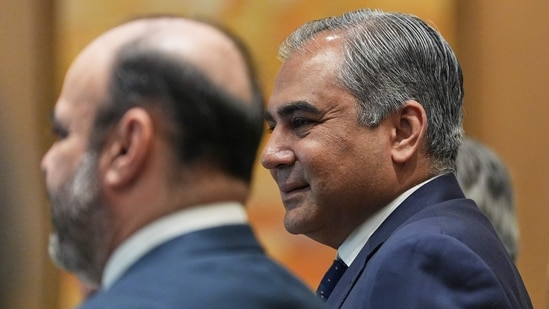
India had comfortably beaten Sri Lanka by 72 runs to win the Women's Asia Cup, but the post-match presentation was delayed as the champions remained unwilling to receive the trophy from Naqvi. The Pakistan Cricket Board chairman, who is also Pakistan's Interior Minister, stayed at the venue for the ceremony, but India's position did not change.
It was a remarkable repeat of what had unfolded after the men's Asia Cup final last year, when India's victorious side had also refused to accept the trophy from Naqvi. The latest episode once again brought his multiple roles — spanning cricket administration and politics — under the spotlight.
Deep Dive
Why did the Indian women's cricket team refuse to accept the Asia Cup trophy from Mohsin Naqvi?
What does Mohsin Naqvi's dual role in politics and cricket imply for Pakistan cricket?
How has the India-Pakistan relationship affected cricket events like the Asia Cup?
Former India batter Mohammad Kaif has now questioned whether Naqvi can realistically fulfil his responsibilities in cricket while occupying such a significant political position in Pakistan. “Are they living in the past? Don't they have a reality check? Mohsin Naqvi is in politics. He is the boss of the board. It's not like that,” Kaif said on Cricbuzz. If you are in cricket, then you have to be in cricket. You have to go to two places. It's a difficult job. You won't be able to give time. You have so many political commitments. You have to run the cricket board. You have to see what's going on inside. You have to stop at one place and invest time. If you look at any body, if you compare it with the BCCI, or look at it from the outside, nobody does two things.”
Kaif questions Naqvi's dual role
{{/usCountry}}Kaif questions Naqvi's dual role
{{/usCountry}}Naqvi's position has increasingly made him one of the central figures whenever cricket and the strained India-Pakistan relationship collide. Apart from heading the PCB and ACC, his responsibilities in the Pakistan government mean his presence at cricketing events is inevitably viewed through a political lens as well.
Kaif argued that running a cricket board itself requires sustained attention and questioned whether somebody with substantial responsibilities elsewhere could devote enough time to the job. “Either you are a politician, or you are a cricketer. You have to balance it. You have to focus on one thing,” Kaif said.
The former India international then turned his attention towards Pakistan cricket itself, insisting that the country's problems cannot simply be attributed to a shortage of quality players. Pakistan, according to Kaif, continues to produce plenty of natural talent. What it requires is a stronger system and people capable of developing those players once they enter the professional structure. “Players aren't bad. You need people who make players. There is a lot of talent in Pakistan,” he added.
Kaif's comments have come immediately after another uncomfortable night for the ACC president. The Women's Asia Cup was supposed to conclude with India's players celebrating another continental title, but the trophy ceremony instead became one of the biggest talking points of the final. And with essentially the same stand-off now unfolding at consecutive Asia Cups, the controversy surrounding Naqvi's position in cricket administration is unlikely to disappear with the end of the tournament.