Sunrisers Hyderabad have already begun to address the issues that dogged them during IPL 2026. They have been one of the busiest teams in the trade market, having already completed three deals.
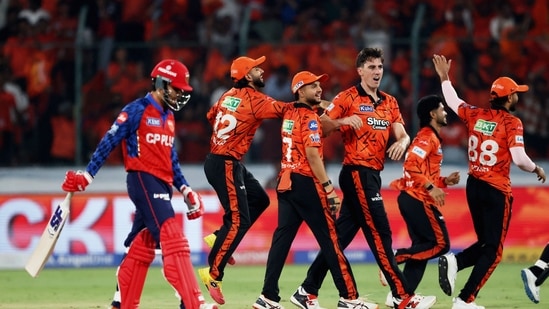
SRH have brought in T Natarajan from Delhi Capitals for ₹5 crore, and Khaleel Ahmed and Nathan Ellis from Chennai Super Kings for ₹4.8 crore and ₹2 crore, respectively. Leaving the franchise are Zeeshan Ansari, who has moved to DC, and Liam Livingstone and Jack Edwards, who have joined CSK. With the November 17 retention deadline approaching, SRH's emphasis has been on strengthening their bowling.
The 2016 IPL champions finished third in the last edition, winning nine of their 14 league matches. Rajasthan Royals stopped their march in the Eliminator. Throughout the tournament, their batting looked more or less settled. While there were some positive signs in the bowling, it was the weak link on occasions.
A look at the statistics of IPL 2026 gives an idea how SRH batting and bowling functioned. The Sunrisers had the second-best batting run rate of the season at 10.54, with a Powerplay scoring rate of 11.08, the second best overall. But in bowling, they conceded runs at an economy of 10.05, the third worst in the league. With the batting compensating for bowling deficiencies on most occasions, SRH had little reason to tinker with their top order.
{{/usCountry}}A look at the statistics of IPL 2026 gives an idea how SRH batting and bowling functioned. The Sunrisers had the second-best batting run rate of the season at 10.54, with a Powerplay scoring rate of 11.08, the second best overall. But in bowling, they conceded runs at an economy of 10.05, the third worst in the league. With the batting compensating for bowling deficiencies on most occasions, SRH had little reason to tinker with their top order.
{{/usCountry}}That points to the names they must retain ahead of the next season.
Settled batting core, emerging bowling prospects
Heinrich Klaasen cost them ₹23 crore, but his performances justified the investment. The South African scored 624 runs at a strike rate of 160, providing consistency and firepower.
Ishan Kishan also played his part. He scored 602 runs at a strike rate of 182.42. The franchise has shown that it also views him as a future leader. He will therefore be among the first names on the retention list.
Then there are Abhishek Sharma and Travis Head. There is little doubt that SRH will retain them. The duo has been at the forefront of the ultra-aggressive batting approach in the Powerplay that is now common in IPL.
All-rounder Nitish Kumar Reddy also delivered with the bat. He scored 302 runs at a strike rate of 171.59, providing dynamism in the middle order. Besides, his ability to bowl a few overs gives the skipper additional flexibility.
In bowling, Eshan Malinga was their biggest discovery. He emerged as their leading wicket-taker, claiming 20 scalps at an economy of 9.33. His ability to interrupt the opposition's momentum with wickets makes him valuable.
SRH found two gems in Sakib Hussain and Praful Hinge. Sakib picked up 15 wickets in 11 matches, while Hinge claimed 14 in seven, albeit at an expensive economy of 11.73. Both showed promise and remain prospects in whom SRH could invest more time.
Shivang Kumar and Harsh Dubey picked up nine and eight wickets, respectively, reinforcing their spin department. They too look like long-term prospects.
Also Read: Emerging in New Zealand: Axar Patel as the anchor spinner
The Cummins conundrum, Harshal's poor returns
With the arrival of Natarajan, Ellis and Khaleel, the biggest question concerns the place of skipper Pat Cummins. He missed the early part of IPL 2026 due to injury before returning to play eight matches. He has spoken about potentially skipping the 2027 season, given the demanding international schedule. With ₹18 crore of their budget invested in him, the franchise must see if there is prudence in retaining a player who could miss the entire tournament.
SRH bought Harshal Patel ahead of the IPL 2025 season for ₹8 crore. The Indian medium-pacer played just five matches in 2026 and didn't take a wicket. He conceded 148 runs in 13.4 overs at an economy of 10.83. His signing was to add depth and experience to the bowling. However, his underwhelming show means he looks like a prime release candidate.
What about the fringe players?
Fringe players like Brydon Carse warrant scrutiny too. The English pacer was bought for ₹1 crore but could not play because of an injury. SRH can also assess Kamindu Mendis and Shivam Mavi. The franchise needs to evaluate what extra value these players bring.
Aniket Verma and Smaran Ravichandaran did not get enough opportunities to be judged fairly. Both look like valuable prospects who can provide inexpensive Indian batting cover. Retaining them could offer flexibility, if the squad is tested by injuries or player unavailability.
The prime objective of SRH is likely to be protecting their successful batting core while addressing the bowling weaknesses. Their trade activity suggests they have already begun tackling the problem. The next question they must resolve is Cummins' availability and the wisdom of keeping ₹18 crore invested in him. With the new additions, they will also have to trim their bowling department.
The real test of their strategy will be whether they can make those difficult calls without compromising the balance of a squad that has shown its potential.