Kolkata: There are worse ways to begin preparing for an ODI World Cup in South Africa than being made uncomfortable in Auckland. India’s five-wicket win was built on a cohesive fast bowling performance and Virat Kohli’s 74 off 51 balls. But beyond the result was a more revealing story on the cusp of their win: a batting lineup confronted with the sort of surface that exposed familiar vulnerabilities.
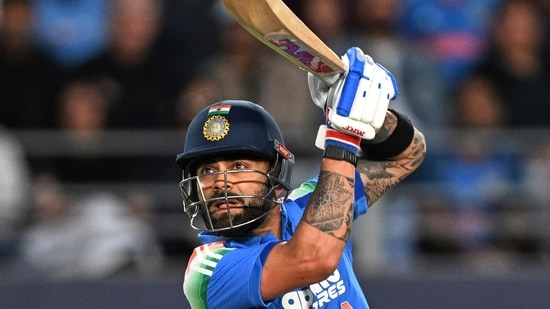
Eden Park has always been a complex venue for visitors, not least because of its unusual dimensions. Rohit Sharma lasted six deliveries, Shubman Gill needed time to settle, Shreyas Iyer struggled to control the short ball, and even Kohli, who appeared to have worked out the conditions better than anyone else, eventually fell attempting a pull. There was pace and movement off the pitch. But on top it was a spongy bounce that made negating even the good length ball a tough ask at times.
Not for Kohli, though. Where other Indian batters managed just 108 runs and lost seven wickets off 150 deliveries pitched back of the length or shorter, Kohli scored 43 runs off 25 similar deliveries. Resisting the temptation to manufacture shots early, Kohli allowed himself time to understand the bounce and then used the pace of the ball to score behind square. Once settled, he was able to turn the short delivery from a defensive problem into a scoring opportunity. That transition turned out to be decisive in light of how India lost four wickets in the space of 20 deliveries.
Deep Dive
Why did India’s batters struggle on the Auckland pitch?
How did Virat Kohli score effectively against Auckland’s short balls?
What should India learn from the Auckland ODI ahead of tougher batting conditions?
Wednesday’s match thus brought back memories of India's previous examinations on difficult surfaces. Just after the 2023 World Cup final, in the second ODI against South Africa at Gqeberha, India were humbled by the steep bounce and pace at St George’s Park. Nandre Burger used his height well to take three wickets as India were bowled out for 211 in 46.2 overs. Only Sai Sudharsan (62) and KL Rahul (56) stood out in a particularly relevant examination because that surface wasn’t very different to the ones India could again encounter next year.
{{/usCountry}}Wednesday’s match thus brought back memories of India's previous examinations on difficult surfaces. Just after the 2023 World Cup final, in the second ODI against South Africa at Gqeberha, India were humbled by the steep bounce and pace at St George’s Park. Nandre Burger used his height well to take three wickets as India were bowled out for 211 in 46.2 overs. Only Sai Sudharsan (62) and KL Rahul (56) stood out in a particularly relevant examination because that surface wasn’t very different to the ones India could again encounter next year.
{{/usCountry}}Dealing with quick bounce is a psychological barrier. But the opposite too has had adverse effects on India. Case in point is the 2023 final, where Australia took pace off the ball, used cutters and slower deliveries, and made batting increasingly difficult on a sluggish Ahmedabad surface. After racing to 80 in the first 10 overs, India managed only 160 in the remaining 40. Here too emerged the common denominator of Kohli being the anchor with a 54, along with Rahul who scored a patient 66 but neither innings gave India the late-overs fillip they so required.
Then came Colombo in August 2024, when India again struggled to adapt to the surfaces in Sri Lanka where the ball stopped, gripped and turned. The first match ended in a tie, with India failing to chase down 231. In the second, India were dismissed for 208 while chasing 241. The third produced an even more harrowing defeat, with India bowled out for 138 in pursuit of 249. In each of those matches, Rohit Sharma set up the chases with quick starts, but the middle order repeatedly struggled to adapt to the conditions and consolidate. Even Kohli was unable to provide the customary stability.
Those two defeats glaringly reminded us how India often runs into problems when their original batting plan becomes ineffective. Which is why the Auckland result notwithstanding, India falling to the same trap they had laid out for New Zealand in the first innings discloses an uncomfortable tendency of not being respectful enough of the conditions.
The loss at Perth in October 2025 also offered a similar vein of argument. In a rain-curtailed ODI, India were dismissed for 136 with Rohit making eight, Gill 10 and Kohli dismissed for a duck. Iyer too struggled against the extra bounce, falling for 11, and only Rahul looked fluent in a 31-ball 38. The circumstances deserve a mention here. India turned up at Perth not having played an ODI since the Champions Trophy final in Dubai in March. Between Dubai and Perth, the difference in conditions was like chalk and cheese, worsened by repeated rain, like in Auckland.
But those qualifications don’t necessarily diminish the value of the examination, especially when India are set to face tougher tests of bounce in the Highveld region during the unknown spring of South Africa next year. The target at Auckland wasn’t a lot but India’s late struggle was a reminder of a problem that has surfaced in different forms over the past three years.
Cue the praise then for Kohli, not just for this innings but also from the larger perspective of how he has kept innovating his game—the rate of six-hitting has gone through the roof, for example—yet not compromised on his technique to provide India with the cushion of an all-weather anchor. But Kohli can’t stage the saviour act every match; the middle order also needs to become comfortable with scoring through rotation rather than relying exclusively on boundaries.
That’s where this tour of New Zealand could help because India don’t need to seek out difficult batting surfaces, arrange quality pace-bowling challenges and resist the temptation to judge themselves through runs and centuries alone. To bat for 15 overs without losing a wicket on a lively surface could be as valuable as scoring 150 on a flat one. And it’s imperative India internalise that process before it’s too late.