
 E-Paper



Delhi’s air worst in 8 months; 10 of 35 monitoring stations record ‘severe’ AQI reading
At 11am, Delhi’s hourly average AQI reading was 374, in the ‘very poor’ zone. While the overall AQI reading declined further towards the ‘severe’ category, according to 10 of the 35 monitoring stations in the city, pollution levels in certain areas had already crossed the 400-mark

 Prefer HTon Google


Ten of 35 monitoring stations across the national Capital recorded the air quality’s dip into the ‘severe’ category on Friday, as Delhi’s overall pollution level continued to slide further into the ‘very poor’ category.
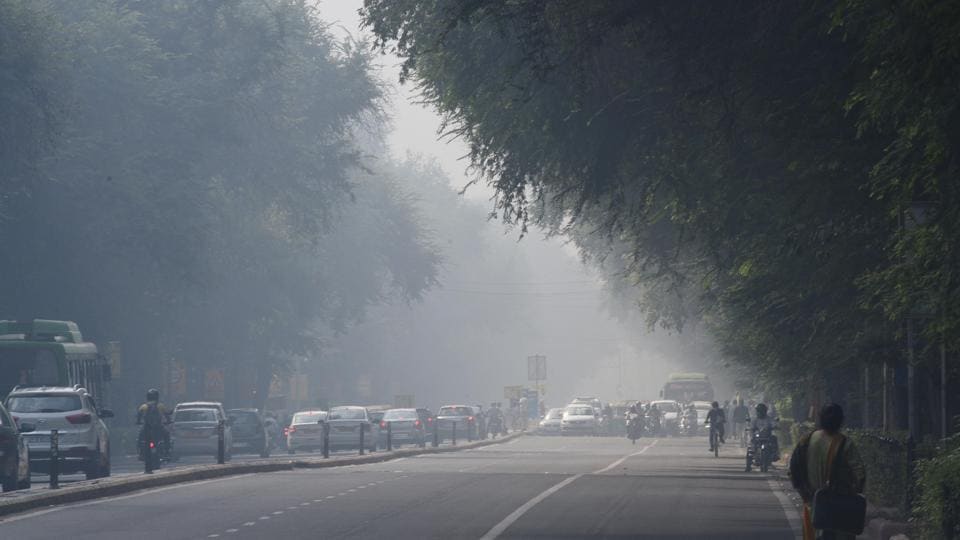
Officials at the monitoring stations said this was the worst air quality reading recorded in the city in the last eight months.
At 11am, Delhi’s hourly average air quality index (AQI) reading was 374, in the ‘very poor’ zone.
While the overall AQI reading declined further towards the ‘severe’ category, according to 10 of the 35 monitoring stations, pollution levels in certain areas had already crossed the 400-mark. Nine of these stations are located in pollution hotspots, where the government will deploy intensive pollution control measures.
The Central Pollution Control Board (CPCB) data showed that on Friday, air in Alipur, Shadipur, Patparganj, Vivek Vihar, Anand Vihar, Jahangirpuri, Rohini, Wazirpur, Bawana and Mundka was in the ‘severe’ zone.
Also Read: Poor air quality is a danger to public health. Adopt a holistic approach
At 7am, the AQI reading was 360, in the higher end of the ‘very poor’ zone. This is the second time that air quality touched ‘very poor’ in Delhi this season (post-monsoon). On October 15, the city’s air quality had turned ‘very poor’ for the first time with an AQI reading of 312.
The city’s overall AQI reading was 296 on Thursday. Government agencies had forecast that the air quality would deteriorate on October 23-24. They said that calm-wind conditions would prevail, which would not allow the pollutants to disperse in the atmosphere.
Measures to deal with ‘very poor’ air quality under the winter phase of the Graded Response Action Plan (Grap)—a round-the-year plan to combat air pollution in Delhi-NCR—such as stopping the use of diesel generator (DG) sets had already kicked in from October 15.
Scientists at the India Meteorological Department (IMD) said that calm-wind conditions refer to the wind speed reading being zero.
“This is a usual phenomenon for October-November, which is when air quality deteriorates. Some improvement is likely around October 26 when wind speed may pick up,” said a senior IMD scientist.
Delhi environment minister Gopal Rai had on Thursday blamed stubble-burning in neighbouring Haryana and Punjab as the major reason behind the plunge in air quality in Delhi.


