
 E-Paper



Govt report shows only 3 lakh out of Delhi’s 15 lakh slum dwellers use toilets
An internal report of Delhi Urban Shelter Improvement Board (DUSIB), compiled in October this year, states that out of around 15 lakh slum dwellers of the city only a little more than 3 lakh use community toilets.


The Aam Aadmi Party (AAP) government may be planning to make Delhi open-defecation free by March 2018, but the situation on the ground suggests that the administration may not be able to meet its deadline.
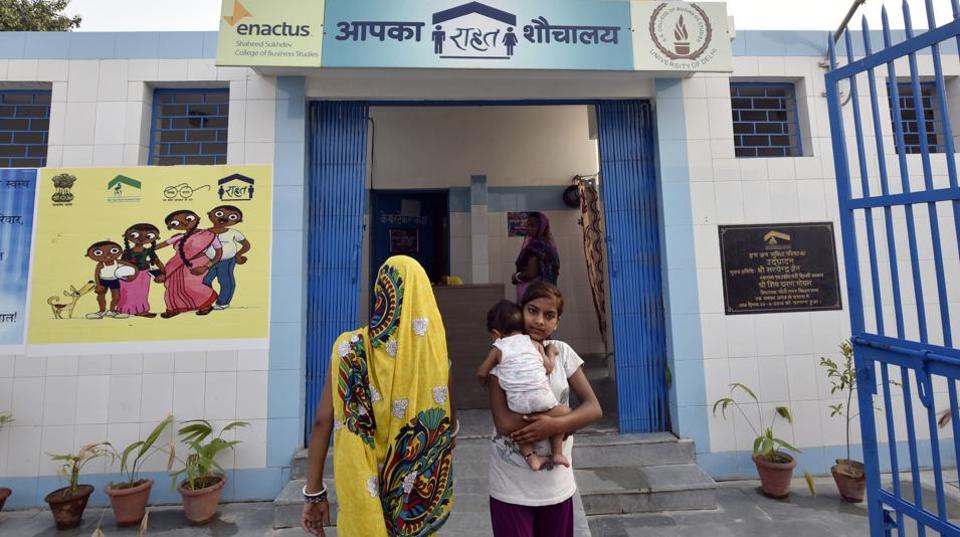
An internal report of Delhi Urban Shelter Improvement Board (DUSIB), compiled in October this year, states that out of around 15 lakh slum dwellers of the city only a little more than 3 lakh use community toilets.
The calculation reveals that only 25% of the target users are using the facility. DUSIB has installed 19,168 toilet seats at 641 toilet complexes till November 2017, out of which 18,281 toilet seats are functional while the remaining are under repair and renovation. DUSIB plans to build 2,500 more toilets and the municipal corporations will build an equal number by the end of December.
The government has set a target to build a total of 27,000 toilet seats in the city to be able to make the city free of open defecation by next year. This leaves the authorities with the big challenge of building 3,000 toilets in the first three months of 2018 to meet the deadline.
Though DUSIB says it is on course with the construction, it is the under-utilisation of toilets which is making the challenge bigger.
DUSIB officials say there are more than three lakh families who live in slums of Delhi, if they assume that a family has five members on an average. This brings the number of slum dwellers in the city to about 15 lakh. As per Swachh Bharat Abhiyan guidelines there should be one toilet seat for 30 people.
According to DUSIB officials, the under-utilisation of toilets could be the result of the Rs 1 per person charged from users.
Bipin Rai, member DUSIB, told HT that slum dwellers practically had to pay Rs 2 per person for using the facility managed by NGOs. Complaints are often received in this connection and action taken against such NGOs.
Explaining the reason behind under-utilisation of toilets, Rai said that if there were six members in a family and they relieved themselves twice or thrice daily then the family ends up spending around Rs 1000 on toilets only.
“This is a considerable amount for most of the families residing in slums. Witnessing this problem, the board members have proposed to waive the user charge which was unanimously accepted. This will boost the usage of toilets in JJ clusters,” Rai said.
Delhi chief minister Arvind Kejriwal in October this year had announced that no user charges would be levied in toilets from January 1, 2018. He termed the move as a ‘New Year’s gift for toilet users’ in slum clusters.
“Thousands of families, who live in slums, have built toilets in their houses. They no more use the community toilets. This is also a reason behind under-utilisation of toilets in JJ clusters,” Rai said adding that the rehabilitation of around 35,000 slum families is also in the pipeline where people will have their own toilets.
According to DUSIB officials behavioural issues of people and untidy toilets are also major contributors. The responsibility of maintaining toilets has been given to various NGOs. As per norms a toilet should be cleaned thrice a day, but this practice seldom takes place.
“The small NGOs, who are operating the DUSIB toilet complexes at JJ clusters, do not work properly and toilets remain dirty. So now we are in talks with some big NGOs, who have specialty in this field, to manage toilets properly,” said DUSIB member AK Gupta.
Sunil Kumar Aledia, executive director, Centre for Holistic Development says that it was not possible to make Delhi open defecation free by having 27,000 toilets only.
“Making Delhi open-defecation free by March 2018 is not possible. These are false claims by the government. Delhi needs around 50,000 toilets to become OD free which will require around five years,” Aledia said.


