The Central Pollution Control Board (CPCB) has constituted a study group to suggest solutions for increase in ammoniacal nitrogen in the Yamuna. The study group will comprise of Delhi Jal Board (DJB), Haryana State Pollution Control Board, Delhi Pollution Control Committee, Irrigation and Water Resources departments of Haryana and Delhi.
The group will review the current monitoring protocol and requirement of strengthening monitoring mechanism, analyse past data and carry out field surveys to identify hotspots of high ammonia.
The study group has been asked to submit its report within a month.
CPCB convened a meeting on January 4, with the officials of Delhi and Haryana to discuss the recurring issue of increase in Ammoniacal Nitrogen in the Yamuna and short and long term remedial actions required.
It was agreed at the meeting to constitute a joint surveillance squad comprising DJB, DPCC, Irrigation and Flood Control Departments of Delhi and Haryana.
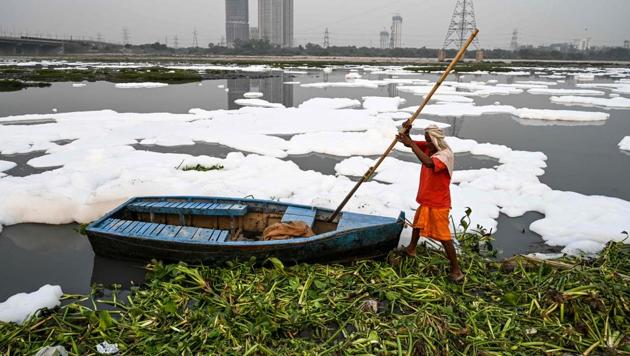
Officials said the possible reasons for high ammoniacal nitrogen could be discharge of untreated sewage from upstream towns in Haryana, discharge from industrial units, common effluent treatment plants (CETPs), sewage treatment plants (STPs), illegal discharge of sewage from unsewered colonies in outer Delhi through tankers, lean flow in the Yamuna and anaerobic decomposition of accumulated sludge on the riverbed.
“High ammoniacal nitrogen in the Yamuna is mainly a result of untreated waste water from industries in Panipat and Sonepat. We don’t need a high level group to understand this. The industries need to be checked from releasing untreated waste. The government is only trying to buy time by setting up study groups. The other obvious problem is there is no water in Yamuna so only polluted water is entering the river and it has no way of getting diluted,” said Manoj Misra, convenor, Yamuna Jiye Abhiyan.
{{/usCountry}}“High ammoniacal nitrogen in the Yamuna is mainly a result of untreated waste water from industries in Panipat and Sonepat. We don’t need a high level group to understand this. The industries need to be checked from releasing untreated waste. The government is only trying to buy time by setting up study groups. The other obvious problem is there is no water in Yamuna so only polluted water is entering the river and it has no way of getting diluted,” said Manoj Misra, convenor, Yamuna Jiye Abhiyan.
{{/usCountry}}Ammonia is one of several forms of nitrogen that exist in aquatic environments. Unlike other forms of nitrogen, which can cause nutrient over-enrichment of a water body at elevated concentrations and indirect effects on aquatic life, ammonia causes direct toxic effects on aquatic life according to the US Environment Protection Agency. Ammonia is mainly produced for commercial fertilizers and other industrial applications.
Stay updated with all top Cities including, Bengaluru, Delhi, Mumbai and more across India. Stay informed on the latest happenings in World News along with Delhi Election 2025 and Delhi Election Result 2025 Live, New Delhi Election Result Live, Kalkaji Election Result Live at Hindustan Times.
Stay updated with all top Cities including, Bengaluru, Delhi, Mumbai and more across India. Stay informed on the latest happenings in World News along with Delhi Election 2025 and Delhi Election Result 2025 Live, New Delhi Election Result Live, Kalkaji Election Result Live at Hindustan Times.