India has reported two Nipah virus infection (NiV) outbreaks in West Bengal in the past, yet the zoonotic infection striking Kerala caught the health system unawares. Even though fruit bats found abundantly in the state are the natural hosts of NiV from the Henipavirus genus of Paramyxoviridae family, no one expected the infection to strike Kerala, which is miles from Bangladesh where annual Nipah outbreaks occur.
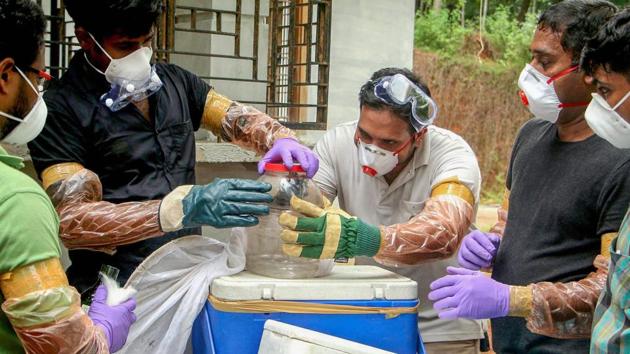
Several species of fruit bats are found across India, of which Pteropus giganteus (flying foxes), Eonycteris spelaea, Cynopterus, Scotophilus kuhlii and Hipposideros larvatus, are known to have NiV. The virus jumps from bats to other animals and humans because of ecological stressors such as shrinking natural habitat. When bats are hungry, their immunity falls and their virus load goes up, leading to the virus spilling out in their urine and saliva to contaminate their surroundings and infect animals and humans. The risk of infection is highest between April and June, when there are fluctuations in bat populations correlated with young bats leaving to fly, as seen in Kerala.
The focal winter outbreaks of NiV in Bangladesh and India in 2001 were linked to indirect transmission from drinking fresh date palm sap contaminated by P. giganteus, with evidence of human-to-human transmission in Siliguri, where 33 health workers and hospital visitors fell ill after contact with sick patients. Emerging zoonoses are fuelled by socioeconomic and anthropogenic environmental changes, with India’s rapidly rising population and increasing animal-human conflict making it one of the world’s hotspots for emerging zoonoses. Compared to developed countries, the absolute burden of outbreaks is 130 times greater in developing countries, show risk assessment studies after Ebola devastated west Africa in 2014-15. The impact of the Ebola crisis on Guinea, Liberia, and Sierra Leone was estimated at US$2.8 billion, according to the World Bank.
Twelve of the 18 samples from Kerala have tested positive for NiV, but the state health department’s rapid dissemination of information with the public and management of the sick and their contacts following the initial deaths has helped contain the outbreak. The first recorded NiV outbreak in Malaysia in 1998-99 caused 265 infections and 105 deaths. In 2001 in Siliguri, NIV was identified as the causative agent by retrospective analysis after 66 had sickened and 45 had died. There is no escaping zoonoses such as NiV, which is widely distributed in at least 10 genera and 23 species of nomadic bats in Africa and Asia, including India. A rapid public health response, however, can mitigate its devastating effects.
{{/usCountry}}Twelve of the 18 samples from Kerala have tested positive for NiV, but the state health department’s rapid dissemination of information with the public and management of the sick and their contacts following the initial deaths has helped contain the outbreak. The first recorded NiV outbreak in Malaysia in 1998-99 caused 265 infections and 105 deaths. In 2001 in Siliguri, NIV was identified as the causative agent by retrospective analysis after 66 had sickened and 45 had died. There is no escaping zoonoses such as NiV, which is widely distributed in at least 10 genera and 23 species of nomadic bats in Africa and Asia, including India. A rapid public health response, however, can mitigate its devastating effects.
{{/usCountry}}