On Wednesday, the Union government announced a revised subsidy allocation for phosphatic and potassic fertilisers for the rabi (winter) cropping season. The new allocation of ₹62,370 crore is 64% more than the Union budget allocated. This is yet another indication that the overall fertiliser subsidy allocation — the 2026-27 budget estimate was ₹1.71 lakh crore — will be significantly higher. It will also stretch the overall fiscal math.
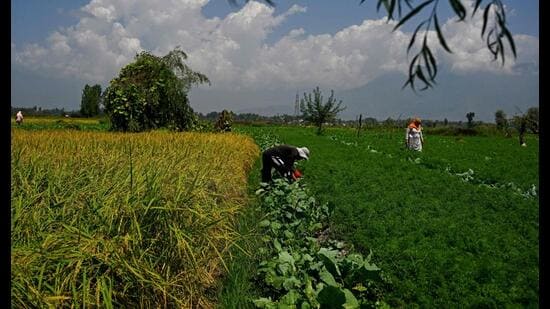
These numbers need to be seen in context. Just a
On Wednesday, the Union government announced a revised subsidy allocation for phosphatic and potassic fertilisers for the rabi (winter) cropping season. The new allocation of ₹62,370 crore is 64% more than the Union budget allocated. This is yet another indication that the overall fertiliser subsidy allocation — the 2026-27 budget estimate was ₹1.71 lakh crore — will be significantly higher. It will also stretch the overall fiscal math.
These numbers need to be seen in context. Just a month after the budget was presented, the US and Israel attacked Iran which later shut the Strait of Hormuz inflicting a huge disruption on hydrocarbon trade from West Asia. Fertiliser prices went through the roof and supplies nosedived. The real worry back then — not anymore for India, thankfully — was whether India would even be able to source adequate fertilisers for domestic crop production. As the world’s most populous country, maintaining adequate food production is absolutely critical for India.
The government did two things in response to the crisis. It made it clear that the higher fertiliser costs would not be passed on to farmers, and it threw the kitchen sink at securing fertiliser supplies irrespective of the prices. This will lead to higher spending, as seen in the revised fertiliser subsidy numbers, but it has achieved something far more valuable.
Because fertiliser prices are critical to farm balance sheets, clarity about them is essential for cropping decisions by farmers. Lingering uncertainty about higher prices and insufficient supplies would have introduced precariousness in cropping decisions. A food inflation shock was almost certain to follow. That this has been a low-rainfall year would have only made the supply shock worse. All of these scenarios are significantly worse than the fiscal deficit being higher by a few basis points.
Beyond this short-term justification for the government’s decision to spend more on fertilisers, are there any larger learnings here? Two factors stand out. India’s fiscal wherewithal allows it to weather cyclical shocks much better than smaller emerging market economies can. This is what sustained long-term growth achieves for a country. Last but not the least is the importance of building domestic capacity in critical value chains. This is what will bestow low-cost resilience to such shocks on the economy in the future.
One Subscription.
Get 360° coverage—from daily headlines
to 100 year archives.
Archives
HT App & Website