Indian officials repeatedly used the term “new normal” in multiple and separate media briefings on Sunday, describing how New Delhi’s actions after the Pahalgam terror attack, and Operation Sindoor, define a new paradigm in how India will now deal with Pakistan. The briefings came a day after the cessation of hostilities with Pakistan, with the terror attack on Pahalgam being the starting point. India responded to this by striking at nine terror hubs in Pakistan, which responded with strikes on
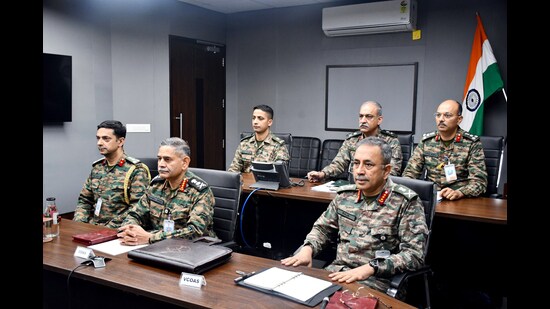
Indian officials repeatedly used the term “new normal” in multiple and separate media briefings on Sunday, describing how New Delhi’s actions after the Pahalgam terror attack, and Operation Sindoor, define a new paradigm in how India will now deal with Pakistan. The briefings came a day after the cessation of hostilities with Pakistan, with the terror attack on Pahalgam being the starting point. India responded to this by striking at nine terror hubs in Pakistan, which responded with strikes on military and civilian infrastructure. The two countries then traded attacks, with India inflicting significant damage with the last one it carried out on the morning of May 10, damaging key air bases in Pakistan. Pakistan tried to respond, but also sought a cessation of hostilities, which India agreed to, even as the US claimed it had played mediator.
It is understandable, after conflicts of this nature — and, in this case, also given the long history of animosity between the two nations — that the parties involved seek to establish that they emerged on the winning side. Given this, it makes sense to look at New Delhi’s claims of a “new normal” critically, and see how much of it is new.
One aspect of this is India’s decision to respond to sub-conventional attacks (terror strikes, for instance) with conventional ones (military strikes). While it was a given that India would respond to the Pahalgam terror attack — given how it had to the Uri and Pulwama ones — the clarity of its response, and the articulation that any future terror attack would be seen as an act of war, is indeed new.
The second aspect is the decision to target terrorist groups responsible for attacks in India, wherever they are — without being constrained by their presence in enclaves across the Line of Control or the International Border. Never before has India struck at Bahawalpur, the base of the Jaish-e-Mohammed, or Muridke, that of the Lashkar-e-Taiba, both internationally proscribed terrorist groups that have been groomed, nurtured, and provided shelter by Pakistan. This too is new.
The third is to walk out of the Indus Waters Treaty, one signed in the spirit of goodwill and neighbourliness but past its best by date, not just because of the climate crisis and the evolving technology of dams, but also Pakistan’s continued sponsorship of terror groups. The treaty has withstood all previous wars between the two countries, but India walked out of it a day after the Pahalgam terror attack.
But the most significant aspect of India’s new normal is the clear message between the lines that Kashmir is no longer a bilateral issue between the two countries because it is no longer an issue at all. The only real bilateral issue between the two countries, New Delhi believes, is Pakistan-occupied Kashmir (PoK).
India now has the task of selling this “new normal” to not just Pakistan or the world, but also to the domestic audience.
One Subscription.
Get 360° coverage—from daily headlines
to 100 year archives.
Archives
HT App & Website