There’s no country for the internally displaced, it appears, particularly if the country is India. A report by the Internal Displacement Monitoring Centre of the Norwegian Refugee Council (NRC) ranks us third behind China and The Philippines among countries most affected by displacement related to natural disasters in 2016. In this period, India saw 448,000 new displacements owing to conflict and violence. Also, close to 2,400,000 people were displaced due to natural disasters. “In recent years, displacement has mainly been associated with flood and storm events, although approximately 68% of India is prone to drought, 60% is vulnerable to earthquakes and 75 % of the country’s coastline is prone to cyclones and tsunamis,” the report said.
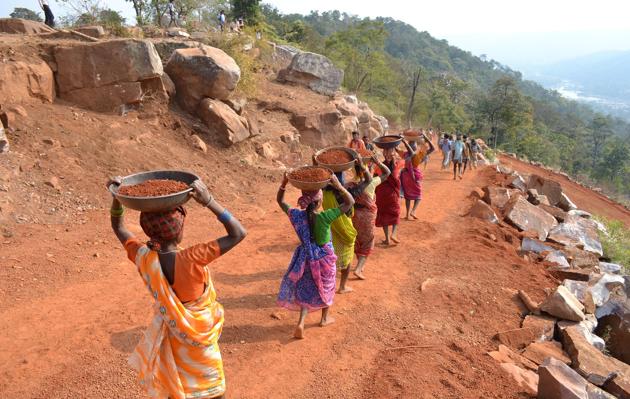
One in three of India’s population stay in poverty and substandard housing with less resources to cope, particularly in disaster-prone areas. Combined with poorly planned urbanisation, environmental degradation, climate change and geological hazards, India’s overall exposure to hazards makes the country most at risk of displacement related to disasters in South Asia.
Projects implemented as part of India’s development and industrialisation since independence have been made possible by the acquisition of land and the eviction and displacement of tens of millions, to build dams, mines and industrial plants.
For a long time, the issue of compensation and rehabilitation of persons displaced by development projects has generated a lot of sound and fury in India. Those affected are told about where they’ll be relocated without taking them into confidence. The displaced are offered land and monetary compensation. But the land is often arid and most times the compensation packages are inadequate. Many of those uprooted by the controversial Sardar Sarovar Dam built over the Narmada, for instance, which displaced an estimated 350,000 people in Gujarat, Madhya Pradesh and Maharashtra since its inception in 1984, are still waiting for reasonable rehabilitation.
Another big reason for displacement in the country is violence emanating from secessionist and identity-based movements and riots sparked by caste and religious tensions. But those displaced due to political strife within India, what the UN calls Internally Displaced People (IDPs), are not even on the State’s radar. Forced physical dislocation leads to several problems for IDPs: Harassment by police and officials of states where they have migrated to; exploitation by local contractors who force them to accept lower wages; no access to schools for their children and no health services for the family. Migration leads to disruption of cultural and community ties. Women and children — the most vulnerable of the population — fight the challenges of violence and threats of trafficking. Unfortunately, we still don’t have a legal framework to deal with IDPs. India has neither signed the 1951 UN refugee convention nor does its 1967 protocol allow the UN high commissioner for refugees — which works with IDPs — access to camps. Without a central law, the IDPs end up being a nowhere people seeking shelter and succour. It’s time the country listened to their voices.
{{/usCountry}}Another big reason for displacement in the country is violence emanating from secessionist and identity-based movements and riots sparked by caste and religious tensions. But those displaced due to political strife within India, what the UN calls Internally Displaced People (IDPs), are not even on the State’s radar. Forced physical dislocation leads to several problems for IDPs: Harassment by police and officials of states where they have migrated to; exploitation by local contractors who force them to accept lower wages; no access to schools for their children and no health services for the family. Migration leads to disruption of cultural and community ties. Women and children — the most vulnerable of the population — fight the challenges of violence and threats of trafficking. Unfortunately, we still don’t have a legal framework to deal with IDPs. India has neither signed the 1951 UN refugee convention nor does its 1967 protocol allow the UN high commissioner for refugees — which works with IDPs — access to camps. Without a central law, the IDPs end up being a nowhere people seeking shelter and succour. It’s time the country listened to their voices.
{{/usCountry}}