There was a telling moment when the Supreme Court was hearing the curative petition against section 377 on Tuesday. While hearing arguments, Chief Justice TS Thakur asked the court if there was any opposition to the curative petition at all, a question that was followed by momentary silence and a round of laughter.
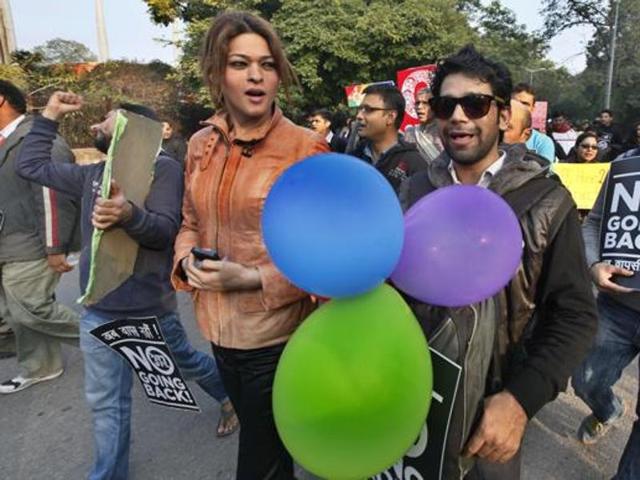
The exchange was remarkable – this was the same court that had thrown out the case three years ago, expressing its inability to guarantee the rights of a “minuscule minority”. Curative petitions are also a statistical long shot, with most dismissed in closed chamber hearings. So anything more than a summary dismissal of the plea was significant.
Read more: SC was wrong on Section 377, but now there’s hope
The most startling aspect however, was that the Chief Justice might have inadvertently touched upon the elephant in the courtroom – that those supporting the draconian provision were definitely on the wrong side of history, fast losing any relevance in the modern world.
The country and the queer movement have come a long way from 2001, when the Naz foundation first approached the court – the ubiquitous ambassadors have all but disappeared from the roads, the once oh-so-cool pager has died a quick death and the last traces of the Left have been wiped clean off the streets of Kolkata.
{{/usCountry}}The country and the queer movement have come a long way from 2001, when the Naz foundation first approached the court – the ubiquitous ambassadors have all but disappeared from the roads, the once oh-so-cool pager has died a quick death and the last traces of the Left have been wiped clean off the streets of Kolkata.
{{/usCountry}}But far more remarkable is the transformation in the gender, sexuality lexicon. Gone are the days when a handful of people were talking about the rights of Lesbian, Gay, Bisexual and Transgender (LGBT) community.
Read more: How gay right is about every Indian’s right: A prince explains
Today, queer support groups are mushrooming in schools and colleges across the country, confident young people are speaking up against bullying and homophobia, and the new generation is more open and accepting of alternative gender and sexuality conversations than they were even a decade ago.
Popular culture is slowly moving away from its traditionally negative portrayal of queer lives – transpeople are featuring in music videos, films and are writing their own stories, advertisements are featuring lesbian couples and conversations around LGBT lives no longer center around derision, stigma or disgust.
Even the holy grail of stereotyping, Bollywood, is gradually changing. Homophobic jokes are increasingly less funny and offensive transphobic characters are being phased out. LGBT filmmakers are making movies that travel to international festivals and mainstream directors turn their attention to narrating LGBT stories with sensitivity and poise.
Pride has spread from the metropolis to smaller cities and towns, which are witnessing some of the most powerful resistances to patriarchal structures, state after state is setting up transgender welfare boards and some of our most ostracized communities – trans sex workers and indigenous gender non-conforming people who don’t identify with western labels – are talking about freedoms and rights.
Internationally too, country after country has embraced LGBT rights, nudging our western-dominated popular culture to accept queer people.
The most visible sign of the turn in the tide is embedded in the newer generation – schools and colleges are no longer the cradle of bullying and violence they used to. Queer authors are speaking out against homophobia in educational institutions and younger people are no longer in favour of policing desires and oppressing communities based on their gender or sexuality.
The movement itself is trying to build solidarities with other struggles, talking about issues of caste, class, religion, disability, gender and trying to strengthen voices from the margins. Activists are fighting for increased access to health, education, jobs and sensitizing the law and order machinery, pushing for more inclusivity in the workplace.
But the road is long and still treacherous. Violence against the most vulnerable people – transpeople, sex workers, queer persons from lower caste or class backgrounds, disabled – continues to be rampant and undocumented. Blackmail and bullying, riding on the back of section 377, thrives even in bigger cities and our schools and colleges have few LGBT people enrolled.
The queer community has a lot of hope from the same court that delivered a progressive verdict for transgenders in the Nalsa case two years ago.
The fight won’t be smooth, with a number of religious bodies already raking the old skeletons of “Indian culture”, “purity”, “unnatural” and “society isn’t ready”.
But Tuesday’s hearing showed that whatever the court decides in the months to come, the world outside had decisively changed, for a more inclusive, welcoming and less-discriminatory society. The LGBT movement has grown far beyond the case, and the grip of the law grows weaker every day. For those opposing their rights, this may be their last hope, because outside the courts, they already seem to have lost the battle. Section 377 will go, tomorrow or in five years from now.
Watch | Shashi Tharoor says SC’s move on Section 377 is positive development