
 E-Paper



Saving trees to beat the heat
India has lost a chunk of its farmland trees. In times of climate crisis, this is a cause for worry

 Prefer HTon Google


The exceptionally high summer temperatures hold a lesson: India badly needs affordable, easy-access adaptation measures to protect people from extreme heat, an impact of the climate crisis that manifests regularly every summer. Access to shade from the scorching sun can help save people, especially in rural areas. However, evidence suggests a trend in the reverse.
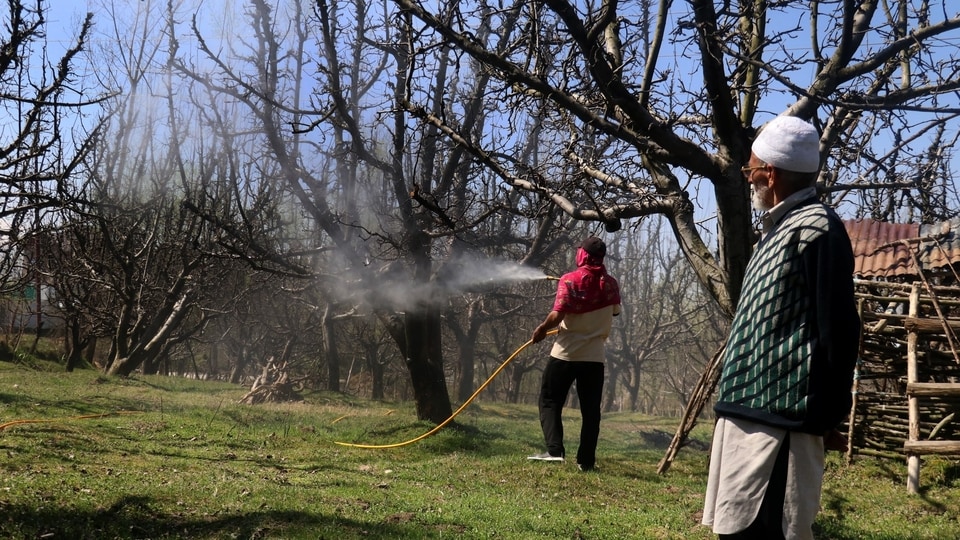
New research that mapped 0.6 billion farmland trees in India, excluding block plantations, and tracked them over the past decade, found that around 11 ± 2% of the large trees (about 96 m2 crown size) from 2010/2011 had disappeared by 2018. Then, during 2018–2022, more than five million large farmland trees (about 67 m2 crown size) vanished, partly due to altered cultivation practices, where trees within fields are perceived as detrimental to crop yields. India’s farmland trees include multipurpose ones such as khejri (Prosopis cineraria), neem (Azadirachta indica), mahua (Madhuca longifolia), gum (Acacia nilotica), and Indian rosewood (Dalbergia sissoo), which provide a variety of ecosystem services from conservation (for example, soil fertilisation and shade) to consumption (fruits, fuelwood, fibre, mulch, medicine, fodder). This is possibly the first time that the status of individual large trees is being mapped using microsatellites providing spatial resolution of 3–5 m. The results are a cause for worry, suggesting that India is gradually losing a major, low-hanging climate adaptation solution. This also reinforces why India’s rural heartland is becoming dustier and drier and living conditions even more difficult.
This trend needs to be reversed, which may necessitate policy tweaks. For example, this newspaper reported in February that a new notification by the Union environment ministry said corporations and other private entities could sponsor plantations on degraded land, including open forest and scrubland, wasteland and catchment areas, and avail green credits, which could be traded. The fear that this could result in a change in land use and impact biodiversity is genuine: India’s experience with plantations, especially raised through social forestry schemes, is that they encourage monoculture and rarely enrich biodiversity or contribute to livelihoods. It is time the conservation ecosystem recognises the role of farmland trees, especially their heat-mitigation potential, and formulate policies in consonance with the needs of citizens and communities. A Supreme Court-appointed committee recently identified older/larger trees as having a higher ecological value. That’s a good first step; now policy has to follow.


