Travel across western Uttar Pradesh, and there is, close to 45 years after his death, deep devotion and admiration for Chaudhary Charan Singh — the first prime minister (PM) of India who came from an entirely rural, agrarian background, and the first and only PM so far from the Jat community. It was this legacy that Ajit Singh, referred to as Chaudhary Saheb by his supporters and rivals alike, inherited from his father. A graduate of the Indian Institute of Technology and then the Illinois Institute of Technology, Singh worked in IBM before Charan Singh’s ill health saw him plunge into Indian politics in the mid-1980s.
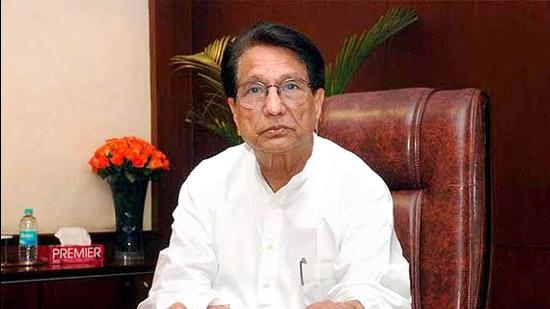
And it was perhaps because of his unique background — of a pragmatism that comes from being rooted to the soil and the exposure that came from a liberal education abroad — that Ajit Singh helped usher in a revolution in India, something that is sadly under-documented. Singh was appointed the industries minister in the VP Singh government in 1989-1990. The era of industrial licensing — or the licence-permit raj — was the still dominant policy consensus. This led to crippling controls over the private sector, where industrialists had to seek bureaucratic permission for every small element of their operations, and had spawned a culture of entrenched corruption. Ajit Singh asked a set of bureaucrats, “Why do we have all these controls?” As economist Rakesh Mohan, who then worked under Singh, has recalled, the minister was clear India could not function this way. This set off an exercise in preparing a new industrial policy blueprint, with an emphasis on decontrolling industry, inviting foreign direct investment, promoting technology, and more — and it was this blueprint which eventually served as the basis for industrial policy reforms of 1991. The fact that AN Verma was the industries secretary under Ajit Singh helped, for Verma was to go on to become the principal secretary to PM PV Narasimha Rao, and push through the changes.
Ajit Singh’s political legacy is mixed. He was a marginal player in Uttar Pradesh politics; he shifted political sides so often that he was seen as unreliable; the last decade has seen his party shrink further; and his father’s dream of Muslim-Jat peasant unity was shattered. But Ajit Singh’s real legacy lies elsewhere. It is ironic, in these times when agriculture and industry have been pitted against each other, that a farm leader was there at the beginning of the move to free Indian industry. Ajit Singh died of Covid-19 on Thursday, but his imprint lives on.
{{/usCountry}}Ajit Singh’s political legacy is mixed. He was a marginal player in Uttar Pradesh politics; he shifted political sides so often that he was seen as unreliable; the last decade has seen his party shrink further; and his father’s dream of Muslim-Jat peasant unity was shattered. But Ajit Singh’s real legacy lies elsewhere. It is ironic, in these times when agriculture and industry have been pitted against each other, that a farm leader was there at the beginning of the move to free Indian industry. Ajit Singh died of Covid-19 on Thursday, but his imprint lives on.
{{/usCountry}}