October 7, 2026 marked three years since the ghastly terror attacks on Israel by Hamas. More than 1,200 people Israelis lost their lives in the attacks and over 200 were kidnapped by the Hamas. Israel launched a full-scale invasion on the Gaza strip in the aftermath of the attacks. Military operations soon expanded to Lebanon to target the Hezbollah, an Iran-supported armed militia. The war reached a new phase in June 2025 when the US and Israel aerially attacked Iran’s nuclear facilities in a joint military operation. It reached yet another phase when the US and Israel launched a full-fledged air raid on Iran on February 28 this year and eliminated many key personnel of the regime including its Supreme leader. The attacks, however, did not lead to a regime change in Iran, which is what the US and Israeli leadership perhaps believed would happen. Iran, actually went on to enforce a closure of the Strait of Hormuz which continues to hurt energy supplies and therefore global economies. The ongoing crisis in West Asia is perhaps the biggest manifestation of the Israel-Palestine dispute at a global level, which has only worsened since the Oslo Accords of the 1990s which were believed to finally settle things.
Here are three charts which make sense of what has happened since the Hamas attacks three years ago.
- Gaza has lost far more people than Israel and the latter has lost international supportAccording to United Nation’s estimates, 74,200 people have been killed in the West Asia war in the last three years. An overwhelming share of these deaths have happened in Gaza, which has also seen a much larger number becoming homeless and displaced even as basic relief operations continue to remain a challenge because of Israeli restrictions and attacks. While Israel seeks a complete destruction of what it claims is terror infrastructure against it, its actions have led to a significant worsening in international opinion – at the level of both governments and people – in this period. Political commentators in many advanced countries, US included, see this as a watershed moment as far as public perception of Israel is concerned, with views particularly hostile in the younger population.
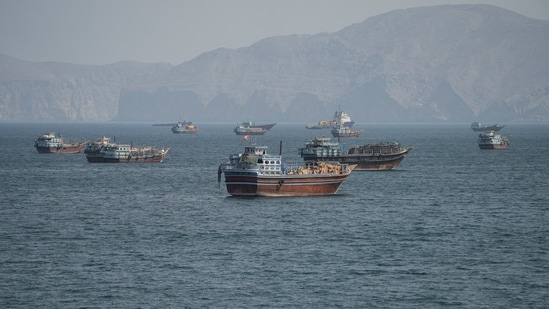
- The February 2026 attacks on Iran led to economic weaponisation of the war in West AsiaGiven the disproportionate role of West Asia in providing the world’s fossil fuel supplies, any military conflict in the region is associated with fears of an oil shock causing economic pain. For a long time, it looked like the region had finally seen a decoupling of war and economics. Crude oil prices, the single most important economic signal from West Asia continued to be low and even fell compared to pre-October 7, 2023 levels, after the war started. All this changed when US and Israel attacked Iran on February 2026 and the latter shut off the Strait of Hormuz. With no long-time resolution in sight after a failed effort at a cease fire, claims and counter claims on traffic in the Strait of Hormuz, and Iran backed Houthi rebels now threatening traffic in the Bab-Al-Mandab as well, the oil shock shows no signs of going away anytime soon.
- Ultimate resolution of the war will depend on the US’s willingness to incur a large military costThis war’s biggest geo-economic fallout has been Iran’s weaponization of the Strait of Hormuz. In the negotiations which have been happening, Iran has made it clear that it will not support restoration of a status quo ante when traffic moved freely in the strait. Accepting Iran’s terms will entail granting it a huge strategic victory. Forcing it to relinquish any such claims will require a military intervention which goes beyond the tactical air strikes US and Israel have been doing including a ground invasion of Iran. Any such military escalation on part of the US will require a much larger military burden, both economically and even in terms of the human cost of war. For the US, where the government of the day is heavily invested in an inward looking anti-war movement like the MAGA for political support, and is also treading on thin ice fiscally, the decision is fraught with large risks. The short point is, the war is not going to be easy to end.