The World Bank has released its latest brief on poverty in India. “Over the past decade, India has made remarkable progress in reducing poverty across both monetary and non-monetary dimensions, recording one of the fastest poverty declines in the world,” it said.
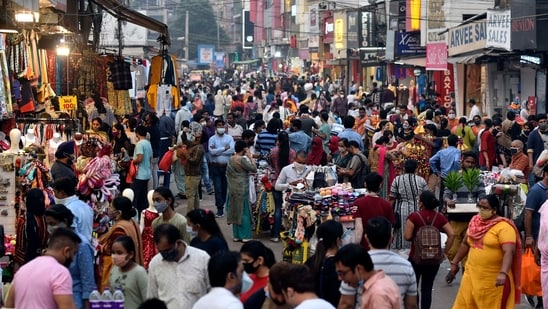
What exactly has been happening to poverty in India, a topic that triggered a big debate among economists not long ago? Here are some key data points from the World Bank update.
India has almost eradicated extreme poverty now
World Bank uses three measures of poverty. They capture income levels of $3, $4.2 and $8.3 per day in 2021 purchasing power parity terms. These three poverty lines capture extreme, lower middle-income class, and upper-middle income class poverty, respectively. Latest data from India for 2023 shows that extreme poverty is now just 2.6% in India, a sharp decline from 27.1% in 2011. Even lower-middle-income class poverty has fallen sharply from 2011 levels. What remains stubborn, however, is the poverty ratio at $8.3 per day income levels. To be sure, the sharp fall in extreme poverty was also visible in the 2022 data available before the latest update.
Who is more likely to be poor in India?
This is an important question because, in absolute terms, even the number of extremely poor people is not insignificant in India. The World Bank release puts the number of extreme, lower-middle income class and upper-middle income class poor people in India in 2023 at 75.2 million, 342.3 million and 1.15 billion, respectively. Poverty, at the lower-middle income class or $4.2 per day level, is more than twice as likely in rural areas as in urban areas, the World Bank says. It is three times as likely among people with no education compared to those with tertiary education. The share of the population in the bottom 40% and top 60% follows a similar pattern. While the release does not provide state-wise poverty numbers, it makes an important observation.
{{/usCountry}}This is an important question because, in absolute terms, even the number of extremely poor people is not insignificant in India. The World Bank release puts the number of extreme, lower-middle income class and upper-middle income class poor people in India in 2023 at 75.2 million, 342.3 million and 1.15 billion, respectively. Poverty, at the lower-middle income class or $4.2 per day level, is more than twice as likely in rural areas as in urban areas, the World Bank says. It is three times as likely among people with no education compared to those with tertiary education. The share of the population in the bottom 40% and top 60% follows a similar pattern. While the release does not provide state-wise poverty numbers, it makes an important observation.
{{/usCountry}}“Spatially, India's poverty reduction story is one of both convergence and concentration. Households in both rural and urban areas experienced substantial welfare gains, with faster progress in rural India significantly narrowing the rural-urban gap. Yet many of the households that remain poor continue to live in rural areas, where productivity is lower and access to higher-quality non-farm employment opportunities remain more limited. Poverty has also become increasingly concentrated geographically. While living standards improved across most states, households in a contiguous belt stretching from Uttar Pradesh to West Bengal account for about 57 percent of India’s poor population. As a result, further reductions in national poverty will increasingly depend on enabling productive employment in these states,” it said.
Inequality has fallen too
What is also remarkable about the recent reduction in poverty is that it has been accompanied by a fall in inequality, as seen in the Gini coefficient in consumption expenditure. The Gini index—which ranges from 0 to 100, capturing perfect equality and inequality, respectively—for India fell from 28.78 in 2011 to 23 in 2023, which seems like a break in the trends seen from 1977 onwards. To be sure, the World Bank itself notes that household consumption survey-based estimates “may also not fully capture the consumption of wealthier households and are likely to understate inequality”.