One of the many benefits of writing an interactive puzzle column, apart from the joy it provides, is that reader feedback sometimes helps create better versions of the same puzzles. For example, after we ran a betting puzzle during the football World Cup, Yadvendra Somra replied that it could be solved with less data than was provided. Enough time has passed since that puzzle to allow us an updated version.
# Puzzle 212.1
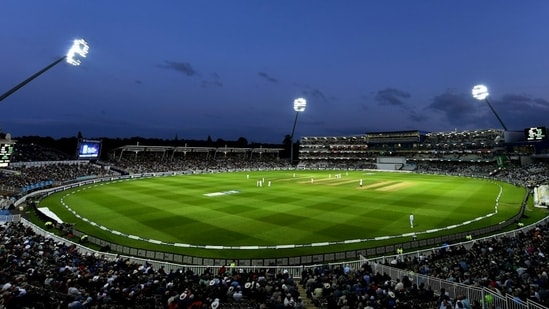
A cricket tournament involves eight teams including the Asian heavyweights India, Pakistan, Sri Lanka and Bangladesh, and the less fancied contenders UAE, Hong Kong, Thailand and Indonesia. Bets on the eventual champion must be placed before the tournament begins, because it is unfair to select the winner when some teams already have points on the table.
The odds offered are: 3-1 (India), 4:1 (Sri Lanka), 5:1 (Bangladesh), 9:1 (Pakistan) and 19:1 (each of UAE, Hong Kong, Thailand and Indonesia). To recap our discussion on a similar puzzle earlier this year, 3:1 represents the bookie’s stake (3) and your stake (1). If you bet ₹100 on India, it means the bookie is implicitly betting ₹300 against India. If the winner is India, you get the bookie’s ₹300 and your ₹100 back, a return of ₹400 in which ₹300 is your profit. If I bet ₹100 on Hong Kong and the winner is indeed HK, I get ₹2000, which includes my money back ( ₹100) and my profit (the bookie’s ₹1900).
A gambler, who owes a moneylender ₹500, asks the latter for another loan.
{{/usCountry}}A gambler, who owes a moneylender ₹500, asks the latter for another loan.
{{/usCountry}}“No way,” says Shylock, “until you repay what you already owe me.”
“Please, sir,” says the gambler (who is a fan of Dickens), “I want some more.”
“Even if I loaned you a certain amount, where would you earn the money to pay me back?”
“By betting on all eight cricket teams,” the Dickens fan explains. He shows the lender a strategy in which he proposes to place equal amounts on the four unfancied teams, and higher unequal amounts on the four heavyweights. No matter which team emerges champion, his profit will always be the same.
“Lend me ₹1 lakh, which I will invest in accordance with the strategy. My profits will not only allow me to repay you but also leave me with money to spare,” he pleads.
“No way,” Shylock repeats. “You will only get as much as necessary to repay me with the profits. Take this money and distribute your bets in a way that ensures your profit is always ₹500, no matter which team wins.”
Grumbling, the gambler takes the loan and distributes the money strategically. When the tournament ends with one team emerging the champion (it doesn’t matter which team, as we already know), the gambler collects an amount equal to his new loan plus the ₹500 he previously owed. He repays the moneylender in full and asks for another loan.
“Go away,” says Shylock, turning to another borrower.
How much is the loan given for betting, and how are the bets distributed among the eight teams?
# Puzzle 212.2
From a sheet of graph paper, cut out an 8 x 8 square. Now make two cuts on the square itself (as shown in the figure on the left) to obtain two triangles and two trapezoids. You can rearrange these four figures to create a 13 x 5 rectangle (as shown in the figure on the right)
Neat, right? 8 x 8 = 13 x 5. But where did the extra unit square come from?
MAILBOX: LAST WEEK’S SOLVERS
# Puzzle 211.1
Hi Kabir,
The sequence of dances and the dance partners are as shown in the table.
— Sabornee Jana, Mumbai
# Puzzle 211.2
Hi!
The arrangement of cards is A, 6, 2, 10, 3, 7, 4, 9, 5, 8 (I tried it too!)
A bit more challenging puzzle (you may run it later or as an addendum to this answer) uses 13 cards. Say A-C-E, moving three cards one by one from the top to the bottom, then deal the fourth, which turns out to be an ace. Say T- W-O, moving three more cards one by one from the top to the bottom and deal the next, a 2. Say T-H-R-E-E, moving five more cards one by one from the top to the bottom and deal the next, a 3. And on from FOUR, FIVE… up to JACK, QUEEN, KING. What is the original order?
— Dr Vivek Jain, Baroda
The supplementary puzzle suggested by Dr Vivek Jain, in fact, appeared in Problematics a long time ago. As he observes, that was a bit more challenging than last week’s puzzle.
Meanwhile, there is the unfinished business of an older puzzle that was rerun last week, with a correction.
# Puzzle 210.2 (rerun)
Hi Kabir,
In the corrected series (10, 11, 12, 13, 14, 15, 16, 17, 20, 22, 24, 31, 100, __, 10000, 1111111111111111), the missing number is 121. It is the decimal number 16 represented in base 3. The numbers in the series are representations of the decimal number 16 written in various bases, starting with base 16 and going down to base 1.
Decimal 16 in base 16 = 10
Decimal 16 in base 15 = 11
Decimal 16 in base 14 = 12
Decimal 16 in base 13 = 13
Decimal 16 in base 12 = 14
Decimal 16 in base 11 = 15
Decimal 16 in base 10 = 16
Decimal 16 in base 9 = 17
Decimal 16 in base 8 = 20
Decimal 16 in base 7 = 22
Decimal 16 in base 6 = 24
Decimal 16 in base 5 = 31
Decimal 16 in base 4 = 100
Decimal 16 in base 3 = 121
Decimal 16 in base 2 = 10000
Decimal 16 in base 1 = 1111111111111111
— Professor Anshul Kumar, New Delhi
Solved both puzzles: Sabornee Jana (Mumbai), Professor Anshul Kumar (Delhi), Shishir Gupta (Indore), Vinod Mahajan (Delhi), Shri Ram Aggarwal (Delhi), Dr Sunita Gupta (Delhi)
Solved #Puzzle 211.2: Dr Vivek Jain (Baroda)
Professor Anshul Kumar, Vinod Mahajan, Shri Ram Aggarwal, and Dr Sunita Gupta have also solved the rerun puzzle from the previous week, along with YK Munjal (Delhi) and Yadvendra Somra (Sonipat).
Problematics will be back next week. Please send in your replies by Friday noon to problematics@hindustantimes.com