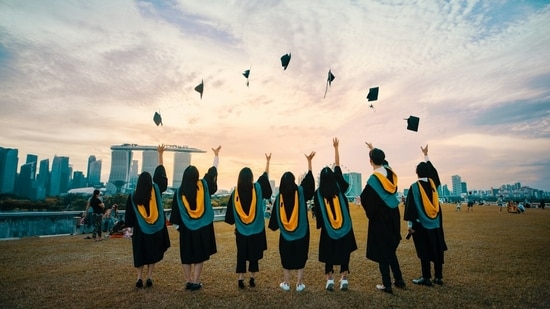
In a few months, convocation halls across India will fill with black gowns and proud parents. As students collect their degrees, many parents will be thinking about one question: Will my child's degree still matter five years from now?
It is a fair question. The job market is changing quickly, and the skills employers need are changing with it.
The World Economic Forum's Future of Jobs Report 2025 says 39% of workers' core skills could change by 2030. At the same time, it expects 170 million new jobs to be created while 92 million jobs may be displaced.
From Cyberattacks to AI Attacks: What does cybersecurity look like in 2026?
So, the real question is not whether the job market will change. It is: What will the ideal graduate look like five years from now?
Good With Technology, Strong in Judgement
By 2031, being comfortable with technology will be essential. AI will increasingly become part of almost every profession, from finance and healthcare to education, engineering and media.
{{/usCountry}}By 2031, being comfortable with technology will be essential. AI will increasingly become part of almost every profession, from finance and healthcare to education, engineering and media.
{{/usCountry}}We should not approach this change with fear. AI is not the enemy; it is a friend and an enabler. The responsibility of education is to ensure that students learn how to use it effectively and responsibly.
AI literacy should therefore not be restricted to technical courses. A student of humanities, management, law, healthcare or media should also understand how AI can support their work.
But technology alone will not define the ideal graduate. As machines take on more routine tasks, human qualities such as judgement, creativity, communication, decision-making and the ability to understand people will become even more valuable.
The ideal graduate will know how to use AI, but will not surrender their thinking to it.
A Degree Is Not the Finish Line
A degree will remain important, but it cannot be the end of education.
Universities must move beyond preparing students merely to clear examinations. Education should prepare young people to solve problems, make decisions, adapt to change and build meaningful careers.
This requires a stronger focus on real-life learning. Students should experience how their knowledge works outside the classroom. A management student should understand how products are built, marketed and sold. A finance student should gain practical exposure to markets. A fashion student should create products for real consumers. A journalism student should understand what it means to create work for a real audience.
Is an AI degree enough to make students job-ready? skills students need to succeed
The objective should be simple: students should graduate with something they can demonstrate, not just something they can describe.
Building the Graduate of 2031
The ideal graduate will need more than marks. They will need practical experience, technology skills, communication, judgement and the ability to keep learning.
Universities should strengthen partnerships with industry through internships, live projects and practical assessments. Students should also be encouraged to build a professional digital identity through portfolios, blogs and other platforms where they can demonstrate their work and capabilities.
Most importantly, education must have a stronger connection with careers. Every student should pass out with a career degree—an education that gives them not just academic knowledge, but the confidence and capability to navigate the world of work.
Five years from now, the ideal graduate will not simply be someone with a degree. It will be someone who understands technology, thinks independently, works well with others, has real-world exposure and is willing to learn again and again.
The degree will still open the first door. But the ability to solve problems, adapt to change and keep learning will determine how far they go.
(About the author: Dr. Ashok Kumar Mittal is the Member of Parliament (Rajya Sabha) and the Founder Chancellor of Lovely Professional University)