
 E-Paper



From Cyberattacks to AI Attacks: What does cybersecurity look like in 2026?
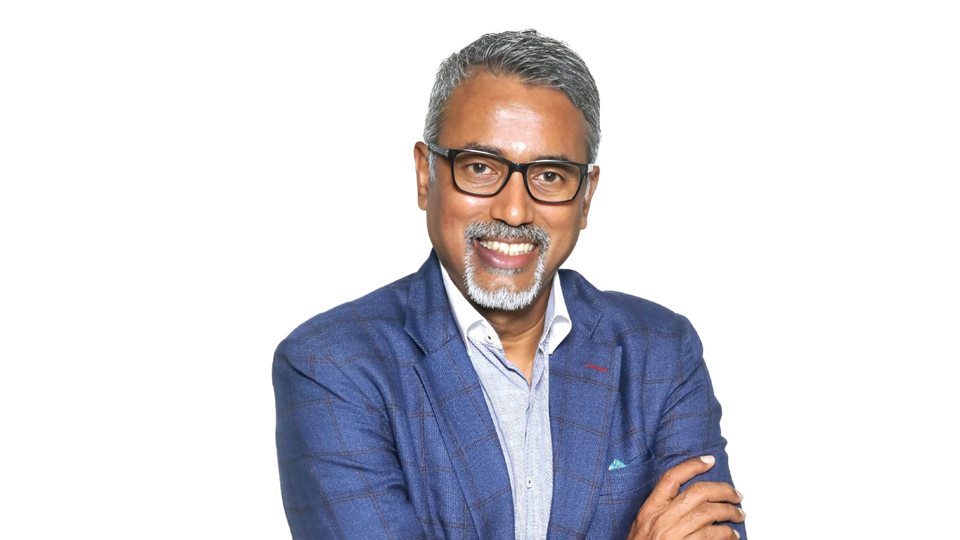
Rathakrishnan Govind explains as threats grow, future cybersecurity professionals will need tech expertise with AI security, critical thinking, adaptability.

 Prefer HTon Google


Cybersecurity has traditionally been a contest between human attackers and human defenders, fought through technology. In 2026, I see that equation changing. Artificial intelligence is increasingly becoming part of the battle on both sides, reshaping how cyber threats emerge and how organisations respond to them.
What concerns me is how AI is lowering the barriers to sophisticated cyberattacks. Cybercriminals can now use it to create convincing phishing emails, imitate writing styles, generate fake identities and produce realistic voice and video deepfakes. Tasks that once demanded considerable time and technical expertise can increasingly be automated and executed at scale.
The World Economic Forum’s Global Cybersecurity Outlook 2026 reflects the scale of this shift. It identifies AI as the biggest driver of change in cybersecurity, with 94% of respondents expecting it to have a significant impact on the field in the year ahead. AI-related vulnerabilities were also identified as the fastest-growing cyber risk during 2025.
However, I believe the implications extend well beyond more sophisticated phishing attacks.
Is an AI degree enough to make students job-ready? skills students need to succeed
The emergence of agentic AI, capable of planning and executing multi-step tasks with greater autonomy, could fundamentally change how cyberattacks are conducted. Such systems could potentially assist attackers with reconnaissance, vulnerability discovery and other stages of an attack, accelerating activities that would otherwise require considerable human effort.
For organisations, this presents a dual challenge. We must strengthen our defences against cybercriminals using AI while also addressing the vulnerabilities that can arise from our own growing reliance on these technologies.
As businesses integrate generative and agentic AI into everyday operations, issues such as data leakage, access permissions, manipulation of AI systems and the security of autonomous agents demand greater attention. Cybersecurity is no longer simply about using AI to protect an organisation; it is equally about securing the AI systems that organisations increasingly depend on.
At the same time, I see considerable potential in AI's role in strengthening cybersecurity. Security teams are increasingly using it to analyse large volumes of data, identify unusual behaviour, detect phishing attempts and prioritise potential threats. The same World Economic Forum research indicates that 77% of surveyed organisations are already using AI for cybersecurity.
We are entering a new reality in which AI can be used both to attack systems and to defend them. How organisations navigate this changing landscape will depend on their ability to understand and manage both sides of the equation.
For the next generation of cybersecurity professionals, this shift has significant implications. Preparing for this evolving landscape must go beyond traditional technical training. Professionals need to understand how AI can be exploited, how AI systems can be secured and how these technologies can be applied responsibly in cybersecurity.
Technical expertise in network security, cloud security, identity management, threat detection, incident response and risk management will remain fundamental. However, these capabilities must increasingly be complemented by an understanding of AI security, automated threat detection, critical thinking and practical problem-solving. Equally important is the ability to adapt as technologies and threats continue to evolve.
I do not see the future of cybersecurity as a question of whether AI will replace cybersecurity professionals. Rather, the defining challenge will be how effectively professionals can work alongside AI, anticipate emerging threats and make informed decisions in increasingly complex environments.
As we look ahead, I believe the next generation of cybersecurity professionals must be equipped not only to defend against the threats of today, but also to understand and anticipate those of tomorrow.
(This article is written by Rathakrishnan Govind, Chief Executive Officer, LSBF Global)


