
 E-Paper



Tata Trusts’ merger proposal: How two Tata companies may keep Tata Sons off the stock market
Noel Tata opposes listing. The Trusts’ proposal to merge an iPhone assembler and a project consultancy could let Tata Sons avoid listing.

 Prefer HTon Google


Tata Trusts, the group of charities that is the majority shareholder in Tata Sons, has proposed merging two Tata companies – Tata Consulting Engineers (TCE) and Tata Electronics Systems Solutions (TESS) – into the holding company. The move, analysts say, could potentially take Tata Sons out of the Reserve Bank of India's (RBI) rules for non-banking financial companies (NBFCs), which require the largest of them to list on the stock market.
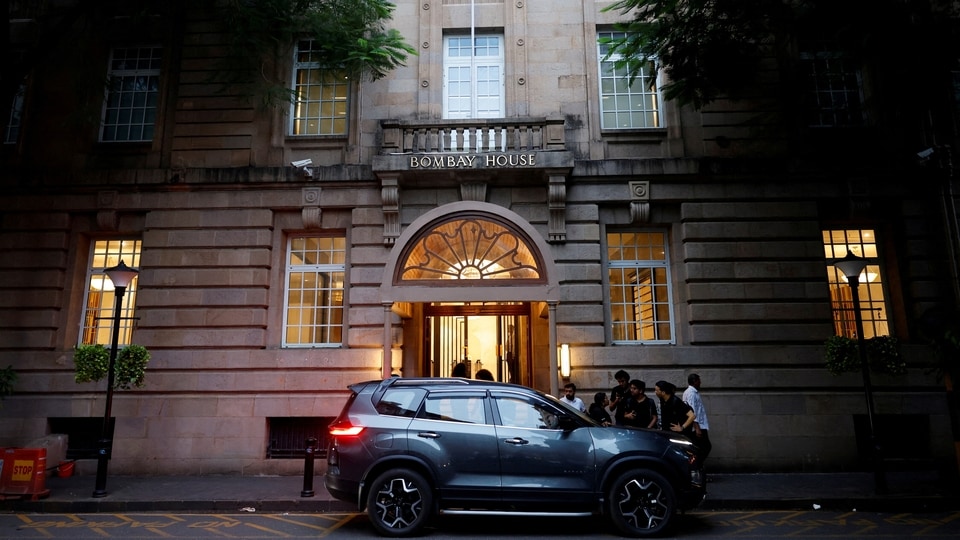
The proposal follows a split on the Tata Sons board over who should lead the company and whether it should go public. On September 17, the board reappointed N Chandrasekaran for a third term as chairman over the objection of Noel Tata, who chairs Tata Trusts and is one of its nominees on the board. The other directors said the need for a listing made continuity under Chandrasekaran necessary, the Mint reported.
The Trusts, which own 65.9% of Tata Sons, called the reappointment illegal under the company’s articles, arguing that both Trust nominees on the board were required to vote in favour, Reuters reported.
The Trusts want Tata Sons to stay private. Noel Tata told the board that if forced to vote, "I would have no option but to veto any such decision to list," according to a statement released by the Trusts. The Shapoorji Pallonji (SP) group, which owns 18.38%, has pressed for a listing for months and its chairman, Shapoor Mistry, has called a listing a “social and moral imperative”, PTI reported.
Why does Tata Sons have to list?
Tata Sons does not lend to the public or take deposits. It holds shares in Tata companies. A firm whose main business is holding shares in its own group is classed as a core investment company, a type of NBFC that the RBI registers and regulates.
In September 2022, the RBI placed Tata Sons in the upper layer of NBFCs, a category subject to stricter regulation. Companies in that layer must list within three years of being identified.
Tata Sons applied in March 2024 to surrender its registration with the RBI, which would have freed it from the listing requirement. But the RBI rejected the application on September 11 this year. After the September 17 board meeting, Tata Sons said it would "initiate steps to comply with the applicable RBI Guidelines" and seek guidance from the RBI, Tata Trusts and other stakeholders. Noel Tata, who has opposed the listing, has asked the board to seek at least three years from the RBI, until September 2029, to list, Mint reported.
How would a merger help?
The RBI decides whether a company is an NBFC by looking at where its money comes from and where it is held. It has two criteria: when more than 50% of the company's income comes from financial assets, and when more than 50% of its total assets are financial assets, such as investments.
A company must meet both conditions to be classified as an NBFC. The merger is meant to raise Tata Sons' income from operating businesses and reduce the share of its revenue that comes from its investments in group companies, Mint reported. The Trusts estimate that after the merger, about 64% of Tata Sons' revenue would come from operating businesses. That could potentially take the company out of the NBFC category, and out of the RBI's regulatory remit.
Also read: Tata Trusts propose Tata Sons rejig as Noel Tata seeks to prevent public listing of company
What are TCE and TESS, and why these two?
TCE is a project management consultancy that works on large infrastructure projects. It has worked on India's new Parliament building in New Delhi and the Mumbai-Ahmedabad bullet train project. TESS is a unit of Tata Electronics. It assembles iPhones at two facilities in India, one of which it runs through a joint venture with Taiwan's Pegatron Corp.
Experts cited by Mint pointed to three features that set the two companies apart.
They are unlisted. Merging a listed subsidiary into Tata Sons would be more complex from a regulatory point of view, because its minority shareholders would have to be accounted for.
They are wholly owned. TCE is a direct, 100% subsidiary of Tata Sons. TESS is wholly owned by Tata Electronics, which in turn is wholly owned by Tata Sons. The merger would bring no new shareholders into Tata Sons.
They are profitable. TESS reported standalone revenue of ₹67,542 crore and a profit of ₹1,025 crore in FY26, according to filings with the Ministry of Corporate Affairs cited by Mint. TCE reported standalone revenue of ₹1,932 crore and a profit of ₹226 crore. Profitability is also likely why the Trusts chose to carve TESS out of Tata Electronics rather than merge the whole company, Mint reported. Tata Electronics is investing heavily in a semiconductor fabrication plant and a chip assembly and testing unit. Neither has started operations, and both will take a few years to turn a profit.
Because the two companies are unlisted and wholly owned, the merger would leave Tata Sons’ shareholding unchanged, and approvals from internal stakeholders would be procedurally simpler, according to experts cited by Mint. Their revenues would also raise Tata Sons’ operating income and reduce the share of its revenue that comes from investments in group companies.
Also read: How Tata Trusts picked two firms to merge with Tata Sons
What could stand in the way?
Gaurav Pingle, a partner at Forefront Legal Consulting LLP, told Mint that creditors' approval "may be the only procedural challenge". But he also questioned whether the RBI or the National Company Law Tribunal (NCLT), which approves mergers, would view the restructuring as aimed only at avoiding a listing, with no other commercial reason.
And what happens next?
Several questions remain open. The position of Tata Sons is not yet known. If the merger happens, the RBI would have to accept that the merged company no longer falls within its NBFC rules. The timeline also remains unclear.


