After winning acclaim worldwide, including the Best Director prize at the Cannes Film Festival, Polish director Paweł Pawlikowski’s Fatherland is premiering in India at the International Film Festival of India (IFFI) 2026. Ahead of the premiere, the film’s producer, Ewa Puszczyńska, spoke to Hindustan Times about her experience of India and its audiences, and whether films still have the power to bring about positive change in the world.
Ewa Puszczyńska on Fatherlands's premiere at IFFI
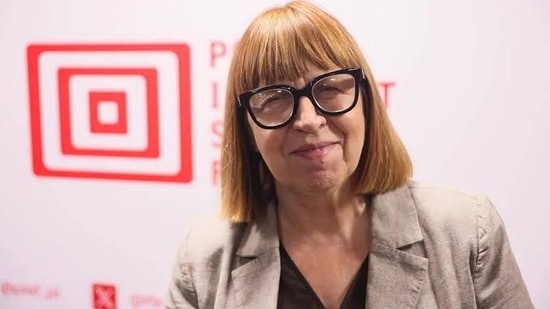
Fatherland is the culmination of Pawlikowski’s thematic trilogy that includes Ida and Cold War. The film is the story of a family caught in the middle of World War II. “Paweł’s previous films like Ida and especially Cold War were very well received in India. Indian audience likes his films, so I hope that Fatherland will be equally well received. Although it's not quite an easy film to watch and to understand. It's different from Cold War, which was a love story with many obstacles along the way. This film is very emotional, but also very philosophical, touching on more than just history,” Ewa says about the film’s reception in India.
Pawel’s films are set in Europe, mostly in the mid-20th century. Yet, they have found resonance in audiences worldwide, even among those for whom World War II isn’t as personal a memory as it is for European audiences. Explaining that, Ewa says, “I think that it speaks about very universal subjects. It talks about the love between a brother, sister, and the family life. That is the same all over. We may live in different cultures, but we share the same basic emotions. These films have many universal meanings. That's why they are still well received all over the world, even if we can see in so far away cultures like India and Europe. But it looks like they're really universal.”
‘The world is divided’
But to Ewa, how Pawel’s films, particularly Fatherland, resonate with the world is also because she feels the divisions in the world today are very universal and reminiscent of the time depicted in the films. “We are divided,” she proclaims, adding, “The world is again divided between east and west, but also between north and south. And within each country. I'm not an expert in contemporary Indian history and politics. But I can see that within India, too, people are divided. That also resonates.”
{{/usCountry}}But to Ewa, how Pawel’s films, particularly Fatherland, resonate with the world is also because she feels the divisions in the world today are very universal and reminiscent of the time depicted in the films. “We are divided,” she proclaims, adding, “The world is again divided between east and west, but also between north and south. And within each country. I'm not an expert in contemporary Indian history and politics. But I can see that within India, too, people are divided. That also resonates.”
{{/usCountry}}Independently made films normally take time in post-production and to find backers for distribution and release. But Ewa says she was always adamant that Fatherland must not take much time after it was completed last year. “It was very important that after they made the film last year, we do not wait for another year or two to finance. I think this is the moment in the world that this film has to be made and screened all over,” she explains.
‘Films can't really make a difference’
Films like Fatherland hold a mirror up to society. But there is debate on whether art can bring about a substantial change in the world. Ewa, who has produced many Oscar-winning and nominated films, is on the fence here too. The veteran producer says, “Unfortunately, I'm not naive anymore. I don't think films can really make a big difference.” However, her estimation of films’ impact is not all hopeless. She adds, “But films can ask questions, and films can make people think, and reflect on what they want. And if people start reflecting and asking questions, then we change slowly, bit by bit. And then people can change the world. That is the influence films can have on people.”
Fatherland is a 2026 fictionalised biographical film directed by Paweł Pawlikowski. It stars Sandra Hüller and Hanns Zischler as Erika and Thomas Mann, respectively, who embark on a road trip across Germany in 1949. The film premiered at IFFI 2026 on Friday morning as the festival's opening film. IFFI 2026 will run in Goa till November 28.
Get more updates from Bollywood, Hollywood, Music and Web Series along with Latest Entertainment News at Hindustan Times.
Get more updates from Bollywood, Hollywood, Music and Web Series along with Latest Entertainment News at Hindustan Times.