As digital banking, online payments and connected services become central to everyday life, cyber criminals are finding increasingly sophisticated ways to exploit trust, urgency and human behaviour.
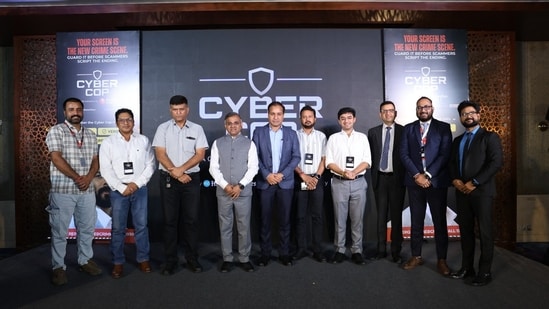
Against this backdrop, the Cyber Cop Digital Safety Camp, Jaipur Chapter, held on 29 August 2026 at Holiday Inn Jaipur City Centre, brought together citizens, cybersecurity experts, banking professionals and law-enforcement authorities to explore one critical question: how can individuals stay safe in an increasingly digital world?
The workshop is part of Cyber Cop, a CSR initiative by Bandhan Bank, presented by Hindustan Times and implemented by Aident Social Welfare Organization, aimed at creating greater awareness around evolving cyber threats and empowering citizens with practical knowledge to stay safe online.
The session highlighted how the rapid adoption of digital banking, payments, communication platforms and online services has transformed everyday convenience while simultaneously creating new opportunities for cyber criminals. Participants were introduced to the changing nature of cyber fraud, where seemingly ordinary calls, messages, links and QR codes can be used to manipulate victims. The discussion covered common threats such as KYC scams, phishing, QR-code fraud, WhatsApp impersonation and AI-enabled voice scams.
A key theme throughout the workshop was the importance of timely action. Participants learnt about the "Golden Hour" of cyber crime, the critical first 60 minutes after discovering a cyber incident, when rapid reporting and preservation of evidence can significantly improve the chances of preventing further losses and aiding recovery. The session encouraged citizens to immediately report cyber fraud through the national helpline 1930, inform their bank and use official cyber crime reporting channels.
The programme featured an address by Sarvashish Roy, Head of CSR, Bandhan Bank, who spoke about the importance of building trust and security alongside the growth of digital banking. He highlighted the role of awareness and education in helping communities identify, avoid and report cyber threats, reinforcing the idea that a safer digital ecosystem requires not only secure systems but also informed and vigilant users.
{{/usCountry}}The programme featured an address by Sarvashish Roy, Head of CSR, Bandhan Bank, who spoke about the importance of building trust and security alongside the growth of digital banking. He highlighted the role of awareness and education in helping communities identify, avoid and report cyber threats, reinforcing the idea that a safer digital ecosystem requires not only secure systems but also informed and vigilant users.
{{/usCountry}}A key highlight of the workshop was an expert masterclass titled Inside the Mind of a Cyber Criminal, led by Saakshar Duggal, TEDx Speaker, AI Governance & Law Expert and Data Protection Attorney. Through real-life examples and engaging storytelling, the session explored how fraudsters exploit human psychology, trust, fear and urgency to manipulate victims. Participants gained practical insights into scams involving OTPs, KYC verification, phishing links, QR codes, AI voice cloning and WhatsApp impersonation.
The session also explored the growing role of artificial intelligence in cyber crime. Participants learnt how AI is enabling criminals to create convincing deepfakes, automated phishing campaigns and sophisticated investment scams, while the same technology is helping strengthen cyber defence through predictive threat intelligence and automated security systems.
One of the most engaging segments of the Jaipur chapter was the interactive audience Q&A, where participants analysed realistic scenarios involving suspicious bank calls, fake KYC requests, QR-code payment scams, impersonation attempts and fraudulent customer-care numbers. The discussion encouraged attendees to apply the learnings from the workshop to situations they could encounter in their daily lives.
The programme also brought a critical law-enforcement perspective through an address by Shantanu Kumar Singh Chanrawat, DIG, Cyber Crime, Rajasthan. His session focused on the role of law enforcement in responding to cyber crime, investigating complaints and guiding citizens through the process of reporting and recovery.
A case study presented by the Rajasthan Police Cyber Crime Branch on a digital-arrest fraud demonstrated the importance of timely reporting and coordinated investigation. The case highlighted how prompt intervention and collaboration between agencies helped prevent financial loss. It also reinforced a crucial message: there is no such thing as a digital arrest, and citizens should never transfer money or share sensitive information under pressure from someone claiming to be a police or government official.
The workshop witnessed enthusiastic participation, with attendees actively engaging with experts and raising questions about real-world concerns and experiences. The response reflected a growing demand for practical cyber-safety awareness and easy-to-understand guidance on protecting personal and financial information online.
The workshop concluded with three simple principles for staying safe online: Pause. Verify. Report. Participants were encouraged to pause before responding to suspicious or urgent requests, independently verify individuals, messages, links or payment requests, and report suspected fraud immediately.
The Jaipur chapter demonstrated that cyber safety is not solely the responsibility of banks, technology platforms or law-enforcement agencies. It begins with informed and vigilant citizens. By bringing together citizens, experts and institutions, Cyber Cop aims to equip communities with the awareness and confidence needed to navigate an increasingly digital world safely.
The message from Jaipur was simple, practical and powerful:
Pause. Verify. Report.
Note to the Reader: This article is part of Hindustan Times' promotional consumer connect initiative and is independently created by the brand. Hindustan Times assumes no editorial responsibility for the content.