More than 8,000 young people from across Uttar Pradesh participated in ‘Sanatani Shankhnaad 2026’, a youth festival organised by the state’s information department at Sharda University in Greater Noida on Wednesday, with discussions and cultural performances focusing on India’s diverse traditions and shared cultural identity.
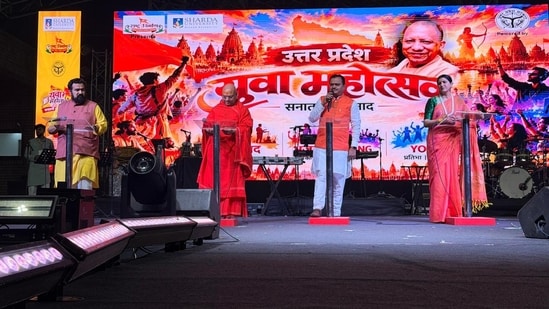
Held under the theme ‘Diverse India: Connecting with Uttar Pradesh’s Cultural Roots’, the event aimed to connect the younger generation with India’s cultural heritage and encourage them to play an active role in its preservation. Participants highlighted the idea that linguistic and differences in forms of worship did not diminish a shared sense of belonging.
The festival featured discussions on the philosophical and scientific basis of Sanatan traditions, religious freedom under the Indian Constitution, spiritual knowledge and the role of young people in nation-building.
Speakers included religious leader Balkानand Giri Ji Maharaj, Supreme Court advocate Vishnu Jain, Sadhvi Dr Shivani Bharti and Kajal Hindustani. They discussed cultural identity, the relevance of Sanatan traditions and the role of youth in preserving heritage.
Speakers also shared their views on what they described as changes in Uttar Pradesh since 2017 in cultural revival, religious tourism and heritage conservation.
{{/usCountry}}Speakers also shared their views on what they described as changes in Uttar Pradesh since 2017 in cultural revival, religious tourism and heritage conservation.
{{/usCountry}}The event combined intellectual discussions with performances representing different Indian cultural traditions. The programme included folk dances, Kathak, Bharatanatyam, devotional music, theatrical performances and a special dance dedicated to Goddess Durga.
A musical and visual presentation on cultural changes in Uttar Pradesh under Chief Minister Yogi Adityanath also featured at the festival. The programme concluded with a musical night by the Keshavam band, combining contemporary music with devotional songs and bhajans.
Organisers positioned the festival as a platform for young people to engage with cultural traditions through discussion, artistic expression and music. Its central message was captured in the phrase ‘Bhasha anek, bhav ek’, meaning many languages, one sentiment, reflecting the idea of cultural unity amid diversity.