The meeting between Smt. Usha Padhee, Additional Chief Secretary, Housing & Urban Development Department, and Subhalaxmi Mahananda, Odisha’s first woman electric-bus driver from Keonjhar district, brought a human perspective to Odisha’s efforts to make public transport more inclusive. Their interaction highlighted two aspects of the change: the role of administrators in creating opportunities and the determination of women who step forward to make use of them.
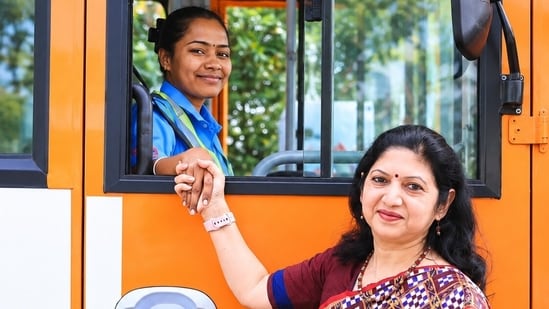
Mahananda’s journey from Keonjhar to the driver’s seat of an electric Ama Bus reflects the possibilities that can emerge when training, institutional support and livelihood opportunities come together. Her presence on the road also offers a visible example to young women who may not have previously considered driving a public transport vehicle as a career.
The meeting took place during the 19th Urban Mobility India (UMI) Conference and Exhibition and the 2nd National Urban Conclave (NUC), hosted in Bhubaneswar from October 23 to 25, 2026. UMI was held in eastern India for the first time, bringing policymakers, transport professionals and other stakeholders together to discuss accessible mobility and liveable cities.
Creating pathways for women in public transport
Odisha’s efforts to increase women's participation in the transport sector involve coordination across government departments and transport institutions. Support from the Principal Secretary, Commerce & Transport Department, the Transport Commissioner and the Managing Director of Capital Region Urban Transport (CRUT) has contributed to initiatives spanning policy, training, livelihood opportunities and transport operations.
CRUT has undertaken measures to help more women enter public transport services. These include advanced electric-bus training for 20 women who hold Heavy Motor Vehicle licences. Women are also working in different roles across the system, including as drivers, conductors and feeder-service personnel.
{{/usCountry}}CRUT has undertaken measures to help more women enter public transport services. These include advanced electric-bus training for 20 women who hold Heavy Motor Vehicle licences. Women are also working in different roles across the system, including as drivers, conductors and feeder-service personnel.
{{/usCountry}}Their participation brings greater representation into everyday public transport operations. It also makes these professional roles more visible to commuters, potentially encouraging other women to explore employment in the sector.
A broader initiative, Atmanirbhar MAhila SuVahak, or AMA SuVahak, seeks to extend these opportunities beyond employment into entrepreneurship. The programme envisages the creation of 2,450 women-led transport enterprises across Odisha.
Its provisions include interest-free loan support of up to ₹10 lakh for purchasing vehicles, an additional incentive of ₹2 lakh for electric vehicles, and free driving and entrepreneurship training with licensing support. Priority assistance for self-help group members and eligible women beneficiaries, along with integration with ride-hailing platforms, is intended to connect training and vehicle ownership with potential income opportunities.
Expanding the public transport network
The initiatives for women's participation are taking shape alongside the expansion of Odisha's public transport system. CRUT, which began as a single-city operation, has grown to operate 770 buses across 138 routes. Electric buses account for 51% of its fleet, while nearly 48% of ticketing transactions are cashless.
At UMI 2026, the CRUT pavilion presented different aspects of this expansion, including Ama Bus services, electric mobility, the Odisha Yatri platform, intelligent transport management, digital ticketing, safety measures and accessibility initiatives. CRUT also supported the planning, coordination and execution of the conference and exhibition.
The event was guided by the theme “Urban Accessibility and Liveability in the Digital Age”. Discussions at UMI and the National Urban Conclave examined how transport systems and digital services can contribute to more inclusive, sustainable and future-ready cities.
Against this wider backdrop, Mahananda’s experience offered a personal illustration of the opportunities that mobility-sector initiatives can create. A woman taking the wheel represents more than an individual career milestone: it reflects access to training, institutional encouragement and the confidence to enter a traditionally male-dominated profession.
As Odisha continues to expand its public transport network and encourage women's participation, the experience of women such as Mahananda could help make careers in mobility more visible to the next generation.