A preliminary list of 43 slums in the city, compiled by the Municipal Corporation of Gurugram (MCG) in the wake of a nationwide lockdown to contain the spread of COVID-19, has since swelled to include over 250 informal housing clusters (including smaller unauthorised colonies and EWS hamlets).
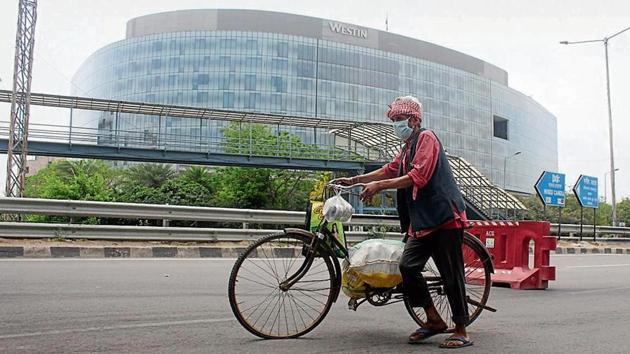
These clusters have been identified in order to streamline the flow of food and essential supplies, such as water, soap and toothpaste, to these areas. An estimated 15 to 20,000 families, mostly daily wage migrant labourers, reside there.
Click here for the complete coverage of the Covid-19 pandemic
The MCG, with the help of several volunteers and NGO groups, has attempting to supply these families with at least two cooked meals a day.
MCG joint commissioner Vivek Kalia said, “We have been actively mapping areas in the city where aid is required and updating this list. Initially, we were focused on providing residents with dry ration, but now we are instead providing cooked food as many of the families living in these clusters do not have stoves or LPG cylinders. There are several kitchens at work in Gurugram, from where MCG officials and volunteers are collecting and distributing food packets.”
Logistically too, providing cooked food instead of dry ration packets has proved to be easier for the MCG.
{{/usCountry}}Logistically too, providing cooked food instead of dry ration packets has proved to be easier for the MCG.
{{/usCountry}}As per a statement issued by the district administration on Sunday, a total of 172,000 individuals across the district are being provided with cooked food and other essential supplies every day. Those who aren’t receiving delivery of supplies in their neighbourhood also have the option of visiting any of the 77 relief centres which have been set up across the district, of which 56 are located within the MCG area. Approximately 168,000 food packets, along with 2,500 dry ration packets, are being provided to people each day.
Kalia urged residents, who wish to volunteer by either providing cooked food or helping with distribution, to approach the district administration or their local councillor before doing so.
“We have noticed that many of the slum clusters in newer parts of the city are being adequately serviced, because of their proximity to condominiums. However, there are large informal housing settlements in older parts of the city too, and we need to ensure equitable distribution of food and other essential items,” he added.
To ensure equitable distribution, the MCG has created a centralised, digital map for each of the city’s four zones, marking the exact locations of these clusters, along with the number of families residing there.
“Volunteers and officials, when referring to this map, are also able to see when food was last delivered to a particular area. This way, we avoid duplication,” Kalia explained. Each of these clusters has also been assigned a citizen volunteer, who is directly responsible for coordinating food supply to the families there.
Among the NGOs at the forefront of this effort are IAmGurgaon, the Gurugram Nagrik Ekta Manch, Agrasar, Janata Rasoi (a community kitchen being run out of DLF3), and Rasoi on the Wheels, in addition several smaller citizen initiatives at a neighbourhood level, and the city’s civil defence personnel, who have taken the reigns on distribution efforts. In rural areas, it is the local panchayats who have become involved, as per a Sunday press release issued by the administration.
Latika Thukral, founder, IAmGurgaon, said, “It is extremely necessary to streamline the distribution process now, as the administration and citizens together will have to take care of the city’s underprivileged for at least the next two months, if not longer. We are actively trying to raise funds to ensure a constant flow of supplies.” According to an estimate by Agrasar, it will take approximately Rs 3250 per family, per month, in order to ensure a daily supply of cooked food to the city’s needy.
Stay updated with all the Breaking News and Latest News from Mumbai. Click here for comprehensive coverage of top Cities including Bengaluru, Delhi, Hyderabad, and more across India along with Stay informed on the latest happenings in World News.
Stay updated with all the Breaking News and Latest News from Mumbai. Click here for comprehensive coverage of top Cities including Bengaluru, Delhi, Hyderabad, and more across India along with Stay informed on the latest happenings in World News.