Doctors, dieticians and naturopaths consider that potassium can be helpful in counterbalancing diets that are now often too high in salt. This essential mineral plays a key role in the transmission of nerve impulses, as well as muscle contractions (especially of the heart) and kidney function. Fruit and vegetables are a very good source of the element.
With a recognised role in lowering blood pressure, potassium is a precious ally for anyone whose diet is too high in salt. Potassium’s role is to maintain the acid-base balance of the body and to regulate the entry and removal of sodium and chlorine to and from the body via the kidneys.
According to the latest data from the French Agency for Food, Environmental and Occupational Health & Safety (ANSES), men consume an average 8.7g of salt per day, dropping to 6.7g for women. For children aged three to 17 years old, average salt consumption is 5.9g for boys and 5g for girls, with variations in relation to age. These figures are way above objectives from the World Health Organization, which recommends a maximum salt consumption of 5g per day, equivalent to just under one teaspoon.
Anyone who eats a lot of bread, deli meats like cured sausages and ham, cheese, broths or stock (vegetable or meat), sauces and condiments, cod or anchovies could benefit from adding fruit and vegetables that are rich in potassium to their plates.
{{/usCountry}}Anyone who eats a lot of bread, deli meats like cured sausages and ham, cheese, broths or stock (vegetable or meat), sauces and condiments, cod or anchovies could benefit from adding fruit and vegetables that are rich in potassium to their plates.
{{/usCountry}}The amount of salt hidden in processed, industrial foods like ready meals, soups and sauces is currently under fire from nutritionists and health authorities.
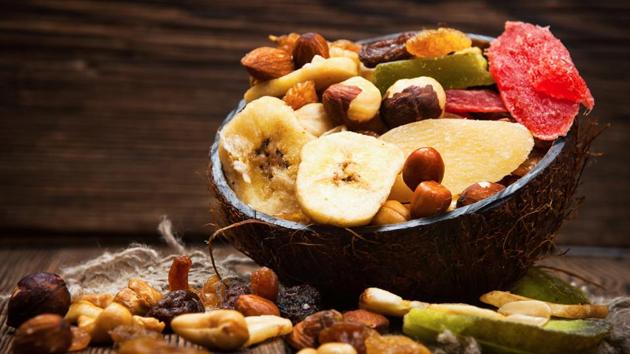
In its natural state, potassium is mainly found in legumes like white beans, chick peas and lentils, as well as vegetables (chard, spinach, potatoes, cabbage, mushrooms), fruit (avocado, banana, apricots, citrus fruit, blackcurrants), dried fruit and nuts (walnuts, almonds, pistachios, dates, figs).
It’s also particularly present in meat and fish, especially oily fish (salmon, sardines, mackerel), as well as chocolate and whole grain cereals.
Only fats like butter, cream, oils and margarine don’t contain the element.
The top ten foods with the highest potassium levels include lentils (810mg per 100g), dried dates (790mg), prunes (732mg), almonds (705mg), spinach (662mg), avocado (650mg), chestnuts (600mg), mushrooms (520mg), walnuts (450mg) and apricots (440mg).
Coffee, cumin seeds, curry powder, ground ginger and coriander seeds are also sources of potassium.
Follow @htlifeandstyle for more.
Catch your daily dose of Fashion, Taylor Swift, Health, Festivals, Travel, Relationship, Recipe and all the other Latest Lifestyle News on Hindustan Times Website and APPs.
Catch your daily dose of Fashion, Taylor Swift, Health, Festivals, Travel, Relationship, Recipe and all the other Latest Lifestyle News on Hindustan Times Website and APPs.