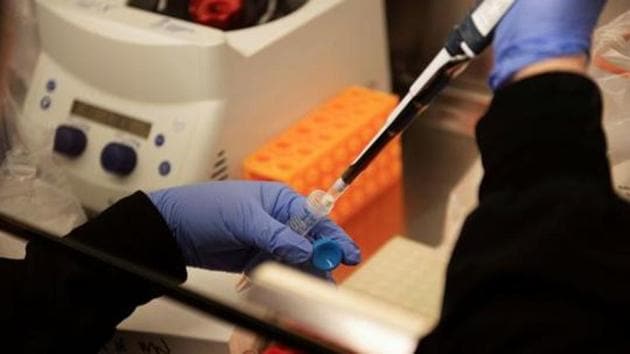
The Oxford University team at Jenner Institute that developed the Astra-Zeneca vaccine against Coronavirus disease (Covid-19) is now set to begin phase-3 human trials of a promising shot against malaria, which will be tested on 4,8000 children in Africa in early 2021.
“It’s going to be available in very large amounts — it works pretty well. And it’s going to be very low-priced,” Jenner Institute director Professor Adrian Hill told The Times (of London) in an interview. The malaria vaccine is likely to be ready for public use by 2024.
“Malaria is a public health emergency. A lot more people will die in Africa this year from malaria than will die from Covid. I don’t mean twice as many – probably 10 times,” said Professor Hill.
Covid-19 deaths crossed 1.5 million worldwide on December 3, which is close to four times the 411,000 malaria deaths, according to the World Health Organization’s (WHO) World Malaria Report 2020 released on November 30.
Also Read: UN warns the Coronavirus pandemic will fan ‘darkest’ surge in humanitarian needs in 2021
Malaria is declining globally, with the disease claimed 4,09,000 lives last year, compared to 411,000 in 2018, according to the WHO report, which has used data from national malaria control programmes from 87 malaria-endemic countries, including India. Children under 5 years, mostly in Africa, account for the majority of deaths.
{{/usCountry}}Malaria is declining globally, with the disease claimed 4,09,000 lives last year, compared to 411,000 in 2018, according to the WHO report, which has used data from national malaria control programmes from 87 malaria-endemic countries, including India. Children under 5 years, mostly in Africa, account for the majority of deaths.
{{/usCountry}}National malaria-control efforts worldwide have averted 1.5 billion cases and 7.6 million deaths since 2000 has been hit hard by Covid-19, said the report, but poor access to prevention tools and health services in many parts of the world have led to avoidable deaths remaining high among vulnerable and underserved populations.
In India, malaria deaths have declined from about 29,500 in 2000 to about 7,700 last year, with the country recording the largest reduction in cases in the WHO South-East Asia region, of which it is apart, where cases declined from 20 million in 2000 to about 5.6 million last year.
The WHO South-East Asia Region, which accounts for a fourth of the world’s population, now bears around 3% of the global burden of malaria cases, which reduced by 73% in the region, from 23 million in 2000 to about 6.3 million in 2019. Deaths declined by 74%, from about 35,000 in 2000 to 9,000 in 2019, with the largest reductions in India.
In the past two years, India has recorded 18% reduction in cases and 20% decline in deaths over the last two years, said the report. Malaria deaths in the country declined from about 29,500 in 2000 to about 7,700 last year, the report said.
“Countries in South-East Asia made particularly strong progress, with reductions in cases and deaths of 73% and 74%, respectively. India contributed to the largest drop in cases region-wide — from approximately 20 million to about 6 million,” said WHO Director-General Dr Tedros Adhanom Ghebreyesus, in the report’s forward.
Also Read| Females clear asymptomatic malaria infection faster than males: Study
Improved targeting of interventions and tools, such as insecticide-treated nets and preventive medicines, and increased funding can speed up efforts to eliminate malaria by 2030. In 2019, total funding reached $3 billion against a global target of $5.6 billion, but the Covid-19 pandemic burden on health systems and global economy is expected to be a further set back.
The case numbers in sub-Saharan Africa have been unchanged since 2016 at about 229 million, and this year the region will fall further short of milestones set by the World Health Assembly in 2015. A 10% disruption in access to antimalarial treatment could lead to 19,000 additional deaths this year, with 25% or 50% disruptions resulting in an additional 46,000 and 100 000 deaths, respectively.
Sub-Saharan Africa has so far recorded around 30 000 Covid-19 deaths, of which more than two thirds occurred in South Africa. “It’s likely that excess malaria mortality is larger than direct Covid-19 mortality,” said Pedro Alonso, director of WHO’s malaria programme, at the report’s release.
The African Region accounts for 90% of the malaria burden. Eleven highest burden countries account for 70% of the global estimated case burden and 71% of global estimated deaths from malaria. These include Burkina Faso, Cameroon, the Democratic Republic of the Congo, Ghana, India, Mali, Mozambique, Niger, Nigeria, Uganda and Tanzania.
Catch your daily dose of Fashion, Taylor Swift, Health, Festivals, Travel, Relationship, Recipe and all the other Latest Lifestyle News on Hindustan Times Website and APPs.
Catch your daily dose of Fashion, Taylor Swift, Health, Festivals, Travel, Relationship, Recipe and all the other Latest Lifestyle News on Hindustan Times Website and APPs.