It all started with the US announcing to pull out as a member of the United Nations health body — the World Health Organisation — almost immediately after President Donald Trump took over for a second term in January this year.
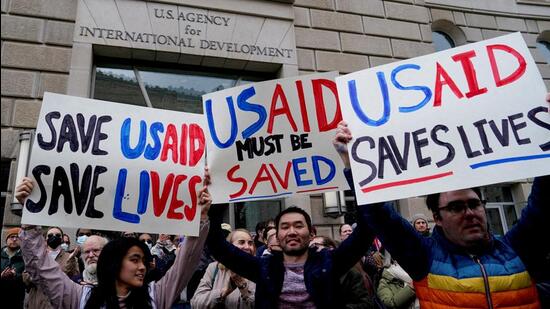
One move after the other led to his administration practically dismantling USAID by sending its workers on paid leave in February, and US health secretary Robert F Kennedy Jr on Thursday announcing plans to cut a quarter of his
It all started with the US announcing to pull out as a member of the United Nations health body — the World Health Organisation — almost immediately after President Donald Trump took over for a second term in January this year.
One move after the other led to his administration practically dismantling USAID by sending its workers on paid leave in February, and US health secretary Robert F Kennedy Jr on Thursday announcing plans to cut a quarter of his department’s workforce as part of a massive overhaul.
Under the announced plan, Kennedy Jr is looking at eliminating 10,000 positions, which is likely to reduce his department’s strength from 82,000 to 62,000 workers. The announcement will have a wider adverse impact as the number of workers of key US government health agencies such as US Food and Drug Administration (FDA), US Centre for Disease Control and Prevention (CDC), and the National Institutes of Health (NIH) will also come down.
As per reports, the USFDA is expected to be the hardest hit with 3,500 job cuts, US CDC will lose around 2,400 people, and the NIH will be down by 1,200 employees.
Not just for domestic healthcare space, these announcements are bad news for the world. India, for example, is a big market for US pharmaceutical companies and our regulators closely follow drug approvals issued by USFDA. Also, the alerts issued by US CDC work as reference point for many diseases. And key health programmes run by UN health agencies globally not getting adequate funds — there are also murmurs that the US may stop funding Gavi, the vaccine alliance — would mean bad news for low- and middle-income countries that are dependent on drugs and vaccines under these programmes.
In one of its recent reports — even though one cannot ignore their timing as they were released within weeks of US making these crucial announcements — the Lancet Global Health highlighted the impact of aid sanctions that they found led to increase in infant and maternal deaths.
Imposing aid sanctions is associated with a significant annual increase in death rates for infants (3.1%), children under 5 (3.6%), and mothers (6.4%) in sanctioned countries, said the paper. The study found that over a five-year period, aid sanctions effectively negated nearly 30% of the progress made in reducing infant and under-five deaths and reversed 60% of the improvements in maternal deaths achieved in low- and middle-income countries during the same timeframe.
Though the announcements the US currently made don’t really fall into the category of aid sanctions, the message of restricting funds by able members can still adversely impact progresses made in the health sector by weaker nations, and that message is loud and clear.
One Subscription.
Get 360° coverage—from daily headlines
to 100 year archives.
Archives
HT App & Website
Catch your daily dose of Fashion, Health, Festivals, Travel, Relationship, Recipe and all the other Latest Lifestyle News on Hindustan Times Website and APPs.
Catch your daily dose of Fashion, Health, Festivals, Travel, Relationship, Recipe and all the other Latest Lifestyle News on Hindustan Times Website and APPs.