At least 2.5 million people in India have died on account of health issues arising from air pollution caused by so-called landscape fires (such as those caused by the burning of farm stubble) between 2000 and 2019, according to a study published by Lancet on Wednesday.
The study added that the world saw at least 30 million deaths in the same period attributable to health issues arising from landscape fires, with at least 90% of these deaths occurring in low-
At least 2.5 million people in India have died on account of health issues arising from air pollution caused by so-called landscape fires (such as those caused by the burning of farm stubble) between 2000 and 2019, according to a study published by Lancet on Wednesday.
The study added that the world saw at least 30 million deaths in the same period attributable to health issues arising from landscape fires, with at least 90% of these deaths occurring in low- and middle-income countries, with the highest burdens in China, India, the Democratic Republic of the Congo, Indonesia, and Nigeria. China, according to the study, saw a little over 2.81 million deaths.
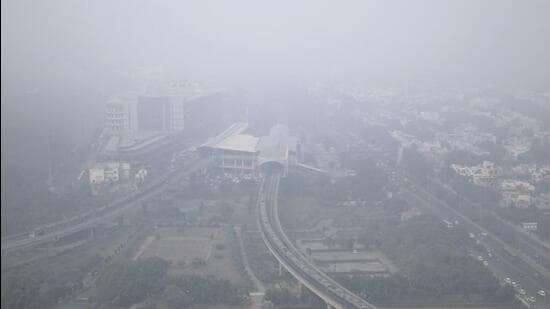
Landscape fires are fires that occur in natural and cultural landscapes, including both wildfires and human-planned fires. Between October and December, India’s northern plains are choked by air pollution arising from cooler temperatures (a phenomenon called inversion), vehicular emissions, and, also, the burning of farm stubble, especially in Punjab.
While these fires can result in direct fatalities, the majority of deaths associated with them stem from the air pollution they generate, which contributes to long-term health issues such as cardiovascular and respiratory diseases. For instance, according to the study, there were 221 direct deaths reported globally in 2018. However, the health risks from landscape fires are much greater, as landscape fire-sourced (LFS) air pollution (particularly fine particulate matter with a diameter of 2·5 µm or less [PM2·5] and ozone [O3]) often travels hundreds and even thousands of kilometres away from the source and affects much larger populations than the flames and heat do, according to the authors.
The authors claimed the study is the largest and most comprehensive assessment to date of the health risks associated with air pollution from landscape fires. It found an increasing number of global cardiovascular deaths associated with pollution from landscape fires with approximately 450,000 deaths per year attributed to cardiovascular disease, and 220,000 deaths attributable to respiratory disease.
The total number of deaths attributable to air pollution from landscape fires in India rose from 117781 a year in the decade between 2000 and 2009 to 137711 a year in the decade between 2010 and 2019, according to the study.
The researchers said they calculated country-specific population-weighted average daily and annual fine particulate matter (PM2·5) and surface ozone (O3) arising from landscape dires during 2000 –19 from a validated dataset.
Annual mortality, population, and socio-demographic data for each country or territory were extracted from the Global Burden of Diseases Study 2019. These data were used to estimate country-specific annual deaths attributable to LFS air pollution using standard algorithms.
The authors also concluded that “immediate climate actions to limit the magnitude of climate change” could help with a modelling study suggesting that 60- 80% of the increase in landscape fires by 2100 could be avoided if the global mean temperature increase could be limited to 2·0°C or 1·5°C over pre-industrial levels.
“Air pollution is a major health hazard, impacting almost all vital organs adversely upon prolonged exposure. Even short-term exposure leads to several health conditions such as sore throat, aggravated asthma, watery eyes etc,” said Dr GC Khilnani, former head of Pulmonology and sleep medicine department, Aiims.
One Subscription.
Get 360° coverage—from daily headlines
to 100 year archives.
Archives
HT App & Website
Catch your daily dose of Fashion, Health, Festivals, Travel, Relationship, Recipe and all the other Latest Lifestyle News on Hindustan Times Website and APPs.
Catch your daily dose of Fashion, Health, Festivals, Travel, Relationship, Recipe and all the other Latest Lifestyle News on Hindustan Times Website and APPs.