EACH YEAR, according to the World Health Organisation, over 300m operations are conducted worldwide. Patients in the rich world are more likely to go under the knife—about 60% of people in England are expected to undergo surgery at least once in their lifetime. Some of these procedures are clearly life-saving, such as organ transplants and emergency Caesareans. But as the number of other operations continues to grow, some in the field are starting to ask an awkward question: how many
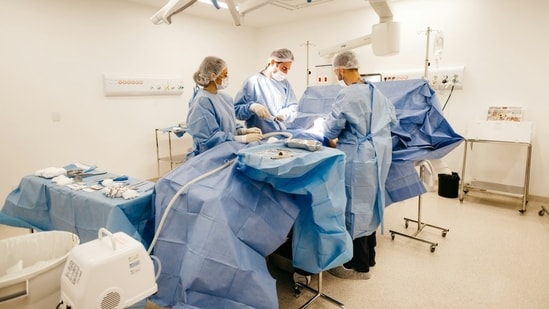
EACH YEAR, according to the World Health Organisation, over 300m operations are conducted worldwide. Patients in the rich world are more likely to go under the knife—about 60% of people in England are expected to undergo surgery at least once in their lifetime. Some of these procedures are clearly life-saving, such as organ transplants and emergency Caesareans. But as the number of other operations continues to grow, some in the field are starting to ask an awkward question: how many are really necessary?
Answers have long been hard to come by, in part because few randomised controlled trials (RCTs), the gold-standard type of research used to assess medications, were conducted on surgical procedures. That made it difficult to know if patients got better more often with surgery than they might have without. This is now changing. The number of surgical RCTs funded by Britain's National Institute for Health and Care Research increased from 34 in 2011 to 188 in 2023, and national surgical-trials programmes are active across Europe as well as in Australia and Canada.
The results are upending the field. Removing an inflamed appendix, an operation that around 5-10% of people have had at some point in their life, has turned out to be no better for most patients than a course of antibiotics. Trials comparing different surgical techniques have also revealed that cheaper and less complex operations can be more effective. Most striking, the data show that some widely used surgical procedures, such as spinal fusions and rotator-cuff repairs, have effects indistinguishable from placebo or non-surgical care such as physiotherapy.
Worse, some types of surgery may do more harm than good. A trial in Britain found that prostate-cancer surgery had no effect on patient mortality 15 years on, but worsened sexual and urological problems. A Finnish trial of a common knee procedure, meanwhile, concluded that patients who had real surgery had more problems in the affected knee ten years on than those who had had sham surgery (anaesthesia followed by a superficial incision). David Ring, an orthopaedic surgeon at the University of Texas at Austin, reckons that most operations in his field may be unnecessary. Surgery itself, it would seem, could use a major intervention.
If so many operations are unnecessary, how to explain the fact that patients often leave the operating table feeling better? In a study published in 2022 in JAMA, a journal, researchers pooled data from 100 surgical trials covering 32 interventions. They found that two-thirds of the improvement patients felt after surgery was due, on average, either to the body healing on its own or else to the placebo effects of feeling cared for and prepped for surgery. Only one-third of the benefit, in other words, came from the procedure itself.
“Surgeons think they're effective because they are administering a potent placebo,” says Seth Leopold, an orthopaedic surgeon at the University of Washington. In a landmark trial on 165 patients in 2002, led by Bruce Moseley from the Baylor College of Medicine, in Houston, the surgical team even splashed water in a dish to mimic the sound of tissue debris being flushed out from the knee joint. (Though patients were under general anaesthesia, the study team were mindful the placebo effect might depend on stimuli registered by the unconscious brain.) The trial found that the surgery was no better in alleviating pain than the sham operation.
Natural healing is also powerful, if slow-acting. In the 2022 study in JAMA the researchers compared real and sham surgeries with standard non-surgical care for a subset of procedures on which data were available. They found that the placebo effect could explain only a small part of the improvement in the sham-surgery group. Most of the benefit came instead from natural improvement.
Achieving changes in clinical practice has proved difficult. Surgeons continue to perform some operations that have been shown to be no better than placebo surgery at the same rate as before. They find it hard to believe that something which they have been doing for years and seems to help their patients is, in fact, useless, says Ian Harris, a surgeon at the University of New South Wales, in Sydney. That occasionally leads to what he describes as outlandish criticisms. In 2014, for example, a group of surgeons wrote a commentary on the use of sham surgery in trials in Arthroscopy, a medical journal, in which they worried that “Patients who may not be of entirely sound mind are selected as research subjects, and research performed on such individuals would not be generalisable to mentally healthy patients.”
Operating theatre
“You have to remember surgeons have no uncertainty,” says Jane Blazeby, a surgeon at the University of Bristol who has conducted many such trials. “They always know what’s best,” she adds, archly. This certainty is not always justified: research has shown that, for one common type of knee surgery, surgeons’ predictions about whether a patient will improve is as good as flipping a coin. Surgeons who have been doing a procedure for years also tend to overestimate its benefits, says Stefan Lohmander from Lund University, in Sweden, because the patients who return for check-ups are mostly those who got better. Moreover, many of these returning patients do not want to disappoint their doctors, says Dr Lohmander—which may, in part, be why surgeons often feel procedures are more successful than their patients do.
For Dr Blazeby, convincing her colleagues to enroll their patients on randomised controlled trials required teaching them to “confidently be unconfident”, she says. Such trials required them to tell patients that an operation they had been doing for years might not be the right choice for them. Encouragingly, younger surgeons are more open to change. Studies in America and Australia, for example, have found that the probability that a surgeon stops performing a procedure a trial has shown ineffective decreases with time. And when trial results reinforce each other, scepticism becomes less tenable.
The nature of a country’s health system also plays a role. Disfavoured operations decline faster in countries where surgeons are salaried, as in Britain and Scandinavia, than in countries such as America where they are paid per operation and act as small businesses. Shoulder surgeries to remove a bone spur fell from 28,000 in Britain in 2016-17 to 5,720 in 2019-20, after trials found that the procedure was no better in alleviating pain than sham surgery. In America the procedure remained popular.
But it is not just surgeons who need to trust the data: a growing number of patients insist on surgery on the basis of inconclusive tests. All too often, says Dr Ring, scans reveal abnormalities that are little more than tissue tears; as natural a by-product of ageing as wrinkles and grey hair. What’s more, he says, these things are unlikely to be what is causing patients’ problems. A growing number of studies, in fact, show that the abnormalities in knees, backs and shoulders that orthopaedic surgeons try to fix are very common in people who have no symptoms at all.
But the promise of a quick fix is hard to resist. “It is becoming more and more difficult to say ‘no’ to the patient,” says Dr Lohmander. In America some surgeons fear their patients will leave them a bad review online, and insurance companies still cover ineffective procedures for fear of losing customers to their competitors.
Even more trials should help doctors hold their ground more firmly. For now, most non-essential surgical techniques remain untested against either sham surgery or non-surgical interventions. A review in 2020 found that just 1% of the RCTs on common surgical procedures conducted for chronic musculo-skeletal pain compared doing the surgery to not performing the procedure at all. To fulfil their Hippocratic promise of doing no harm, surgeons must be prepared to ask how much good they are actually doing.
Curious about the world? To enjoy our mind-expanding science coverage, sign up to Simply Science, our weekly subscriber-only newsletter.
One Subscription.
Get 360° coverage—from daily headlines
to 100 year archives.
Archives
HT App & Website
Catch your daily dose of Fashion, Health, Festivals, Travel, Relationship, Recipe and all the other Latest Lifestyle News on Hindustan Times Website and APPs.
Catch your daily dose of Fashion, Health, Festivals, Travel, Relationship, Recipe and all the other Latest Lifestyle News on Hindustan Times Website and APPs.