Union parliamentary affairs minister Kiren Rijiju on Monday said the government has made consistent efforts to engage in dialogue with the Opposition for the passage of a constitutional amendment bill and a delimitation bill to roll out 33% reservation for women in the Lok Sabha and state assemblies while expanding the lower House, adding that constructive cooperation from all parties is required now.
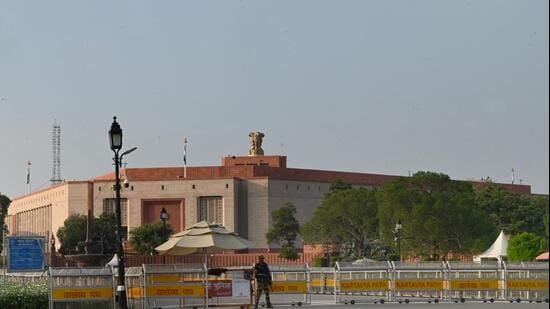
On April 17 this year, the Constitution (One Hundred and Thirty-First Amendment) Bill, 2026, which sought to raise the Lok Sabha ceiling to 850 seats and implement 33% reservation for women in time for the 2029 general elections, was defeated in the Lok Sabha after receiving 298 votes in favour and 230 against—falling short of the mandatory two-thirds majority. Following the defeat, the government withdrew two linked bills: one mandating delimitation on the basis of the latest available census data (2011), and another implementing corresponding changes in Union Territories.
To be sure, Parliament enacted the Nari Shakti Vandan Adhiniyam in 2023, but the law links the implementation of the quota to a fresh delimitation exercise.
In his letter to Congress president Mallikarjun Kharge on Monday, Rijiju also denied allegations that the government overlooked the Opposition or moved away from building consensus on critical issues, stating that the government had held discussions with representatives of the Dravida Munnetra Kazhagam (DMK), Samajwadi Party, Yuvajana Sramika Rythu Congress Party (YSRCP), Nationalist Congress Party (NCP), Shiv Sena (UBT), All India Majlis-e-Ittehadul Muslimeen (AIMIM), and Biju Janata Dal (BJD) to facilitate dialogue and build a broader consensus on the proposed legislation.
Here is a look at where major Opposition parties stand on the constitutional amendment bill:
{{/usCountry}}Here is a look at where major Opposition parties stand on the constitutional amendment bill:
{{/usCountry}}Indian National Congress
The Congress is steadfast that the quota for women should be carved out of the existing 543-seat strength of the Lok Sabha. Congress leader Rahul Gandhi has maintained that Parliament already passed the women’s reservation law in 2023 and should implement it without delay. In his latest Chhatron ki Goonj interaction in Chennai, Gandhi dubbed the bill to raise the number of seats in the Lok Sabha as “an attack on Tamil Nadu” and announced, “We are not going to let Modi touch Tamil Nadu.” The Congress has also demanded another 25-year freeze on the Lok Sabha’s existing strength—something both Indira Gandhi and Atal Bihari Vajpayee implemented to halt any increase in seats.
Samajwadi Party
With 37 Lok Sabha MPs, the Samajwadi Party (SP) played a key role in defeating the delimitation-related bill earlier this year. The BJP has reached out to SP chief Akhilesh Yadav, but he has given no indication that his position has changed since April. Opposition leaders believe that with Uttar Pradesh assembly elections due early next year, the SP is unlikely to come out in support of the BJP-sponsored legislation. The party argues that redrawing constituencies without adequate population and caste data could unfairly alter political representation. Akhilesh Yadav has also questioned the urgency of the government’s proposal and expressed concern about its potential impact on Uttar Pradesh’s political map.
Dravida Munnetra Kazhagam
The DMK voted against the constitutional amendment bill in April. But after the party snapped ties with the Congress over its decision to back the Vijay-led TVK government in Tamil Nadu, the DMK, which has 22 MPs in the Lok Sabha, has kept everyone guessing. Both the BJP and the Congress are banking on support from DMK chief M.K. Stalin. Congress leaders point out that on August 12, the DMK supported a state assembly resolution urging the Modi government to retain the Lok Sabha’s existing strength of 543 seats and implement 33% women’s reservation without linking it to delimitation. BJP managers argue that even if the DMK abstains from voting, it would reduce the gap between the Opposition and the government.
Trinamool Congress
The TMC played a key role in defeating the constitutional amendment bill in April when party leader Abhishek Banerjee agreed to Congress leader Rahul Gandhi’s last-minute request to send 21 of its 28 MPs to Delhi for the voting. The TMC had initially planned to send only 10, given its preoccupation with the Bengal assembly elections. However, after losing the state elections, the TMC suffered a major jolt when 20 of its 28 Lok Sabha MPs, apart from the majority of its legislators, rebelled against the leadership. This has considerably diminished the Mamata Banerjee-led TMC’s clout and importance in the Lok Sabha. The former West Bengal chief minister continues to oppose the constitutional amendment bill and has asked all Opposition parties to defeat it.
Shiv Sena (UBT)
Former Maharashtra chief minister Uddhav Thackeray’s party opposes the bill, but it has only three members in the Lok Sabha after six MPs broke away to join the rival Eknath Shinde-led Shiv Sena, which now has 13 MPs.
Nationalist Congress Party – Sharadchandra PawarThe NCP (SP) has hinted at support for the bill and has said that the increase in seats should be 50% across all states. The party is concerned that population-based seat redistribution will disproportionately affect states that have successfully controlled population growth, particularly southern states. NCP (SP) leader Supriya Sule has said the party will discuss the proposal with its Opposition allies before deciding its position.
Left Parties
The Left parties—the Communist Party of India (2), CPI (Marxist) (4), and CPI (Marxist-Leninist) Liberation (2)—which hold eight seats in the Lok Sabha, are completely opposed to the constitutional amendment bill and want the freeze on the strength of the Lok Sabha to continue.