On August 6, the journal Science published a study from Stanford and the Arc Institute in which artificial intelligence designed the genomes of 16 functional viruses. The viruses infect bacteria, and the work could help develop new treatments. What it showed is that AI can now contribute to the design of complete, functioning viruses.
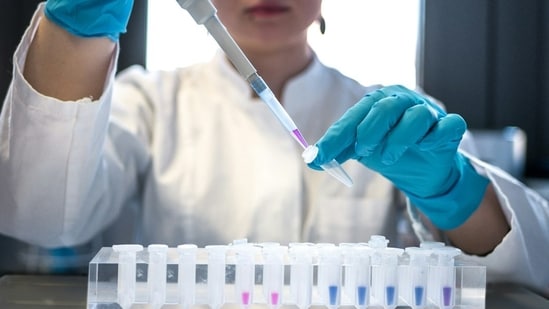
Earlier this year, OpenAI and Ginkgo Bioworks connected GPT-5 to an automated laboratory and tested more than 36,000 reaction compositions across six rounds of experiments. The cost of producing a benchmark protein fell from $698 to $422 per gram, based on the reaction components used, though people were still needed to keep the lab running. Taken together, these results show design and testing drawing closer, with plenty of hard practical steps still standing between a prediction on a screen and anything dangerous in the world.
DNA screening can help close the gaps
Safeguards must keep pace with such rapid progress. In October 2025, another Science study found a flaw in the software suppliers use to screen orders for lab-made DNA and to verify buyers' identities and legitimacy. In computer-based tests, some AI-redesigned protein sequences could evade the screening software. The researchers did not show that the designs would be dangerous, but they had found a real gap. Screening companies wrote and shipped fixes before the paper appeared.
Software needs to be kept up to date to remain relevant. Passing a test today does not mean the system will remain safe a year from now, as new methods emerge. Someone must fund regular updates, check that they work, and ensure suppliers use them. Maintenance is never glamorous, but it still needs a budget.
{{/usCountry}}Software needs to be kept up to date to remain relevant. Passing a test today does not mean the system will remain safe a year from now, as new methods emerge. Someone must fund regular updates, check that they work, and ensure suppliers use them. Maintenance is never glamorous, but it still needs a budget.
{{/usCountry}}India also has an economic stake in who pays for that maintenance. The government puts its bioeconomy at $195.3 billion in 2025, on track to reach a $300 billion target in 2030. Its drug makers and research labs already know all about serving demanding foreign customers. That experience carries a warning: credibility rests on what an inspector can verify. Rather than treat biosecurity compliance as a burden, India can turn that upkeep into an affordable service for laboratories at home and across the Global South. It has done something like this before, with digital identity and payments.
Why biosecurity needs a global approach
Using disease as a weapon is a very old idea. In 1763, British personnel at Fort Pitt, now Pittsburgh, tried to spread smallpox among the Indigenous population using items from a smallpox hospital. Letters from the time show what they intended, though whether it caused the subsequent outbreaks remains unsettled. That uncertainty is the point. Proving how an epidemic started has always been hard, long before anyone knew what a gene was.
In the 20th century, states built that idea into industrial products. In 1979, anthrax killed dozens of people in the Soviet city of Sverdlovsk. Officials blamed contaminated meat. Investigators later mapped where the victims had been. The cases formed a line running downwind from a military plant. Subsequent investigations linked the outbreak to an accidental release from a military biological weapons programme. The technology has moved on since. Unfortunately, the secrecy and the difficulty of proving who was at fault have not.
The danger goes beyond a human pandemic. The 2001 anthrax letters in America caused 22 infections and five deaths, put 32,000 people on preventive antibiotics, and cost over $200 million to decontaminate postal buildings. Farms are vulnerable too. In India, a serious disease outbreak in crops or livestock could ruin farmers, disrupt food supplies, and halt exports long before investigators knew if it happened by nature, by accident, or by design.
The Biological Weapons Convention has banned these weapons since 1975, without a standing verification mechanism. Talks on an inspection system collapsed in 2001. The current effort to strengthen the treaty meets in Geneva from December 7 to 11, before a review conference in 2027. Progress there would be welcome. A quarter-century without an agreed verification system also argues for steps that do not need everyone's signature.
Lab outputs are being generated faster and at lower cost, thanks to technology. At the same time, global governance rules still depend on long and laboured talks among distrustful governments. Meanwhile, biotech firms are free to work across borders faster than states can agree on who is responsible for what. Putting guardrails on AI design tools is one layer of defence; screening DNA orders is another. Neither is enough on its own. The goal is to use both at once, through practical safeguards that labs can adopt today and an independent agency can verify.
The market will not sort this out by itself. A supplier who screens properly spends money and sometimes holds up an order for review, while a casual competitor ships the same day. The European Commission's analysis for its Biotech Act proposal recognises this penalty. Governments should make proper screening a condition of doing business and help honest suppliers meet it without incurring high costs.
Some of this already exists. SecureDNA screens orders free of charge anywhere in the world, keeps its database current, and helps labs integrate it. IBBIS, the International Biosecurity and Biosafety Initiative for Science, gives away screening software through its Common Mechanism.
But a free tool is not the same as a tool in use. Free software does not eliminate implementation costs. Someone must plug it into the ordering system, assess the orders it flags, protect clients' commercial secrets, and keep records an auditor can read. That requires salaried personnel, and the cost of compliance should cover their work.
Also read: Nuclear war, AI-enabled bioweapons could wipe out humanity by 2100: Lancet report
India can build an affordable biosecurity framework
This is where India can apply the playbook it knows best: Digital Public Infrastructure (DPI). Just as India treated digital identity and fast payments as low-cost public rails rather than luxury products, it can build a shared compliance layer for biosecurity. One difference needs to be highlighted here – a domestic payments rail needs only a domestic regulator, while an assurance service is worth little unless buyers and regulators abroad accept it. India's opening is to help small suppliers and modest labs run open-source screening systems properly, with hands-on support, an outside check that the screening works, and someone responsible when it fails. Do that, and labs from Pune to Nairobi get a public utility they can rely on, and a number to call when an order is on hold.
Announcing an Indian standard will achieve nothing if the performance behind it fails. India already regulates genetic engineering and dangerous organisms under rules dating back to 1989. The missing piece is whether our requirements for screening DNA orders and buyers are sufficiently specific for auditing. As recent studies by the Observer Research Foundation and IISc–EBRC workshops point out, there are real gaps in those rules. Fixing them is about strengthening the oversight we already have, not starting from scratch.
We should start with programmes that involve public money and public service. Government-funded research should be the first to use only DNA suppliers that meet a published screening standard and document how they check buyers. The US National Institute of Standards and Technology provides useful baseline data for testing DNA screening, which gives India a good starting point. Customer checks need separate standards. The Engineering Biology Research Consortium has similarly proposed linking US federal research funding to independently assessed sequence screening. The roadmap should be: give suppliers time to adapt, support smaller suppliers, and enforce real consequences for repeated failures.
Trust in digital systems comes from live verification, not paper licences. An Indian biosecurity DPI would treat every verification as an ongoing service rather than a one-time certificate. Assessments would have clear scopes and expiry dates, with screening tools retested as methods evolve. Buyers would be able to instantly check if a supplier's accreditation is active without viewing sensitive data. Crucially, the agency providing support should not be the one grading it. Nobody should mark their own homework.
An effective governance mechanism is one that is easy to understand, use and administer. Suppliers need published review times and a way to appeal an order held up by mistake. Regulators should make it easy to report a near miss and costly to hide one. And they must tell the difference between a clean record kept by a careful lab, and one kept by a quiet one. A system that punishes every admission teaches people to stop admitting things.
This proposal has some clear limits. Screening commercial orders cannot prove a government is hiding secret bioweapons programmes. It does not replace internal lab oversight, disease tracking, or hospital preparedness. No screening service can declare an entire country's biotech sector safe. What it can do is make a key part of the legitimate supply chain harder to misuse and prove that the checks were actually carried out.
India should bring three things to the 2027 review conference: a common minimum standard, help for developing nations to comply, and mutual recognition of trusted assessments. The rules must apply equally, meaning Indian facilities would have to meet the same standards. Proving the system works at home gives Indian diplomats real leverage – far better than just claiming leadership.
The politics will be tough. On October 12, after welcoming a new UN declaration on pandemic preparedness, the WHO urged governments to finalise the Pandemic Agreement's pathogen-sharing rules, with talks resuming in November. These discussions centre on what nations receive in return for sharing virus samples and genetic data. It is a different mission from weapons control, but the friction is familiar: nations expected to help protect the world want a fair share of the rewards.
Biosecurity rules will face that same test. If only rich institutions and nations can afford to comply, the rules shut poorer scientists out while careless suppliers remain in business. An Indian offer should therefore include both money and a technical partnership, while leaving room for others to shape the terms. Basic protection should never depend on what a laboratory can pay.
History gives us a great example of cooperation and a reason for hope. In 1980, the World Health Assembly declared smallpox eradicated, after a campaign backed by the United States and the Soviet Union – despite the Cold War. Two rivals who agreed on almost nothing found one thing worth doing together, and patient work made it possible. Health workers in the affected countries (India among them) turned those promises into vaccinations, village by village.
Keeping screening software up to date will rarely make global headlines the way an AI-designed virus does. But it may still be one of the most useful things India can do for the world. The place to begin is December's talks in Geneva, with the 2027 review to show results.
A safeguard earns trust by consistently working. India can help make that work affordable.