The 2026-27 Premier League season gets underway on Saturday, with the usual blockbuster story lines – fresh names on the teamsheets, new bosses on the touchlines, an unfamiliar league table, the everlasting promise of hope and the everlong familiarity of heartbreak.
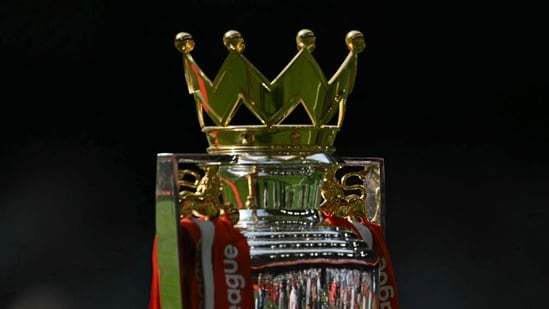
But a flurry of changes on the more profane side of the game are likely to shape the next 10 months in English stadiums. The league will roll out several new laws designed to keep the game flowing, snuff out unwarranted stoppages and crack down on time-wasting tactics.
What's changing, and why? A look at the new laws aimed at keeping the beautiful game beautiful – the very same laws you can bet will have fans squabbling from the terraces to the comments sections.
The many ticking clocks
The key change is a visible five-second countdown at throw-ins and goal kicks. If a referee judges that a team is deliberately delaying a restart, the referee whistles, signals and counts down five seconds with a raised hand. If the ball is not in play by then, possession is reversed. The throw-in goes to the opposition from the same spot; a delayed goal kick becomes a corner for the attacking side.
The rule extends a change made last season, under which a goalkeeper who controls the ball for more than eight seconds concedes a corner. The International Football Association Board (IFAB), which frames the laws of the game worldwide, judged that measure a success and has applied the same principle to the two other restarts most often used to run down the clock.
{{/usCountry}}The rule extends a change made last season, under which a goalkeeper who controls the ball for more than eight seconds concedes a corner. The International Football Association Board (IFAB), which frames the laws of the game worldwide, judged that measure a success and has applied the same principle to the two other restarts most often used to run down the clock.
{{/usCountry}}Substitutions come next. A player being replaced has 10 seconds to leave the field from the moment the board goes up. A player who fails to do so must still leave, but the substitute cannot enter until the first stoppage after a minute of running time has elapsed.
Injured players face a similar restriction. A player treated or assessed on the pitch, or whose injury stops play, must leave and stay off for a minute after the restart. The Premier League previously used a 30-second period.
To be sure, players caught in these measures will not automatically be booked. IFAB has taken the view that the loss of possession, or of a substitution, is punishment enough. A caution follows only if a player excessively delays the restart.
Also read: Arsenal favourities as another season starts with new rules, new coaches
The goalkeeper tag trial
Goalkeepers are exempt from the one-minute rule, but the Premier League has rolled in a trial clause to ensure teams don't exploit this gap.
If play stops for a goalkeeper to receive treatment, the manager must nominate an outfield player to leave the pitch immediately. Managers are understood to have 10 seconds to name that player, with the captain becoming the nominee by default if none is named. That player must stay off for at least a minute after the restart.
Pro Ref, which manages match officials in the competition, said the trial addresses occasions on which goalkeeper injuries have been used to disrupt momentum or create opportunities for teams to reassert their control on the game. Exceptions apply where the goalkeeper has been fouled and needs immediate treatment, has collided with an opponent who also needs treatment, or is bleeding. The league will monitor the trial through the season.
VAR's wider remit
The contentious video assistant referee (VAR) system gains one new power and one widened one, both rare and both potentially decisive. It can now intervene on a red card that follows a clearly incorrect second yellow, but only once the second caution has been shown, not where one might have been.
Separately, the long-standing mistaken-identity review has been widened to cover yellow cards: where a referee penalises an offence but books the wrong player, VAR can correct who is carded. Only the identity can be revisited, not the offence itself – unless it bears on a goal, a penalty or a straight red.
Other strings tightened
A slew of other minor changes tighten, clarify or wipe out ambiguity about prevailing laws:
A player who denies an obvious goal-scoring opportunity is no longer cautioned if the referee plays advantage and a goal follows.
The blanket ban on jewellery has gone, replaced by a rule that permits accessories which are not dangerous and are safely covered.
The Premier League has also softened its stance on hair-pulling, which was treated as an automatic red card last season, after several contentious dismissals. Referees now have discretion: a red card applies only where the pull is clearly deliberate and carried out with excessive force or brutality, while less forceful or non-violent instances now draw a yellow.
The changes England rejected
IFAB attached several optional provisions to this year's package, some of which were used at the World Cup. The Premier League has taken none of them.
No VAR review for incorrectly awarded corners: The league has decided against widening the video referee's scope, in line with its stated principle of maintaining a high threshold for intervention, under which the referee's call stands unless the error is "clear and obvious" – a term that many teams and players would argue is, ironically, ambiguous.
No red cards for covering mouths: The league also rejected the sending-off offence for players who cover their mouths while speaking to an opponent in a provocative or inflammatory manner. The provision sought to target players concealing racist or abusive remarks from cameras and lip-readers.
The issue of players covering their mouths became particularly controversial in February this year, when Benfica winger Gianluca Prestianni pulled his shirt up to his mouth while saying something to Real Madrid"s Vinicius Jr during a Champions League game.
Prestianni was accused of racist abuse and eventually found guilty of homophobic conduct by a Uefa investigation.
In the Fifa World Cup that followed, red cards were introduced to stop players from covering their mouths.
No hydration breaks: The league already has a drinks-break protocol for matches that kick off when the temperature is above 30°C. Referee body cameras, allowed as a competition option, do not form part of the package either.