Control of the US Congress for the last two years of Donald Trump’s second term could be decided on November 3 in roughly a dozen Senate contests and a few dozen House districts, where polls indicate that either party could win.
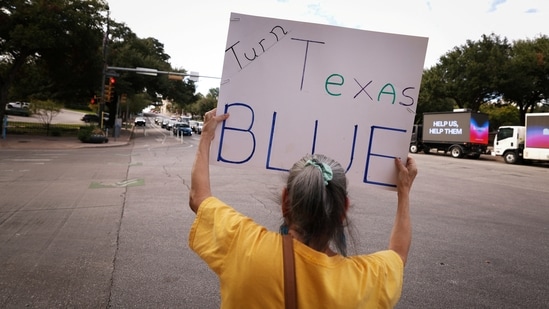
If Democrats take the House in the midterm elections, they could block parts of Trump’s legislative agenda, open investigations and step up oversight of his administration. Control of the Senate would let them shape the confirmation of cabinet officials, federal judges and any Supreme Court nominee. If Republicans keep both chambers, Trump would have a freer hand for his legislative priorities, although narrow majorities could still slow the passage of bills.
Republicans hold the Senate 53–47, counting two independents who normally vote with the Democrats. Democrats need a net gain of four seats to reach a 51-seat majority. A 50–50 split would leave Republicans in charge, since vice-president JD Vance casts the tie-breaking vote.
Senators serve six-year terms, staggered so that about a third of the chamber faces voters every two years. This year, 33 seats are up on that schedule, plus two special elections: in Ohio, for the seat Vance left to become vice-president, and in Florida, for the seat Marco Rubio left to become secretary of state. Republicans currently hold 22 of the 35 seats being contested and Democrats 13.
{{/usCountry}}Senators serve six-year terms, staggered so that about a third of the chamber faces voters every two years. This year, 33 seats are up on that schedule, plus two special elections: in Ohio, for the seat Vance left to become vice-president, and in Florida, for the seat Marco Rubio left to become secretary of state. Republicans currently hold 22 of the 35 seats being contested and Democrats 13.
{{/usCountry}}The House stands at 218 Republicans, 214 Democrats, one Republican-aligned independent and two vacancies. All 435 seats are up, and a party needs 218 for a majority. Democrats therefore need four more seats than they hold now.
Cook Political Report, a nonpartisan US election forecaster, rates the most competitive races as toss-ups, where either party has a good chance of winning. The analysis here also covers races Cook rates as leaning or likely to go one party’s way.
Also read: Trump's midterm test and what the US election results could mean for India
Senate seats Democrats are targeting
Cook rates seven Senate races as toss-ups. Six are Republican-held (Texas, Maine, Ohio, Iowa, Alaska and Kansas) and one is Democratic-held (Michigan). A seventh Republican-held seat, North Carolina, is rated likely Democratic. If Democrats win North Carolina and hold all their own seats, they need three of the six Republican-held toss-ups to take the chamber. Cook estimates Democrats will gain between two and six seats, a range that includes the four they need.
North Carolina: Roy Cooper, a former Democratic governor, faces Michael Whatley, a former Republican National Committee chairman, for the seat Republican Thom Tillis is vacating. Cooper won the governorship in 2016 and 2020, even as Trump carried the state both times. Senate Republicans’ main spending group has pulled back from North Carolina and redirected money to Kansas, AP reported.
Texas: Democrat James Talarico, a state representative, faces Ken Paxton, the state’s Republican attorney general, who defeated four-term senator John Cornyn in a primary runoff in May. Talarico beat Congresswoman Jasmine Crockett for the Democratic nomination. Texas has not elected a Democratic senator since 1988. The RealClearPolitics average of polls taken October 8–21 put Talarico at 48.5% and Paxton at 46.7%.
Maine: Republican senator Susan Collins is the only Republican senator from a state Trump has never carried statewide. She faces Troy Jackson, a former president of the state Senate. Jackson became the Democratic nominee after Graham Platner withdrew in July following a sexual assault allegation, which he denies. Maine is one of two states that use ranked-choice voting in statewide elections, in which voters rank candidates in order of preference.
Ohio: Former Democratic senator Sherrod Brown is trying to return against Jon Husted, the Republican appointed to the seat Vance had vacated. The race is a special election to fill the rest of Vance’s term. A Marist poll of likely voters, taken October 15–18, put Brown at 48% and Husted at 44%. Data centres have become a central issue, AP reported. Husted has been attacked for his role in bringing them to Ohio as the state’s lieutenant governor, and has sponsored Senate legislation asking utility regulators to charge large power users more.
Iowa: Democratic state representative Josh Turek, who won Paralympic gold medals in wheelchair basketball in 2016 and at the Tokyo Games, is running against Republican Congresswoman Ashley Hinson for the seat Joni Ernst is vacating. Iowa voted for Trump in the last three presidential elections, and the polls are split. The RealClearPolitics average of polls taken September 29 to October 22 put Hinson at 46.1% and Turek at 45.5%. Marist, polling likely voters on October 8–11, had Turek at 48% and Hinson at 45%, with a margin of error of 6.6 points.
Alaska: Democrat Mary Peltola, a former congresswoman, is challenging Republican senator Dan Sullivan. Alaska also uses ranked-choice voting.
Kansas: Adam Hamilton, founder and senior pastor of the largest United Methodist church in the US, is challenging Republican senator Roger Marshall. Republicans have not lost a Senate race in Kansas since 1932. Cook moved the race into the toss-up category in early October. Total advertising spending is on course to reach about $71 million, a record for the state, according to AP, citing the ad-tracking firm AdImpact.
Senate seats Republicans are targeting
Republicans keep the Senate if they hold their own seats or offset Democratic gains elsewhere. Their main targets are three Democratic seats, one of which Cook rates a toss-up.
Michigan: Abdul el-Sayed, a former public health official, faces Mike Rogers, a former Republican congressman, for the seat Democrat Gary Peters is vacating. Michigan voted for Trump in 2016 and 2024, although Democrats have not lost a Senate election there since 1994. Marist put el-Sayed at 50% and Rogers at 48% among likely voters on October 15–18. El-Sayed has campaigned for Medicare for All, a single government-run health insurance scheme covering every American.
Georgia: Democratic senator Jon Ossoff faces Republican Congressman Mike Collins. Ossoff won his seat in 2021 in a runoff, a second round between the top two candidates that Georgia holds when no one wins more than half the votes. Trump won Georgia back in 2024. If no candidate wins a majority on November 3, Georgia holds a runoff on December 1.
New Hampshire: Democratic Congressman Chris Pappas faces John Sununu, a former Republican senator, for the seat Jeanne Shaheen is vacating. Republicans have not won a Senate seat in the state since 2010. Cook moved the race to toss-up in September and back to leaning Democratic in October.
Also read: Before the vote, another vote: How US primaries decide who gets to run for midterms
The House seats
Cook rates 21 House races as toss-ups in its October 9 ratings. Many of them are being fought on new maps.
Nine states will use new House maps in this election, AP reported, and all favour Republicans except those in California and Utah. Texas Republicans redrew their map to try to win five more seats. California voters responded by approving a Democratic map that could add five seats for their party. AP reported that Florida’s new map improves Republicans’ chances of winning four more seats and Ohio’s improves them by two.
If every district performed as drawn, Republicans could net up to nine seats, though AP noted that a strong year for Democrats could cut that number. A University of Groningen analysis, based on past presidential voting, estimates Democrats would need about 52.4% of the national House vote to win a majority under the new maps, against 51% under the old ones.
Texas Republicans redrew five districts they hoped to win from Democrats, but three of them, all in South Texas, are still competitive, Reuters reported. Two of them are held by Democratic Congressmen Vicente Gonzalez and Henry Cuellar. Counting the 2024 presidential votes within the new boundaries, Trump would have won both districts by 10 percentage points. The third was a safe Democratic seat before the redraw and is now an open race, with no incumbent running.
New York’s 17th District: Republican Mike Lawler is one of three Republicans representing a district Kamala Harris won in 2024. Reuters said he was the most vulnerable House Republican seeking re-election. He faces Cait Conley, a combat veteran and national security expert. Two polls in late September showed each candidate narrowly ahead.
Maine’s 2nd District: The retirement of Democrat Jared Golden opened a district Trump won by nine points in 2024. Paul LePage, a former Republican governor, faces Matt Dunlap, the state auditor. Polls in September gave Dunlap a narrow lead, Reuters reported.
California’s 22nd District: Republican David Valadao, whose race Cook rates a toss-up, faces Democrat Randy Villegas, a political science professor at a community college and a school board trustee in Visalia. Under the district’s previous boundaries, 64% of its residents were enrolled in Medicaid, the government health programme for low-income Americans, the highest share of any Republican-held seat, according to KFF, a health policy research organisation. That has made cuts to Medicaid in Trump’s 2025 tax and spending law a campaign issue. Valadao has said he voted for the law because it protected Medicaid for the most vulnerable, including children, pregnant women, disabled people and seniors.
Ohio’s 9th District: Democrat Marcy Kaptur, in Congress since 1983, faces Republican Derek Merrin, a former four-term state representative whom she beat by less than a percentage point in 2024. Trump won the district by about seven points in 2024. Under its redrawn boundaries, he would have won it by 11.
Florida’s 13th District: Republican Anna Paulina Luna faces Leela Gray, a retired Army brigadier general, in a district the new map made slightly more Republican. A Republican loss here would signal a broad national swing, AFP reported.
What could tip the close races
Reuters/Ipsos put Trump’s approval at 31% in a poll that closed on October 19, the lowest in either of his terms; a week later it was 32%. Reuters reported that inflation has surged since Trump ordered strikes on Iran in February, pushing up petrol prices. In its latest poll, 73% of voters said their cost of living was heading in the wrong direction.
On the generic congressional ballot, a national question about which party’s candidate voters prefer without naming the candidates, the latest Reuters/Ipsos poll had registered voters favouring Democrats by 47% to 36%. Among those most likely to vote, the gap was 53% to 44%. A PBS News/NPR/Marist poll of registered voters in mid-September had Democrats ahead by 53% to 41%.
But a national lead does not convert evenly into seats. The result depends on where each party’s voters live and how the districts are drawn, and a party can win the national vote while losing the closest individual races.