E-Paper



Trump's midterm test and what the US election results could mean for India
Americans vote on November 3. A Democratic House could introduce some checks, though its leverage over President Trump has limits.

 Prefer HTon Google


Americans vote on November 3 for control of the House of Representatives and the Senate in midterm elections that are set to be one of the defining tests of US President Donald Trump’s political career, and the outcome of which could shape issues that matter to India.
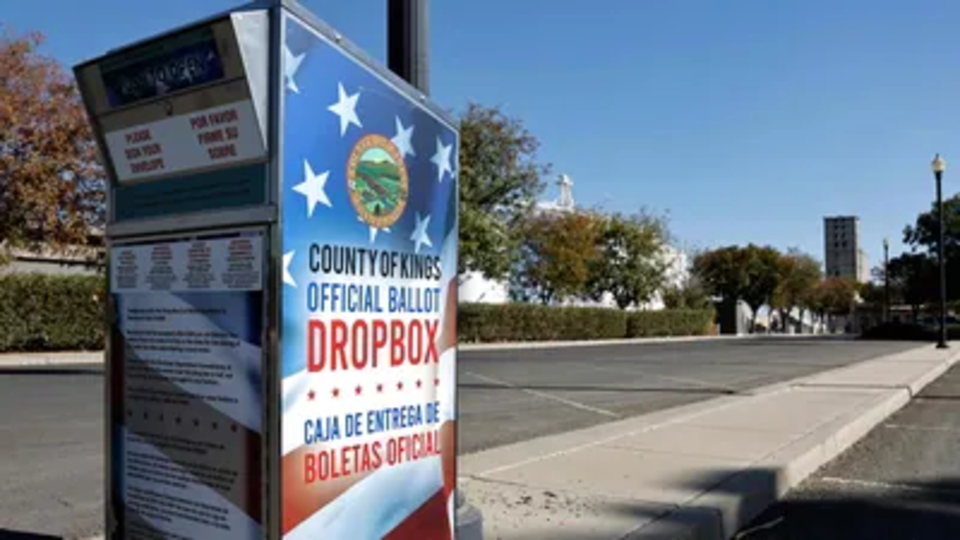
The President’s approval rating slid from 47% when he took office to an average of around 37%, with some polls recording all-time lows of 33% to 34%, as anger over the economy, fuel prices and the Iran war has mounted. Republicans, according to projections, are on course to lose the House, which they hold by a razor-thin majority, while the Democrats have put themselves in contention for the Senate, with candidates threatening upsets in Republican strongholds such as Texas.
What a new Congress can and cannot change
Midterms rarely change the fundamental direction of US strategy, says James Lindsay of the Council on Foreign Relations, a US think tank. In 2006, the Democrats rode massive voter discontent with the Iraq war to take back both the House and the Senate from the Republicans. Despite intense pressure at the time, president George W Bush refused to reconsider American involvement in the war, and in 2007, he ordered over 20,000 additional troops into Iraq.
Lindsay argues that the party in control of Congress has leverage when the President needs legislative consent for his actions. Trump has not needed that consent for the Iran war or his global tariffs, which limits how far foreign policy will change.
Still, Democratic control of the House, which is expected, and of the Senate, which is more of a stretch, could influence how America behaves in the world in ways that affect India and others.

The Iran war
The war has become deeply unpopular among US voters for fuelling high energy prices, and stopping it is a priority on the Democrats’ legislative agenda. The key could be control over spending bills, which must pass the House.
Democratic lawmakers have introduced measures to ban new funds for the war, but these would also need to pass the Senate, and Trump would likely veto them. The party could also simply refuse to approve new money, although the Pentagon’s existing funds mean that might not force an immediate end to US operations.
Even so, a Democratic House can make life difficult for Trump and his team. “This is a war that is hugely unpopular among Democrats. It’s frankly hugely unpopular among Americans in general. So I would expect to see hearings focusing on the war. I think we’re definitely going to see an attempt to focus on secretary of defense Pete Hegseth, possibly to move forward with an impeachment. Those are just a couple of examples of what the Democrats can do,” says Matt Duss, executive vice-president at the Center for International Policy, a Washington think tank, and a former foreign policy adviser to Vermont senator Bernie Sanders.
For India, the war has destabilised a crucial geopolitical region, severely disrupted global shipping and killed a number of Indian seafarers. New Delhi wants a swift end to hostilities, so the fight in Washington over the conflict matters to it.
Pakistan and the power to investigate
The Trump administration’s warmer relationship with Pakistan has been watched with concern in New Delhi, as have Islamabad’s dealings with businesses linked to Trump’s family and associates. Critics have described the Trump family’s expanding crypto ventures, at a time when Trump oversees US crypto policy, as a conflict of interest.
In 2025, a Pakistani government body signed a letter of intent with World Liberty Financial, a crypto firm backed by the Trump family. It also used the good offices of Trump’s special envoy to negotiate a memorandum of understanding with the General Services Administration (GSA), the US government agency that manages federal property, to redevelop the Pakistan-owned Roosevelt Hotel in New York.
Democratic lawmakers have objected, pointing out that Sullivan & Cromwell, a law firm co-led by Trump’s lawyer, received a contract to handle the deal.
A House majority would give Democrats substantial powers to investigate such dealings. Aides on Capitol Hill told HT that Democrats are interested in investigating Pakistan’s dealings with the Trump administration, which will doubtless interest New Delhi.
“Investigations on corruption, conflict of interest and misconduct by the Trump family in official dealings will be one of the biggest pursuits for the Democratic majority. Kushner in the middle-east & Russia and Don Jr’s crypto dealings are too juicy for the Dems to give up. Pakistan is an inevitable link in the latter story and will definitely catch some heat,” said Prerna Bountra, deputy director for international relations at the Ananta Aspen Centre.
Who would run foreign affairs in the House
Winning the House would put Democrats in charge of its senior committees, including the influential House Foreign Affairs Committee (HFAC). Gregory Meeks, a veteran New York Democrat expected to become its chairman, has long supported the US-India partnership and has openly disagreed with the Trump administration’s handling of ties with India.
Representative Sydney Kamlager-Dove, a California Democrat, is another prominent supporter of the relationship and has been critical of the administration’s India policy. She is in line to lead HFAC’s South Asia subcommittee, a key position that helps shape Capitol Hill’s approach to India and the rest of the region.
AI and chips
The backlash against the breakneck development of AI has been one of the standout stories of the 2026 campaign. In a Reuters/Ipsos poll published on October 7, 84% of registered voters said AI was a threat to American workers, and 56% backed limits on building data centres, including 69% of Democrats, 55% of independents and 43% of Republicans.
Trump has opposed heavy regulation of AI companies and data centre development, but some Republicans, such as Texas governor Greg Abbott, have spoken against it and in some cases, taken action too.
Hakeem Jeffries, the Democrats’ leader in the House who is in line to become Speaker if his party wins back the chamber, has said that regulating AI will be a legislative priority.
Without the Senate, though, Democrats would struggle to pass anything beyond narrow, bipartisan bills. Even with a Senate majority, they would need to win over Republicans, and Trump could use his veto to block sweeping AI legislation.
New Delhi is likely to watch whether a more hawkish Congress tightens export controls on advanced chips. In early 2025, the Joe Biden administration capped the sale of AI chips to India and several other countries, causing much concern given India’s own AI ambitions and its dependence on US-made chips. The Trump administration later rolled the caps back.
India, like other countries, will also watch how political restrictions on AI in America affect the US-China AI race, and the US backlash may offer lessons for India’s own data centre rollout.
Where both parties go next
New Delhi will likely be looking at how the results will shape the two parties after Trump, who – at 80 – is serving his final two years in office.
A decisive win would galvanise the Democrats for the 2028 presidential election. The party has recovered from its 2024 defeat with wins in Virginia and New Jersey in 2025, and the New York mayoral victory of Zohran Mamdani, a democratic socialist, fired up its progressive base.
A heavy defeat could lead some Republicans to ask whether it is time to look beyond Trump and the Make America Great Again (MAGA) movement. A broader rethink is unknown, though, as Trump loyalists vice-president JD Vance and secretary of state Marco Rubio are widely seen as potential frontrunners for the party’s 2028 nomination.
"I think a scenario in which Trump holds on to both the House and the Senate is the most unlikely. But it would be a complete referendum on everything that he's doing. It would reaffirm that everything he's doing is fully supported by the American people, and that includes the Iran war, tariffs and everything in between. At the end of the day, people might say, 'I'll take these policies over what a future Democratic administration’s policies would look like',” an associate to a Republican leader who is part of a campaign management told HT.
The rising prominence of the Democrats’ progressive wing could pose some challenges for the relationship, given some leaders’ criticism of the Indian government. Duss told HT these concerns would remain a priority for the party’s left-wing.
New Delhi has also been concerned by rising anti-Indian sentiment on the Republican party’s hard-right. But members of the party believe this was largely a social media phenomenon.
“The anti-Indian stuff is not really anything that I'm hearing on the ground. I do see it online on Twitter and whatnot. I think everyone finds it abhorrent,” the associate quoted earlier said.