For half a century, strategists staring at the Strait of Hormuz have seen oil.
Before the current conflict, crude oil and petroleum liquids moving through the narrow waterway averaged 21.6 million barrels a day in the fourth quarter of 2025. By the second quarter of 2026, the US Energy Information Administration estimated that figure had fallen to 4.9 million barrels a day.
But one of the most disturbing moments of the crisis had little to do with oil.
On March 30, US President Donald Trump said that if a deal was not reached soon and the Strait was not reopened, the United States could target Iranian power plants, oil infrastructure and possibly desalination plants. Iran had separately accused the US of striking a desalination facility on Qeshm Island; Washington denied responsibility.
Desalination is fundamental to providing water supplies across much of the Gulf, allowing cities to grow where there were no natural freshwater sources to support them. That engineering triumph is also a strategic vulnerability: it concentrates one of life's necessities into a small number of industrial facilities.
For decades, we organised our geopolitical fears around energy security. We may now be entering the age of water security.
The cliché says future wars will be fought over water. The more plausible future is one in which water becomes a weapon inside conflicts ostensibly about something else. A river need not be diverted, a dam bombed or a neighbour's annual supply dramatically cut. Sometimes it is enough to control when water arrives, what the other side knows about it, and whether anyone downstream can be certain it will arrive.
{{/usCountry}}The cliché says future wars will be fought over water. The more plausible future is one in which water becomes a weapon inside conflicts ostensibly about something else. A river need not be diverted, a dam bombed or a neighbour's annual supply dramatically cut. Sometimes it is enough to control when water arrives, what the other side knows about it, and whether anyone downstream can be certain it will arrive.
{{/usCountry}}Predictability itself is a strategic asset. Uncertainty is the leverage.
Four levers of water power
Modern hydropolitics can be understood through four levers. Volume is the oldest: how much water crosses a border. Timing is subtler: storage and release schedules mean a cubic metre in flood season is not the same as one at planting. Information matters because downstream countries need reservoir levels, snowmelt and release schedules. Infrastructure — dams, canals, pumps, desalination plants and the software controlling them — makes the first three usable.
Conflict over water is ancient, from Sumerian irrigation battles to Machiavelli and da Vinci's failed attempt to divert the Arno. Modern monitoring simply makes it easier to document. In 2024, 420 water-related conflict events were recorded, up 78% from 2022, mostly involving access disputes or attacks on infrastructure rather than the direct use of water as a weapon.
The treaty that survived everything — until it didn't
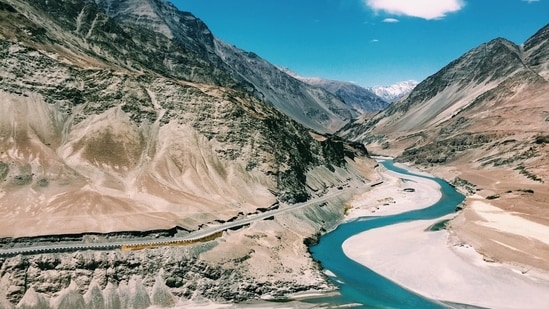
Few agreements illustrate the old order better than the Indus Waters Treaty. Signed in 1960 by Jawaharlal Nehru and Ayub Khan after World Bank-mediated negotiations, it allocated primary rights over the Ravi, Beas and Sutlej to India and over the Indus, Jhelum and Chenab to Pakistan.
India and Pakistan fought wars, became nuclear powers and repeatedly broke off relations — yet the rivers continued to flow under rules both broadly recognised.
Also read: ‘India could use water as weapon’: Pakistan minister warns amid Indus Water Treaty row
That is why India's decision after the Pahalgam terror attack of April 2025 to place the treaty "in abeyance" was consequential. New Delhi says it will remain so until Pakistan credibly and irrevocably ends support for cross-border terrorism. Pakistan rejects India's position, and the treaty does not expressly provide for unilateral suspension.
The decision froze regular data exchanges, dispute talks and project updates. Communication is reduced to sporadic flood alerts. India cannot completely shut off the river, but weaponising water does not require stopping the flow; it only requires creating uncertainty. For everyday farmers, losing predictable timelines for planting, flood warnings, and power generation is just as devastating as having the water cut off entirely.
The most immediate Indian dividend from IWT abeyance is not more water but more optionality over what India can do with it.
Engineers have flushed silted reservoirs such as Salal and Baglihar, while a nearly 4,900-MW Chenab hydropower pipeline has acquired fresh momentum. The earliest effects are appearing in India: a desilted reservoir in Reasi, projects in Kishtwar, an irrigation canal near Leh, and plans for a tunnel that could eventually divert Chenab water into the Beas. India still lacks the storage to control the western rivers for long periods; what it has gained is greater command over infrastructure, timing and information.
Once water cooperation becomes conditional on behaviour in another domain — terrorism, borders, trade or military restraint — water has entered the bargaining table.
India should consider that principle carefully. Because on another great river, it is downstream.
The Chinese mirror — and the Farakka clock
The Brahmaputra enters India from Tibet as the Yarlung Zangbo. At its Great Bend, China is constructing its planned 60-gigawatt Medog cascade, a five-station project estimated at roughly $170 billion. Its scale has heightened downstream concerns about sediment, ecology and short-term flow timing. Beijing says downstream countries will not be significantly harmed; India has raised concerns.
The most apocalyptic claims are overstated: much of the Brahmaputra’s flow is generated by rainfall in the Indian basin after the river enters India. But public information is insufficient to establish the project's eventual storage capacity, operating rules or ability to regulate flows over time.
Also read: India, China discuss border issues, upstream river projects at key talks
Large upstream infrastructure creates optionality. Depending on its design and operation, it can affect sediment, short-term timing and downstream dependence on information. Even if China behaves impeccably, the capability changes what India must plan for.
To counter this, India plans to build major hydropower projects of its own, including the proposed Siang project in Arunachal Pradesh. The pattern resembles an arms race: China builds, India responds, and the cycle continues, while riverside communities bear the environmental and social costs.
Negotiating water rights along the Ganga is India's next big challenge. The 30-year water-sharing treaty with Bangladesh ends in December 2026, necessitating a new agreement. But before India can strike an international deal, it must satisfy its own states. Indian states prioritise their own water security – West Bengal has blocked deals with Bangladesh before, and states like Bihar will demand solutions for their own flood, silt, and water supply issues.
This leaves India caught in a delicate three-way balancing act. On the Indus, India sits upstream and demands flexibility; on the Brahmaputra, it sits downstream from China and demands predictability; and on the Ganga, it must resolve deep internal disputes among its own states before making promises to Bangladesh. The legal arguments India asserts as an upstream power could easily be turned against it by countries positioned further upstream.
We see this pattern worldwide. Ethiopia's dam worries downstream Egypt; Turkey's dams affect Iraq's water planning; Afghanistan's Qosh Tepa canal raises concerns across Central Asia. Yet international rules remain weak.
Of the 153 UN member states sharing transboundary waters, only 43 have operational arrangements covering at least 90% of their shared basin area.
The next crisis may begin with missing data
Three developments now look likely.
First, water infrastructure will become national-security infrastructure. Desalination plants, dams, pumps, treatment facilities, and canals — and the telemetry and software controlling them — will need physical and cyber protection comparable to that for energy installations.
Second, older water treaties divide water based on past weather averages, but climate change—with shifting monsoons, erratic snowmelt and intense droughts—has made historical data less reliable.
Third, independent verification will become critical. Imagine dam data becoming unavailable during a conflict or disagreement. The upstream country says flows are normal; its downstream neighbour suspects water is being held back. The dispute then becomes one about facts—and whose facts to trust. Independent satellite observations and automated sensors could act as neutral inspectors, tracking reservoir levels, snow cover and river flows.
A country should not have to believe an upstream neighbour's description of what its river is doing. It should be able to check. The scarce resource may ultimately be neither water nor data, but trusted data about water.
India needs a doctrine, not just more dams
India needs something more sophisticated than either "water must never be weaponised" or "our water is ours to use": a doctrine of resilience at home and reciprocal restraint abroad, combining infrastructure, independent hydrological intelligence and diplomacy.
The Indus arrangements deserve modernisation. A 1960 treaty could not have anticipated today's population, hydropower technology, climate volatility or security environment. But modernising an institution is different from normalising permanent uncertainty.
Also read: Strategic logic behind India’s Indus Waters Treaty stand
India should eventually seek an updated architecture built around contemporary hydrology, transparent reservoir operations, automatic data exchange and independent verification — and want broadly the same principles on the Brahmaputra.
Farakka's December deadline offers a chance to build climate variability, ecological flows, better measurement and the interests of Indian states into a new agreement with Bangladesh.
India should also invest aggressively in hydrological intelligence — satellites, sensors, forecasting and artificial intelligence. No country should allow another to control both a river and the information by which that river is understood.
Fixing water problems begins at home. It makes no sense to blame other countries for building dams if you are busy pumping your own groundwater until it's completely depleted.
Back to Hormuz
For generations, the strategic importance of the Strait of Hormuz lay in what floated across its surface: tankers carrying the fuel of industrial civilisation.
In 2026, the conflict exposed a stark reality: the technology these coastal nations built to turn seawater into fresh drinking water was suddenly turned into a tool of war.
Meanwhile, India and Pakistan are reconsidering an agreement that kept rivers largely outside their wars for six decades. China is building one of history's largest hydropower projects on the river that becomes the Brahmaputra. India's Ganga agreement with Bangladesh expires in December. Beneath them all, aquifers keep falling.
The 1900s were about fighting over oil and trade routes to power industry. The 2000s will be about securing water—rivers, underground reserves, desalination plants, and tracking tech—to ensure survival.
Technology has made water more controllable — and therefore more political.
The next strategic weapon may not explode.
It may be an unannounced release, a missing data feed, a disabled pump—or a season spent waiting to learn what is coming downstream.
(The views expressed in this article are personal)