
 E-Paper



Strategic logic behind India’s Indus Waters Treaty stand
This article is authored by Gaurav Sen, senior research fellow, School of International Studies, Jawaharlal Nehru University, New Delhi.

 Prefer HTon Google


India has put the Indus Waters Treaty in abeyance since April 2025, following the Pahalgam terror attack, and the decision has drawn debate in legal and humanitarian terms. Some have argued the decision is a violation of a decades-old water-sharing pact, while others have argued the decision is a disproportionate measure to a terror attack impacting common Pakistanis. However, these measures cannot be properly understood outside the framework of a broader strategic design. India’s decision is best understood as the ‘hydro-punishment’ of Pakistan, although a more accurate formulation is the construction of a new tool of hydrological diplomacy. This decision is part of the broader strategy of Indian state to counter the paralysing role of Pakistan’s nuclear weapons on India’s ability to punish Pakistan for its sub-conventional operations.
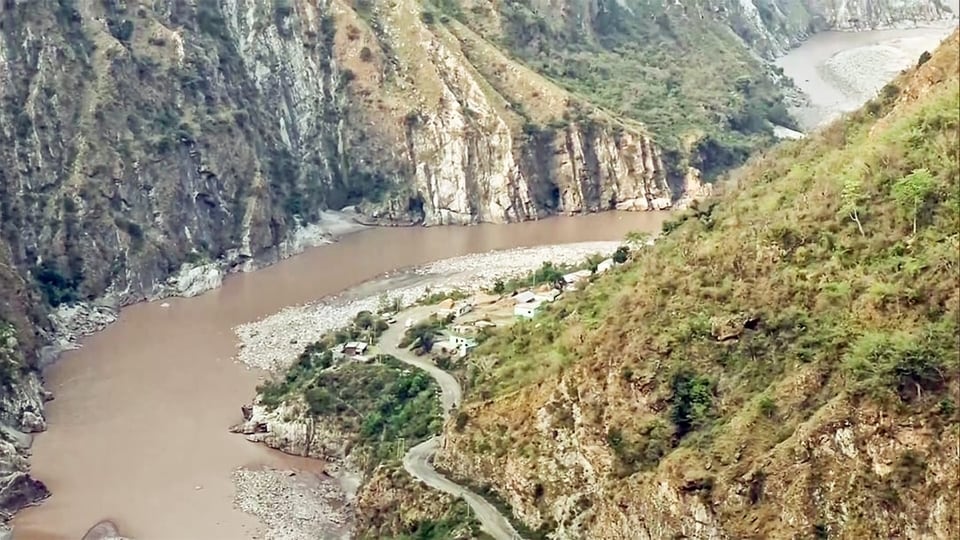
For over three decades, Pakistan’s strategy toward India has rested on a calculated asymmetry: sponsoring militancy, insurgency, and terrorism in Kashmir and elsewhere while sheltering behind a nuclear deterrent that makes any full-scale Indian retaliation prohibitively risky. This is the essence of what Indian strategists have long called the ‘bleeding India with a thousand cuts’ doctrine — a policy of low-cost, deniable aggression calibrated to stay below the threshold that would invite conventional war, let alone nuclear escalation. India's own responses, from surgical strikes after Uri to the Balakot air strikes after Pulwama, demonstrated that conventional retaliation is possible but structurally limited. Each strike must be calibrated so precisely to avoid nuclear escalation that its deterrent value against future attacks has diminished with repetition. Pakistan's military and political establishment has, in effect, learned to absorb and normalise these responses.
The suspension of the Indus Waters Treaty reveals a different dynamic. While water is not a weapon, it is vital for Pakistan's economy and food security. Under the treaty, Pakistan has access to about 80% of the Indus water, which supports the majority of the country’s agriculture, and sustains about a quarter of Pakistan’s GDP and a third of its total labour force. In contrast to military actions, limiting data-sharing, stopping treaty-obligated activities, and declaring India’s position of using the western rivers to the fullest extent is not a military act, and will not create a situation of a nuclear war. It occupies a non-military, non-kinetic strategic space, while causing long-term economic harm to Pakistan, which its deterrent systems were not designed to address.
India’s leverage is coercive-diplomatic, rather than an immediate punitive response. Currently, India's storage and diversion infrastructure are insufficient to rapidly reduce the flow of the western rivers into Pakistan. The immediate purpose of placing the treaty in abeyance is not the complete weaponisation of water. Instead, India’s longstanding institutional constraints, which limited its ability to take action, such as data-sharing, design restrictions on hydropower projects, and India’s participation in a dispute-resolution framework, which India now considers to be a flawed system, are no longer constraints. Official statements about the treaty signal that abeyance is an ongoing and indefinite policy tool, as opposed to a limited and temporary gesture.
This makes it a very valuable deterrent. Its effectiveness lies more in the long-term policy options it creates over the coming decade than in immediate actions. This is only true, however, if there are no shifts in Pakistani policy. This can include increased dam and reservoir construction on the western rivers, increased design freedom in hydropower projects, and the increasing uncertainty surrounding river flows on which Pakistani agricultural planning relies. By declaring the Permanent Court of Arbitration’s rulings on competence and maximum pondage null and void, India has shown that it will keep international legal systems from restoring the very restraints that India wants to get rid of. This positions water as a long-term structural deterrent, specifically because Pakistan cannot easily litigate, wait, or escalate, without incurring compounding long-term costs.
India has noticed an actual asymmetry in its favour within an otherwise almost reciprocal nuclear restraint relationship. This is especially true since India has an opportunity to stop Pakistan's continued support to Islamic terrorists. Water leverage is cumulative and binding, and is not impacted by Pakistan's nuclear threats. Pakistan's continued support to terrorism is Pakistan's proxy war against India. It remains an open question whether that tactic will compel Pakistan to abandon support for terrorism. Thus far, Pakistan has chosen to legally and diplomatically challenge India. It is important to note that infrastructure development on India's western rivers, to which Pakistan has treaty rights, would also affect India's relationship with other countries. However, it is sound logic to use infrastructure as a coercive tactic. India has used a treaty negotiated during the colonial era to leverage its position and reduce the long-standing costs that were almost completely subsidised for Pakistan. It has decided to use that treaty not as a retaliatory tactic against Pakistan, but as a coercive economic strategy which India has not used against Pakistan in decades.
(The views expressed are personal)
This article is authored by Gaurav Sen, senior research fellow, School of International Studies, Jawaharlal Nehru University, New Delhi.


