India’s solar story has largely been a story of scale. In little more than a decade, the country has moved from 2.8 GW of installed solar capacity in 2014 to 164.59 GW as of July 2026. Non-fossil fuel sources now account for more than 54% of installed power capacity. Manufacturing has expanded alongside this deployment, creating an industry that is very different from the one India had a decade ago. The next challenge, however, is less visible in the headline capacity numbers. It is about what sits behind them.
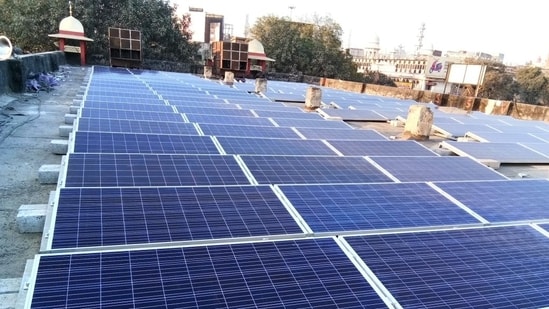
A solar module may carry a Made in India label, but that does not necessarily mean that the entire value chain behind it is domestic. If critical upstream components remain dependent on imports, a disruption in another market can still find its way into an Indian factory. For a country that wants solar to play a larger role in its energy security, that is an important distinction. Self-reliance, therefore, has to mean building enough depth across technology, components, skills and supply chains to make the industry more resilient and globally competitive.
India’s manufacturing expansion is significant. Module manufacturing capacity has risen from 2.3 GW in 2014 to around 228 GW of installed capacity under the ALMM framework, reflecting the rapid expansion of India’s domestic solar manufacturing base. The Production Linked Incentive (PLI) scheme has further encouraged investment in high-efficiency and integrated manufacturing. The ₹24,000-crore PLI programme explicitly aims to develop integrated plants, local sourcing and technological self-sufficiency.
But capacity at the module end tells only part of the story. Module capacity is currently around 6.5 times domestic cell capacity. This points to a structural imbalance- India has built substantial downstream capability, while important upstream stages remain less developed.
{{/usCountry}}But capacity at the module end tells only part of the story. Module capacity is currently around 6.5 times domestic cell capacity. This points to a structural imbalance- India has built substantial downstream capability, while important upstream stages remain less developed.
{{/usCountry}}Wafers and ingots are a case in point. The government has acknowledged the import dependence at these stages and expanded the ALMM framework to include them from June 1, 2028. That shift is important because supply-chain resilience is ultimately about controlling the points at which a disruption can stop production. Polysilicon, ingots, wafers, cells and modules are not independent businesses within the solar ecosystem. They are sequential stages of the same manufacturing chain.
The opportunity now is to connect those stages more closely. Greater integration can improve control over quality and production planning, reduce exposure to sudden changes in imported input costs and create room for Indian companies to develop process expertise and intellectual property. The ambition should be to move from assembling products in India to building the capabilities behind those products in India.
The solar industry is not standing still while India builds factories. Cell architectures are changing, manufacturing processes are becoming more sophisticated and efficiency gains increasingly determine the economics of a module over its operating life.
For Indian manufacturers, this makes R&D less of a long-term aspiration and more of a present manufacturing requirement. TOPCon and heterojunction technologies are already part of the high-efficiency landscape, while perovskite-silicon tandem cells point towards the next generation of photovoltaic technology. The commercial path for newer technologies is not straightforward; durability, yield, scale and cost still need to be addressed. But that is precisely why domestic research capability matters.
India’s manufacturing base will be stronger if companies are able not just to adopt a technology developed elsewhere, but to modify processes, improve yields and eventually create intellectual property of their own. The same principle applies inside the factory. AI-enabled manufacturing can help identify defects earlier, improve yield, reduce downtime and make quality control more consistent. But the value of digitalisation should ultimately be visible on the shop floor--in lower material losses, better traceability, higher productivity and more reliable output.
People will be just as important as technology. An integrated solar industry requires engineers who understand semiconductor processes, technicians who can operate increasingly automated production lines and researchers who can work across materials and cell technologies. Manufacturing capacity without the specialised workforce to operate, maintain and improve it would leave a critical part of the ecosystem incomplete.
There is another dimension to self-reliance that is easy to overlook- India can’t build a resilient solar industry by simply replacing one dependency with another. Around 97% of India’s PV module exports were directed to the US in FY 2023-25. The US has been an important market for Indian manufacturers, but such concentration also creates exposure to changes in trade policy and demand. The opportunity lies in building a broader export base across Europe, West Asia and Africa.
But entering these markets will require more than surplus manufacturing capacity. Buyers will look for consistent quality, global quality benchmarks, delivery reliability, competitive economics and confidence that suppliers can maintain those standards over time. This is where domestic value addition and export competitiveness meet. A deeper Indian supply chain can reduce exposure to external shocks, but it must also become efficient enough to compete globally without relying indefinitely on policy protection.
India also has an opportunity to work with other emerging economies. The BRICS Photovoltaic Industry Working Group and Solar PV Cooperation Roadmap can provide a platform for cooperation on technology, manufacturing and supply chains. The larger opportunity is to translate such frameworks into practical industrial partnerships and greater value addition within participating economies.
India does not need to produce every input domestically or withdraw from global supply chains to become self-reliant. A mature manufacturing ecosystem is one that knows where its vulnerabilities are, has credible alternatives for strategically important inputs and can compete when market conditions change. That is why the next chapter of India’s solar story should be measured differently.
Gigawatts will continue to matter, as will new factories and investment announcements. But the more revealing indicators will be the depth of the value chain, the technologies developed, the skills created and the number of markets Indian manufacturers can serve competitively. Self-reliance will not be achieved when India simply makes more solar modules. It will be achieved when the country can build, improve and compete across the ecosystem that makes those modules possible.
(The views expressed are personal)
This article is authored by Vineet Mittal, director, Navitas Solar.