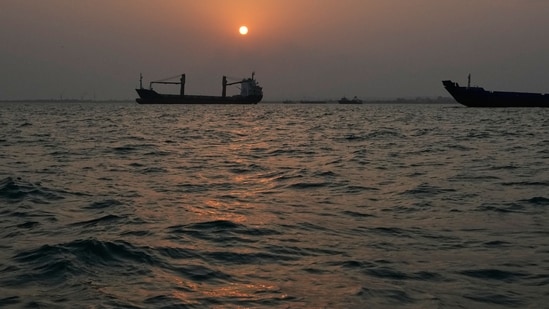
Few geopolitical chokepoints matter as much to Asia’s security as the Strait of Hormuz, through which most of the region’s energy imports pass. Since late February, the strait has stayed effectively closed to commercial shipping for almost five months, with vessel movement down to a fraction of normal levels.
India imports about 60% of the LPG it consumes. About 90% of these imports pass through the Strait of Hormuz. India is, therefore, particularly vulnerable to geopolitical disruptions that affect this route.
Most Indian households and community-based kitchens depend on LPG. Even a small disruption in the supply chain can have cascading effects on the entire system. Since March, the sharpest disruption has been in the commercial and community segments. Oil marketing companies have formed a committee to ration and distribute commercial cylinders equitably across states, domestic LPG production has been raised by about 25%, and fresh import contracts have been signed with suppliers outside the Gulf.
Commercial cylinder shortages, however, continue to affect community services adversely.
Over the past five months, fuel uncertainty has spread through community kitchens. Among the most exposed are school midday meal programmes in remote parts of India, where access to affordable cooking energy is essential to keeping kitchens running every day. In March, school kitchens in states such as Punjab, Maharashtra and West Bengal reported delays in cylinder refills, and many shifted back to firewood and clay ovens to keep meals going.
India’s flagship Mid-Day Meal programme, now implemented under PM POSHAN, provides free cooked meals to primary and upper-primary students in government schools. In remote areas of rural India, the programme has played an important role in tackling two major problems: malnutrition and literacy. Approximately 11.20 crore children benefit from midday meals under the PM POSHAN scheme. As per 2024-2025 data, this programme covered about 10.36 lakh schools providing primary and upper-primary education.
{{/usCountry}}India’s flagship Mid-Day Meal programme, now implemented under PM POSHAN, provides free cooked meals to primary and upper-primary students in government schools. In remote areas of rural India, the programme has played an important role in tackling two major problems: malnutrition and literacy. Approximately 11.20 crore children benefit from midday meals under the PM POSHAN scheme. As per 2024-2025 data, this programme covered about 10.36 lakh schools providing primary and upper-primary education.
{{/usCountry}}Most of these schools use LPG for cooking midday meals. Because school kitchens operate within fixed budgets and depend heavily on subsidised cooking fuel, changes in either LPG prices or availability can quickly translate into operational stress. Prolonged disruption affects children’s nutrition and the overall functioning of the primary education system in government schools.
Affordable clean energy is central to the success of PM POSHAN, but its uneven supply in remote areas remains an under-recognised vulnerability. Approximately 25.2% of schools rely on firewood and other fuels. The remaining 74.8% depend on LPG supply for cooking. The daily provision of midday meals in many schools thus remains closely tied to the reliability of the LPG supply chain.
The total cost per meal is ₹12.13 per day at the primary level and ₹17.62 per day at the upper primary level, including food grains, cooking, logistics, and labour. The material cost norms, including ingredients and fuel, are around ₹6.78 for primary and ₹10.17 for upper primary, respectively.
These figures show cooking costs account for a large share of the total allocated budget, including fuel costs. Sharp variations in LPG prices and availability can force school authorities to use firewood, worsening indoor air pollution and increasing greenhouse gas emissions. Higher spending on cooking fuel can reduce spending on ingredients, potentially impacting daily nutrition. The bind becomes what to prioritise: clean air or nutritious food?
India already has several clean-energy technologies capable of reducing dependence on a single imported fuel. The challenge is to make these solutions affordable, locally appropriate, sustainable and replicable.
One such option is solar steam-based cooking. In Kothara village in Kutch, Gujarat, a solar cooking system was installed in SolCafe, a residential school cafeteria, with support from the Gujarat Energy Development Agency to serve about 100 children. Women from the local community have been trained to maintain the system, creating livelihood opportunities alongside clean-energy access.
Biogas is another proven option for institutional kitchens. Shrimati Manekba Vinay Vihar Educational Complex near Gandhinagar uses two biogas plants with a combined capacity of 90 cubic metres per day, generating cooking fuel for more than 500 meals. These plants mainly consume cattle dung, agricultural residue and kitchen waste, saving roughly 30 LPG cylinders a month while also producing organic fertiliser.
Electric cooking offers another such pathway through large-capacity electric pressure cookers (EPCs), energy-efficient appliances suitable for preparing staple foods such as rice, beans, lentils and seasonal vegetables commonly served in midday meals. Energy Efficiency Services Limited has already distributed induction cookstoves under its National Efficient Cooking Programme, and the same bulk procurement and delivery model could be adapted for school kitchens. Solar-powered EPCs connected directly to solar panels (without batteries) could be a promising solution for remotely located schools with unreliable access to electricity.
A one-time investment in localised clean energy infrastructure can reduce the dependency on LPG and make essential welfare programmes more resilient to international supply shocks. What is needed is a dedicated policy initiative for community kitchens to have reliable access to clean energy. Such a programme could draw inspiration from existing initiatives such as PM-KUSUM, which promotes clean energy solutions for farmers and rural communities.
Convergence with other schemes is also possible. The kitchen-cum-store component of PM POSHAN could include additional support for clean-cooking infrastructure; the ministry of new and renewable energy’s National Bioenergy Programme could help fund biogas plants in residential schools; and rooftop solar initiatives such as PM Surya Ghar could be extended to school kitchens for electric cooking. Such interventions could be assessed through a gender-responsive budgeting framework, recognising the benefits cleaner energy can bring to women, who often bear a disproportionate share of cooking and fuel management responsibilities.
The government can support community kitchens by providing the necessary infrastructure needed to adopt clean-energy solutions on a sustained basis. Proven technologies such as biogas, solar heating or other renewable energy generation systems could significantly reduce their dependence on LPG. Once established in public institutions, successful models could also be replicated in private schools.
In the long-term, this kind of energy transition could reduce the dependence of essential welfare services on crude oil imports. It would help control environmental harm and indoor pollution, while creating opportunities for local employment generation. This would also contribute to the goal of Atmanirbhar Bharat and the Sustainable Development Goals, particularly SDG 2 (Zero Hunger), SDG 3 (Good Health and Well-being), SDG 4 (Quality Education) and SDG 7 (Affordable and Clean Energy).
These systems can significantly reduce dependence on imported fuels, particularly if the equipment and components are manufactured domestically, and deliver environmental benefits. Biogas systems, for instance, convert organic waste into cooking fuel and fertiliser, bringing principles of circularity into community-level operations.
Cleaner technologies can further reduce carbon emissions and limit the use of polluting fuels such as coal and firewood, thereby improving indoor air quality and the quality of life for both cooks and children. Lastly, diversifying energy sources can mitigate geopolitical disruptions and advance the broader goal of self-reliance envisaged under Atmanirbhar Bharat.
(The views expressed are personal)
This article is authored by Debraj Bhattacharjee, assistant professor, Department of Operations and Analytics, FLAME University, Pune, Animesh Ghosh, senior fellow, Ashoka Centre for a People-centric Energy Transition (ACPET), Ashoka University, Delhi-NCR and Harshit Vallecha, postdoctoral research associate, School of Engineering and Built Environment, Sheffield Hallam University, Sheffield, UK.