Every winter, India learns to read the air through numbers. AQI readings dominate headlines, schools consider closures, and families check pollution apps before stepping outside. When the smog lifts and the numbers improve, attention moves elsewhere.
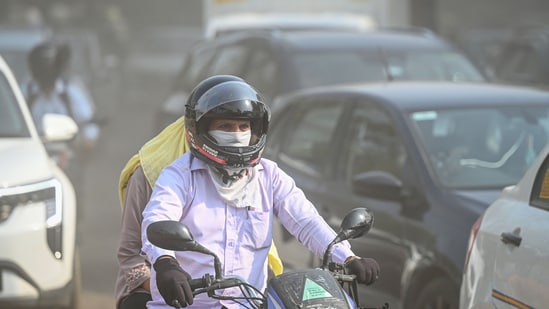
But the need for safer air does not end when the skyline becomes visible again.
India needs to approach air as a year-round public-health priority. That means sustaining efforts to reduce outdoor pollution while paying far greater attention to the air inside our homes, schools, workplaces and hospitals.
The Air Quality Index has helped make an invisible problem visible. It gives citizens a useful warning and governments a basis for action. Yet an outdoor AQI reading cannot answer every question about the air we breathe. In particular, it cannot establish whether a crowded classroom is adequately ventilated or whether a hospital waiting room is allowing infectious respiratory particles to accumulate.
That gap deserves a place in our public-health conversation.
Air pollution affects far more than breathing comfort. The World Health Organization links exposure to polluted air with heart disease, stroke, lung cancer and acute and chronic respiratory illness. The consequences extend well beyond the days when pollution makes our eyes sting.
Indoor environments add another layer of exposure. Cooking emissions, tobacco smoke, dust, dampness and pollutants entering from outside can all affect the air within a building. Occupants themselves can introduce infectious respiratory particles. The combination varies from one setting to another, which is why a citywide reading cannot serve as a certificate of indoor safety.
{{/usCountry}}Indoor environments add another layer of exposure. Cooking emissions, tobacco smoke, dust, dampness and pollutants entering from outside can all affect the air within a building. Occupants themselves can introduce infectious respiratory particles. The combination varies from one setting to another, which is why a citywide reading cannot serve as a certificate of indoor safety.
{{/usCountry}}Consider a classroom on a day when outdoor air quality has improved. Its windows may remain closed, its ventilation may be inadequate, and several children may have respiratory infections. A favourable outdoor reading does not resolve those conditions.
Similarly, a low particulate reading on an indoor monitor cannot, by itself, establish that a room is free of infectious aerosols. Particle measurements provide useful information, but they do not identify which particles contain viable pathogens.
We must also distinguish between microbial presence and infection risk. Microorganisms are part of everyday environments; their detection does not automatically mean that a space is dangerous. Risk depends on the organism, the exposure, the building conditions and the susceptibility of the people present. WHO recognises that pathogens can transmit through inhalation, with transmission influenced by factors including airflow and ventilation.
The task is to translate that understanding into practical protection.
We expect drinking water to be managed through infrastructure, maintenance and accountability. Shared indoor air deserves comparable attention.
A hospital can disinfect its surfaces thoroughly and still need stronger controls for airborne transmission. A school can have an impressive campus and poorly ventilated classrooms. An office can maintain a comfortable temperature without supplying sufficient fresh air.
Cooling and ventilation serve different purposes. Building owners, administrators and occupants need to understand that distinction.
Health care settings warrant particular attention because they bring vulnerable patients, infectious individuals and healthcare workers into shared spaces. Airborne precautions belong within a broader infection-prevention programme, alongside hand hygiene, surface cleaning, appropriate isolation and other clinical measures. Air treatment cannot prevent every healthcare-associated infection, but the airborne route should receive deliberate attention.
India has an opportunity to support innovation in air treatment and environmental surveillance. It must also become more demanding about evidence.
Effective air management combines control of pollution sources, appropriate ventilation, filtration and, where justified, additional air-disinfection measures. HEPA filtration is an established component of this approach. Properly designed germicidal ultraviolet systems can also provide supplementary protection in suitable settings. Their effectiveness depends on design, installation, operation and maintenance.
Emerging technologies should face the same scrutiny.
A percentage reduction achieved in a laboratory is useful evidence, but its relevance to an occupied room depends on the test conditions, treatment time, airflow, room size and placement. Evidence of microbial reduction also needs to be distinguished from evidence of fewer infections.
As someone working on air-decontamination technology, I believe the industry has a responsibility to make these distinctions clear. Buyers should be able to assess performance, safety, maintenance requirements and operating costs without having to navigate exaggerated promises.
Monitoring requires similar discipline. A sensor reading is valuable when its meaning and limitations are understood. Its greatest contribution is helping people recognise a problem, take an appropriate action and check whether conditions improve.
The next step should be to make indoor air management an explicit operational responsibility.
Schools, health care facilities and other public buildings need clear, workable guidance on ventilation, filtration, maintenance and responses to poor conditions. Requirements should reflect differences in occupancy and risk: an intensive care unit, a classroom and an office have different needs.
Procurement should reward independently demonstrated performance and sustained operation. Buying a device is only the beginning. Someone must be responsible for maintaining it, replacing consumables and ensuring that it remains suitable for the space.
India also needs stronger field research. Studies in functioning hospitals, schools and workplaces can help establish which interventions deliver meaningful benefits under local conditions, at what cost, and with what practical constraints.
Public communication must become more useful, too. Citizens should understand that clear skies do not guarantee healthy indoor air, and that ventilation, source control and well-maintained air treatment each have a role.
These efforts must advance alongside sustained action on transport, industry, construction dust, waste burning and household energy. Indoor protection and outdoor emission reduction address connected parts of the same public-health challenge.
AQI has given India a shared language for recognising polluted air. We now need the infrastructure and accountability to act on the risks that a single number cannot capture.
The measure of progress should be healthier places to learn, work, recover and live—throughout the year.
(The views expressed are personal)
This article is authored by Arindam Ghatak, co- founder and CEO, Biomoneta.